

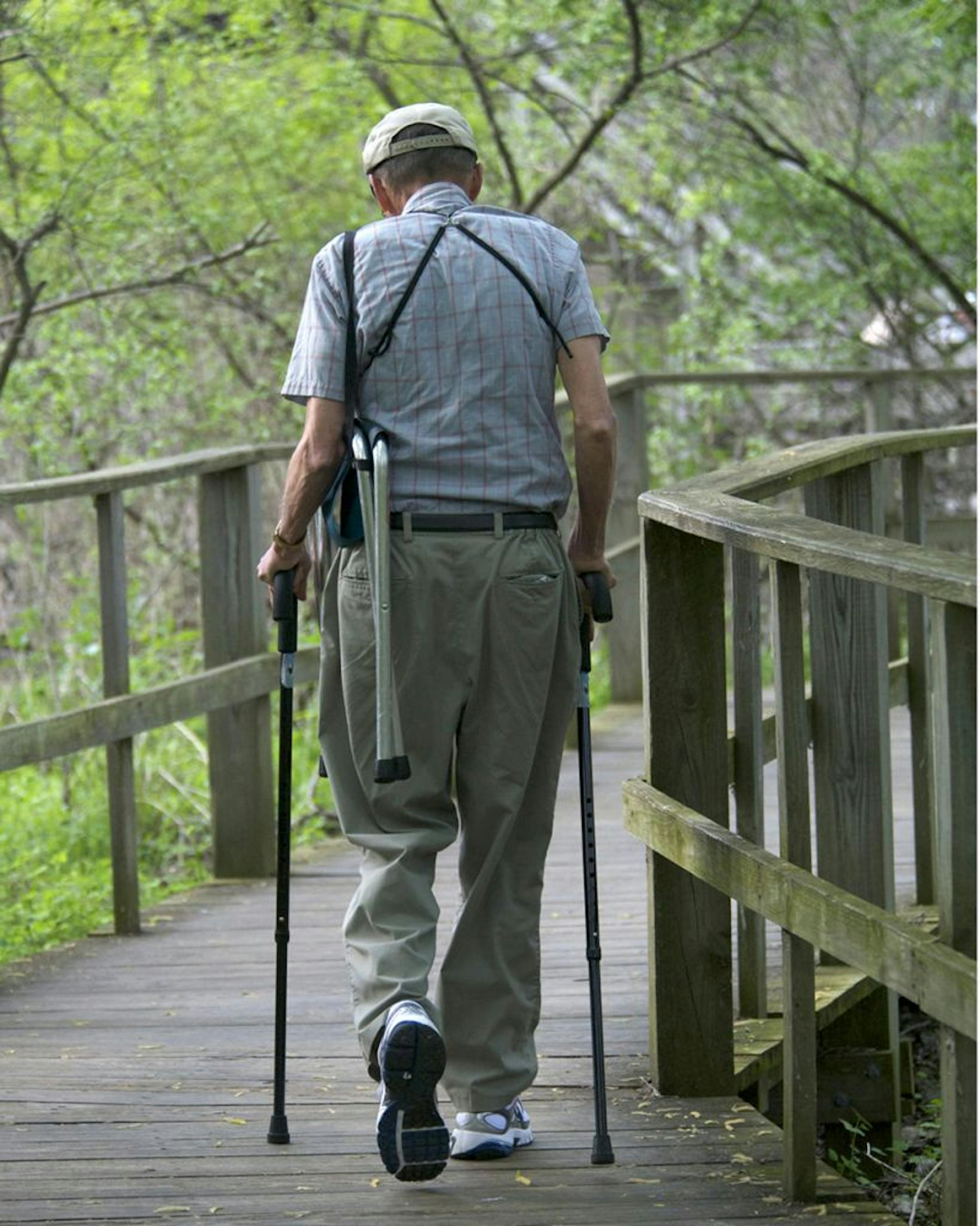
Seeing and identifying a particular bird isn't always the only challenge when bird-watching. For some people, simply getting on the site can be difficult.
When it comes to choosing outdoor activities, canes, crutches, walkers, wheelchairs -- or simply aging bodies -- can be limiting factors.
My wife, Jude, and I were at Madera Canyon in southeastern Arizona last year, a good place to find birds. We heard that an Aztec thrush, a stray from Mexico, was being seen half a mile up a trail at canyon's end. The trail was uphill and rock-studded. For various reasons, neither of us was able to take that hike.
Our recent visit to Ohio presented a very different story. We birded at Magee Marsh, a swampy woodland tight against the Lake Erie shore. Spring migrant birds pile up here to rest and feed before crossing the lake.
At one time, birders tromped through the wet and mucky woods, slowly but surely destroying the place they loved. The Ohio Division of Wildlife recognized the problem, and attraction of this place to bird-watchers. The state built a ¾-mile-long, 6-foot-wide boardwalk that snakes through the woody swamp. It has ramps. It has benches. It's a marvel.
What struck me was the number of birders we saw using canes, crutches, walkers and wheelchairs. You don't usually see those folks out birding. We also saw parents with small children in strollers, another population segment with access concerns.
In Minnesota, birders with mobility issues have lots of good places to find and observe birds, places that limit or do away with those issues.
Where are they? All over. And Frank Berdan of St. Paul decided to make a list of them.


