

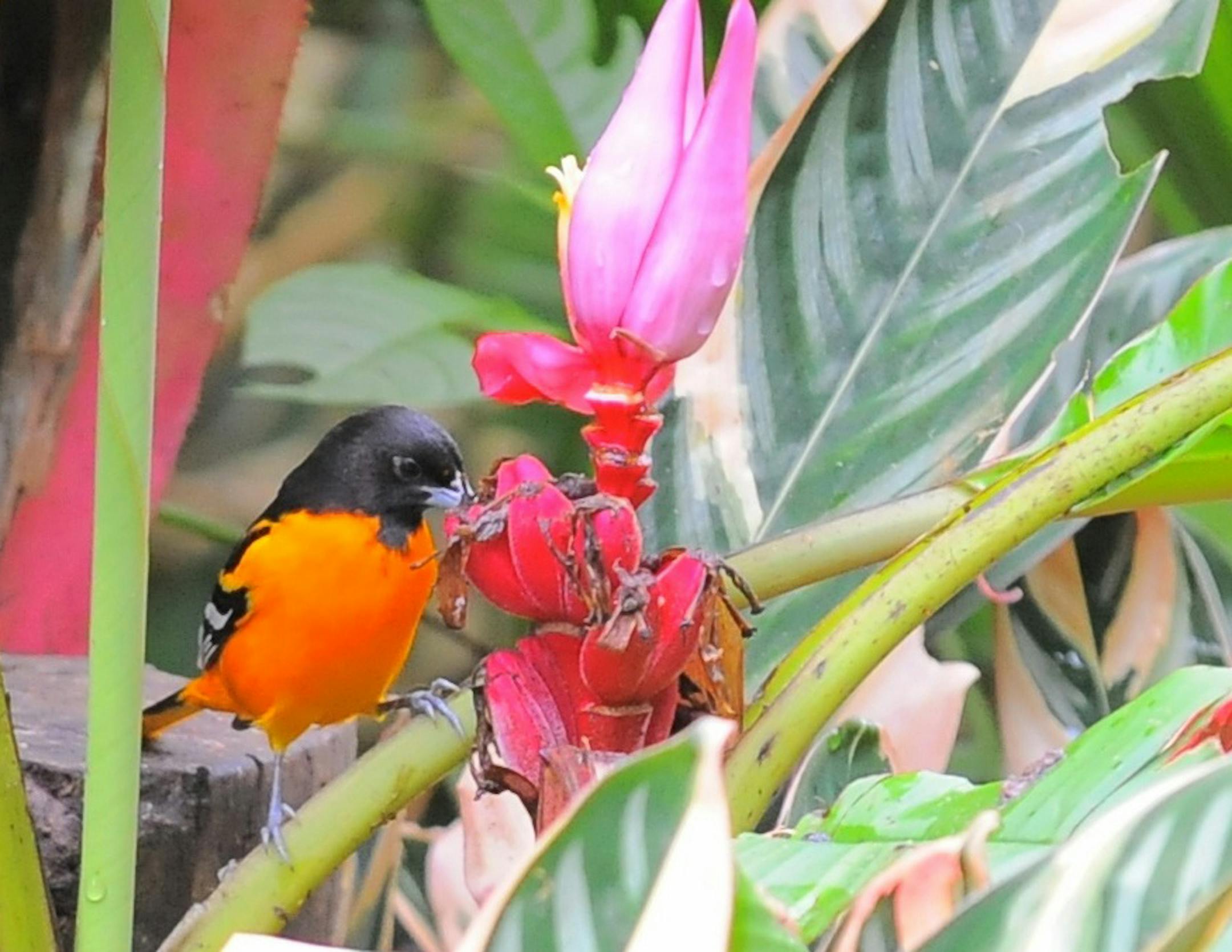
Q: Sitting on a tree branch in a tropical jungle sounds like a pretty good lifestyle right about now. Am I right to think that for migratory birds, the "livin' is easy" in winter?
A: You're right to think that winter in the tropics is less stressful than dashing around the temperate zone in summer, catching insects and feeding them to nestlings from dawn to dusk.
But what looks like lush jungle to us in places like Belize, Panama or Ecuador may simply be another work zone for songbirds. There's a lot of competition between visiting and resident birds for the fruits and insects in the tropical forest. For this reason many migratory birds defend a feeding territory in winter, which causes stress and burns up calories. And there are many predators in tropical forests, so "our" migrants must find or relearn places where they can dash for safety or to roost without being seen.
Add to this the fact that many migratory birds arrive in Central or South America worn out and tattered after a long journey, and need time to build up their stamina for the coming trip back north. So it's not all fun and games in the tropics.
Getting started
Q: I received a bird feeder as a gift, but have to admit I don't know the first thing about feeding birds and need some tips.
A: It's great that you're ready for the wonderful and fascinating world of bird feeding, and I guarantee that this will enrich your life. Setting up a feeding station isn't at all complicated, but there are some key steps that will keep you from becoming frustrated and help birds stay healthy.
For one thing, the squirrels in your area will consider your feeder a personal challenge and will relentlessly attempt to get to the seeds it holds. So keeping these critters out is very important, both to conserve seed and so squirrels at the feeder don't deter birds from visiting.
I'd recommend setting the feeder on top of a 6- or 8-foot pole or shepherd's hook, then put a squirrel guard on the pole, so squirrels can't shinny up. (The squirrel guard might be a metal "witch's hat" or could even be a garbage can lid retrofitted for the job.)


