

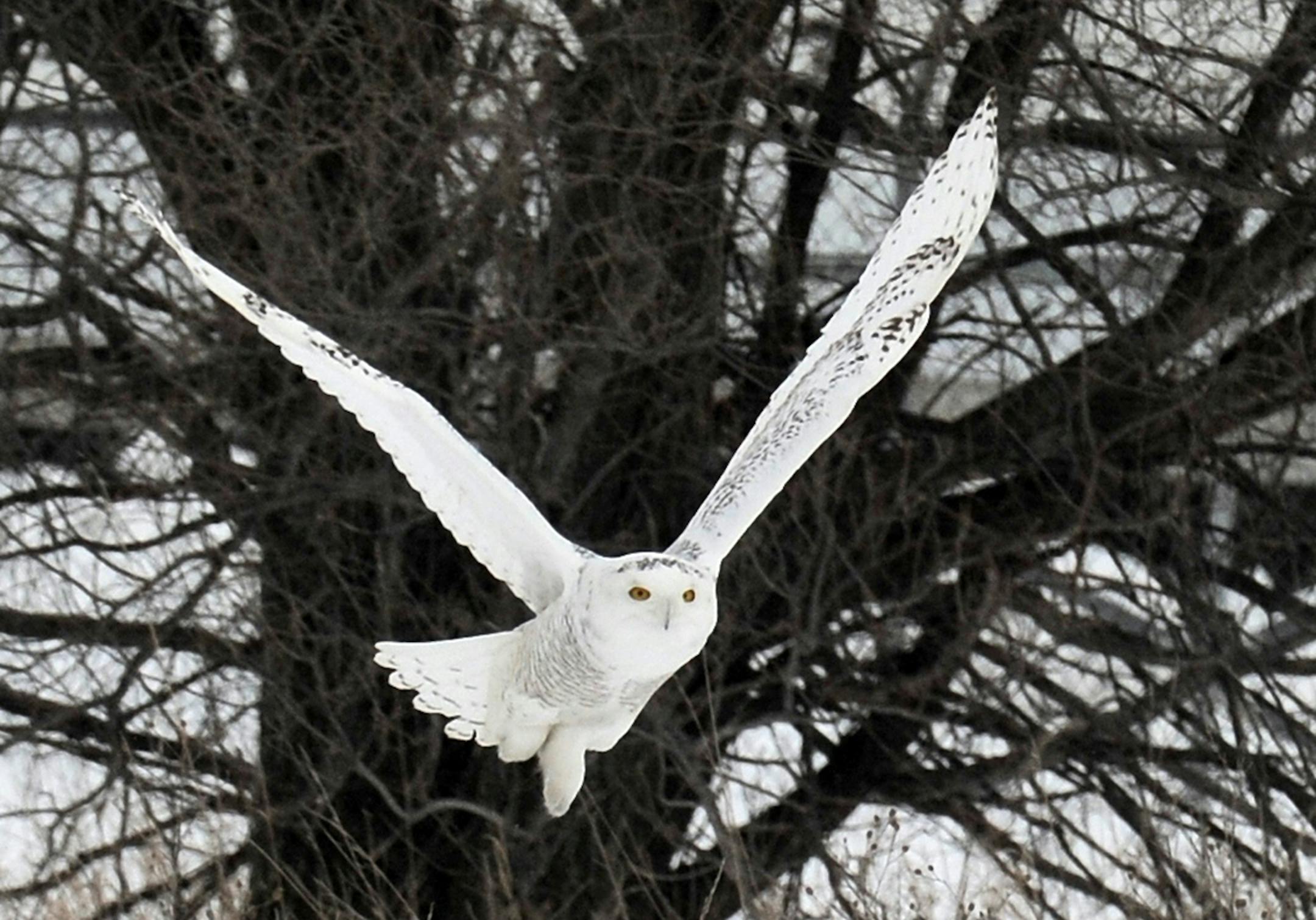
The magic will begin to end in March.
That's when we can expect our snowy owl visitors to fly away north.
It's been an exceptional visit, unprecedented, spectacular and well-followed. Certain owls, those faithful to a location, have received human visitors day after day. There has been national and local television coverage, radio stories and lots of print press.
For all of that, misunderstandings are common.
These owls, thousands of them from here to Maine, from Newfoundland to Virginia, came south for one reason. Not hunger. They needed space, according to Jean-Francois Therrien of the Department of Biology at Laval University in Quebec.
Therrien took a photo in northern Quebec in July. It showed a snowy owl nest rimmed with 70 dead lemmings. They had been brought to the nest by the male owl as the hen tended eggs.
I'm not certain that the hen owl was done laying when the photo was taken. She had but four eggs. When food is plentiful, snowy owls often hatch 10 or 12 young.
At that rate, 100 pairs of owls (200 birds) would in a few weeks increase by 1,000: 100 nests, 10 eggs per nest. There were hundreds, perhaps thousands of pairs of nesting snowy owls in the eastern Arctic. Do the math.


