What could be more natural on a warm summer's day than enjoying a stroll on a path around a wetland filled with waving grasses and the songs of marsh birds?
What could seem more unnatural than to suddenly have a shrieking black object appear out of nowhere and begin divebombing your head, almost coming within striking distance?
This happened to me several years ago, and I'll bet more than a few of us have had this experience. What had I done to cause the commotion? It turns out that my stroll looked like a threat to that most territorial of birds, the red-winged blackbird. He interpreted this as an incursion into his territory and a danger to female red-wings on their nests. He'd worked hard to establish his dominance over those several acres of wetland and wasn't going to give it up without a fight — even if a trespasser has no interest in jumping his claim.
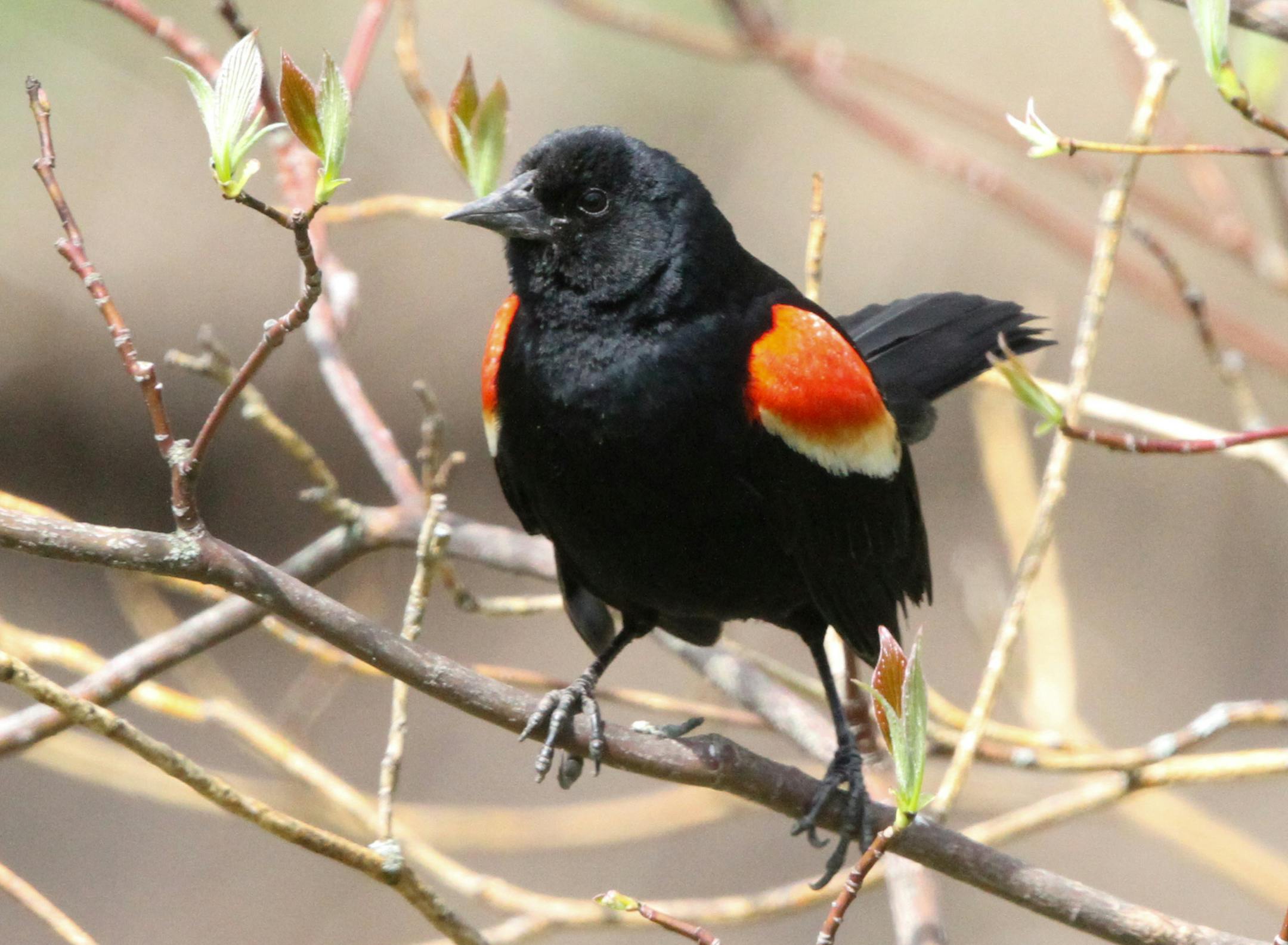
These handsome black birds with the bright red wing patch will take on any and all comers. I've seen photos of red-wings fluttering around the heads of white-tailed deer that were attempting to cut through a marsh, harassing humans in parks and on paths and even rocketing upward to chase away red-tailed hawks that dared to enter their airspace.
It's all about real estate
As with most male birds during breeding season, it's all about holding a territory, but these birds take it to the extreme. Abundant and aggressive, they're among the first migratory birds to arrive back each spring (so early that many regard them as the true harbingers of the season, instead of the robin). We begin hearing their distinctive "konk-la-ree" song in late February or early March, as the first males rush in to snatch up the most coveted real estate. (Hear their song here: www.allaboutbirds.org/guide/red-winged_blackbird/sounds)
These can be life or death situations, because the weather then often still is wintry, with cold snaps and late winter snowfalls. Some of the early birds will succumb to the elements or to starvation before spring arrives. But it's worth it, evolutionarily speaking, because males who manage to hang on to a territory and stay in top breeding condition until females arrive some weeks later will win the breeding sweepstakes.
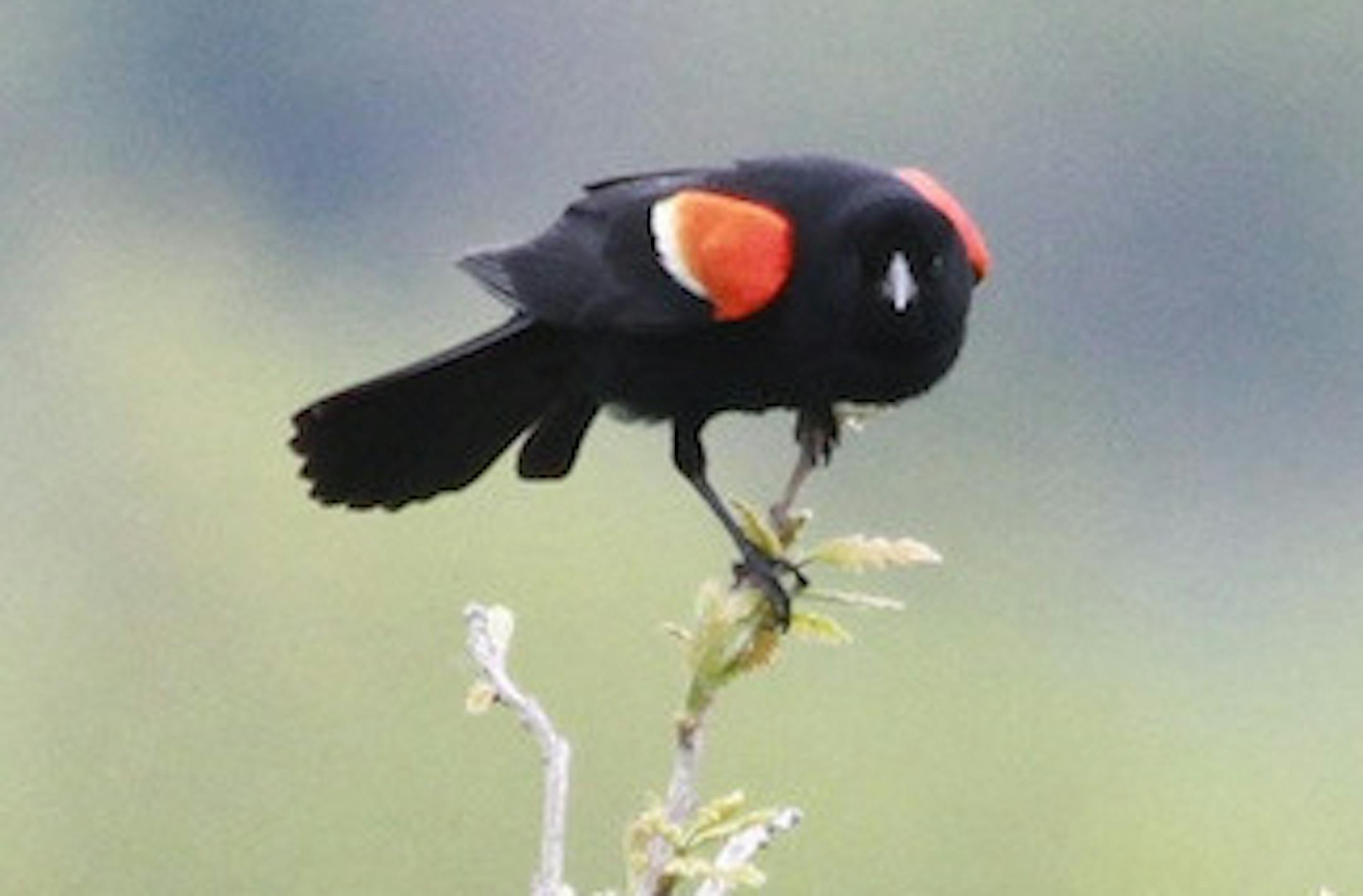
That red patch on each wing shouts a message in this bird's world. When he sees an intruder, he puffs himself up and lowers his head, then raises the feathers in those red epaulets. This clearly signals aggression and is designed to deter any interlopers. But if this display doesn't do the job, then the bird engages in aggressive flight, which might include flying at a stroller's head.
Territory trumps it all
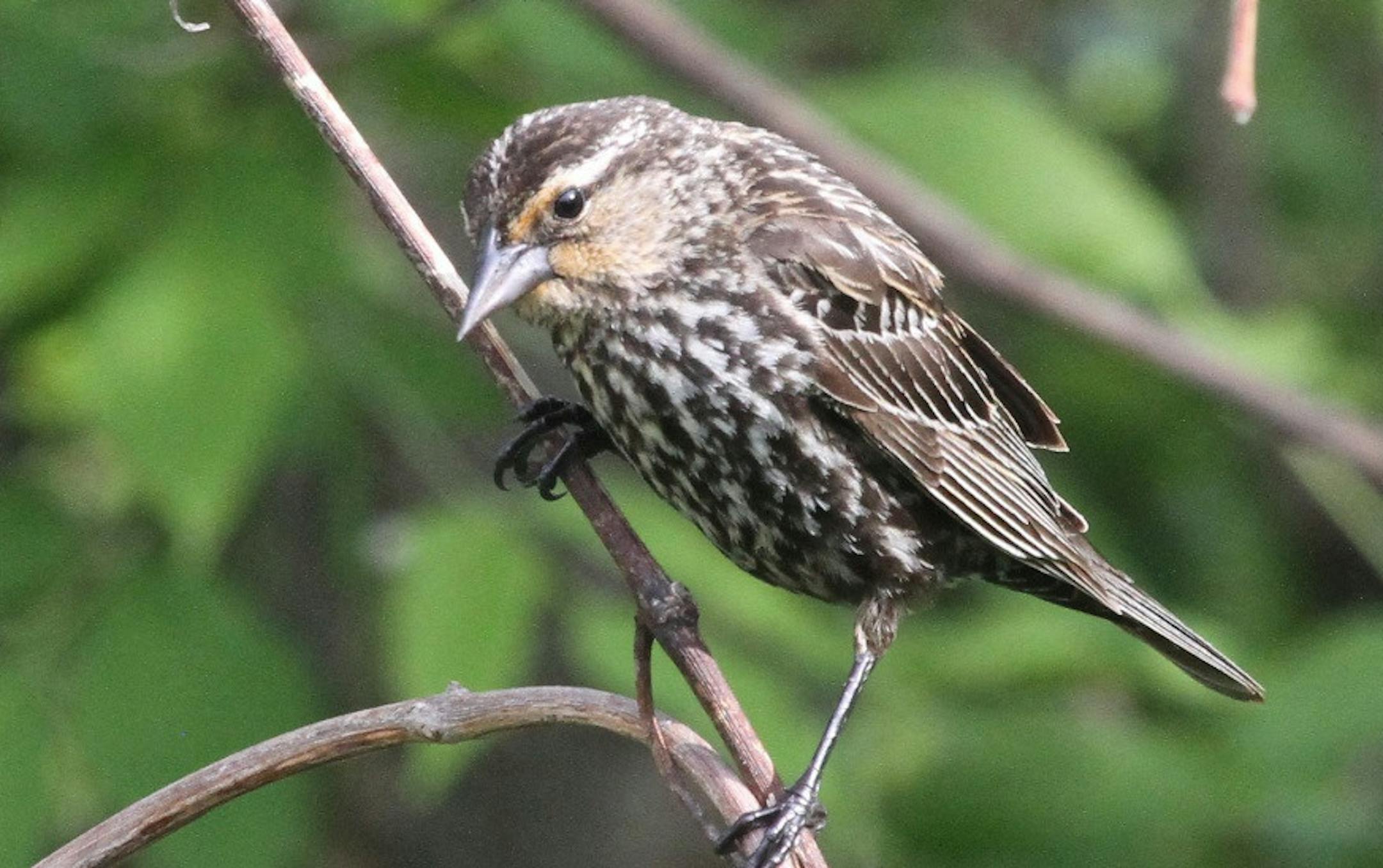
What is a female red-winged blackbird looking for in a mate? Her top criterion is a good nesting territory. If she approves of his landscape, then she'll give a male a second look. And, unusual in the bird world, he may appeal to more than one female: If a marsh looks to have abundant resources, in terms of nesting sites and food for nestlings, then 10 or more females may settle in. All will mate with the male who holds the territory and all of their offspring will have the same father. This is not at all common in the bird world, where monogamy dominates. Red-wings share this trait with bobolinks, meadowlarks, lark buntings, and a few others.