
Birding: Pileated woodpeckers are a sight to behold

For the Minnesota Star Tribune
February 10, 2015 at 9:10PM
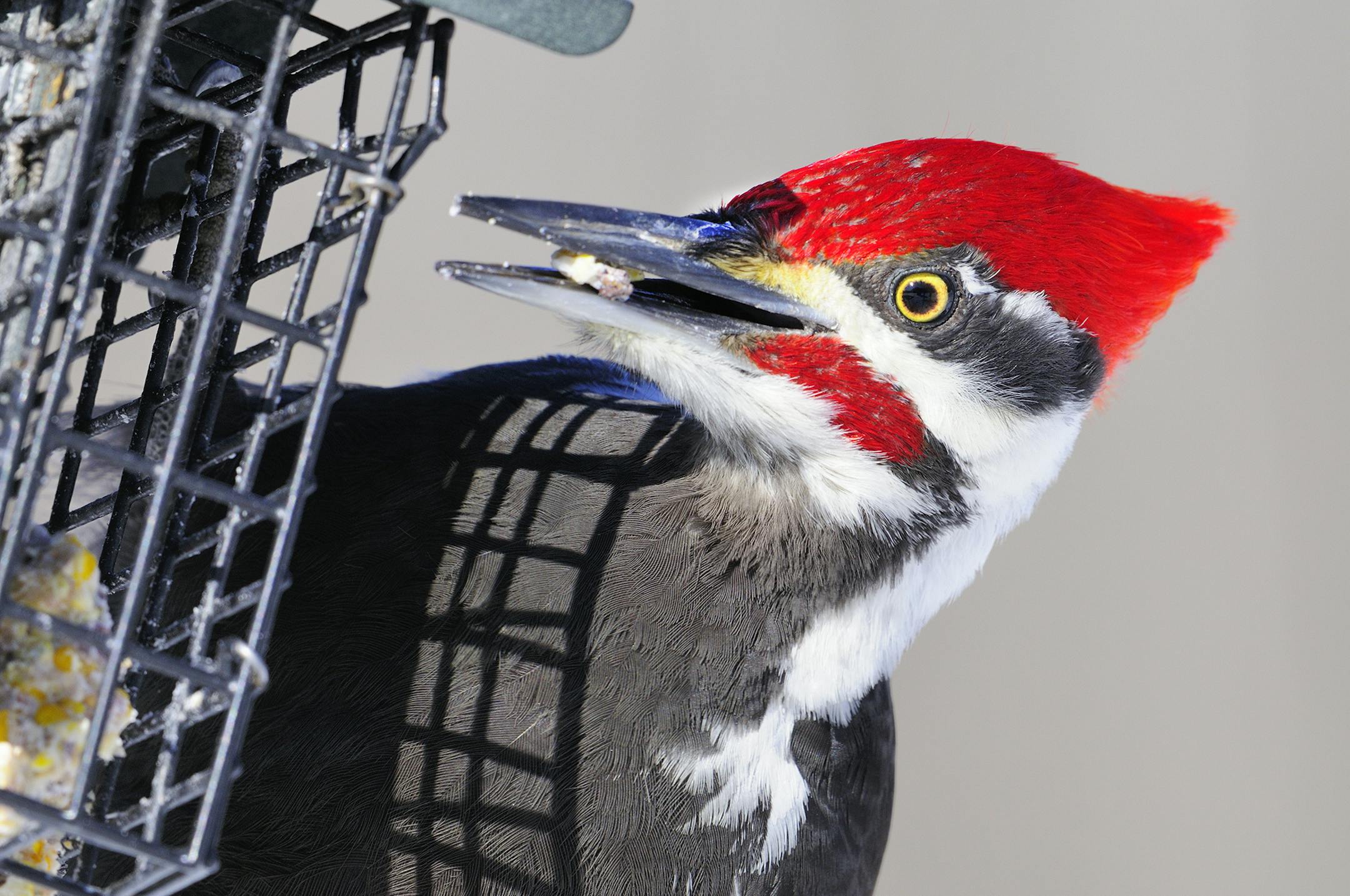
This male pileated woodpecker was attracted to the author's backyard by a suet feeder.
This male pileated woodpecker was attracted to the author's backyard by a suet feeder. (The Minnesota Star Tribune)

Q: I saw a huge bird in my neighbor's tree, and he later told me it was a pileated woodpecker. Is it unusual to see this bird in the city?

A: Pileated woodpeckers are a jaw-dropping sight wherever and whenever they appear. They're almost as big as crows and are standout handsome, with large red crests and dramatic black and white plumage. You're most likely to see a pileated if you live near a dense woodland or large park with stands of trees (such as along the Mississippi River, near Minnehaha Creek, state parks, etc.).

They occasionally fly into neighborhoods to check out trees for hidden insects and this is when most of us see them. Like downy and hairy woodpeckers, they don't migrate, so you might spot a pileated in any season.

Birds gone missing

Q: I've been feeding birds for years but suddenly there are no birds of any variety at my feeders on the deck and hanging from the trees. There are no tracks in the snow, either, so I don't think it's due to predators. Any thoughts?

A: This kind of thing happens from time to time, even to those, like you, who have maintained successful bird-feeding operations. The usual suspects would include a bird-eating hawk parking itself in your neighborhood, or that there's something the matter with the food you're offering. But since you note that you fill feeders with safflower and suet, and it's tough for these to go bad in winter, I'd suspect a hawk. He may be perched out of sight in a nearby tree, but the birds know he's there.

Would it be possible to move at least a few of the feeders to another location, maybe on the side of the house, where the birds might feel safer? It's a good thing if there are small trees or shrubs nearby where they can dash for safety if they feel a threat is in the area. Try to make a few changes so that things look safer to the birds and they'll probably reappear.

Birds gone missing 2

Q: In the past few weeks my birds just seem to have disappeared. I keep feeders and birdbath squeaky clean and all I see is one woodpecker and a chickadee, maybe some doves and a sparrow. Why have they gone away?

A: All of us who feed birds face this kind of situation from time to time. One day there'll be flocks of birds on and under feeders, but on the next, almost no traffic, and this can go on for a while.
The weather is a likely culprit: During warm spells in winter, birds seem to glean enough calories from wild sources, such as old flower heads or berries. Conversely, on days when it's brutally cold, birds may stay huddled in night roosts and only dash out for brief periods. Another possibility is a predator in the neighborhood (see above) or a neighbor might have set up a new and attractive feeding system. One thing is certain, though — with your good hospitality on display, your birds will return.

What's with the robins?

Q: A large flock of robins has been showing up each evening in our neighborhood. They settle into the evergreens for the night and leave in the morning. There might be 200 at times, and we wonder what's going on — shouldn't they have migrated?

A: That must be quite a sight, seeing so many of these large thrushes in the neighborhood each evening. You mentioned that there are hackberry trees in the area, and the robins doubtless come in to feast on the berries, then seek shelter in the evergreens. More and more robins are spending the winter in our area, due to a noticeable rise in nighttime temperatures in winter because of our warming climate. As long as robins can find enough food to eat (mostly berries at this time of year) and water to drink, they can deal with winter weather.

Crows vs. cat

Q: Some years ago we had a cat that spent time outdoors and I've always wondered about a scene my son observed one day. He heard a lot of noise just as he was coming home from walking the dog, and found the cat sitting on the ground, encircled by 10 or 12 hollering crows. He let the dog chase the birds off, but we've always wondered whether they would have harmed the cat.

A: Crows sometimes kill smaller animals, such as mice and voles, but I've never heard of crows killing a cat. A group of crows surrounding another animal is usually trying to drive it out of the area (which is why they mob great horned owls in the daytime). I recently heard of a group of crows creating a ruckus in a suburban back yard whose owner keeps chickens. A neighbor discovered a coyote feasting on the chickens and the crows were trying to get the mammal to leave (maybe so they could eat the carcasses). In the case of your cat, either the crows felt the cat was endangering a member of their flock or they'd seen it catch a bird or other small animal, and wanted the spoils for themselves.

Pesky sparrows

Q: We recently switched from safflower to a seed mix in our feeders and are now inundated with sparrows. Does taking the feeders down for a week or two work to discourage these relentless pests?

A: That's a good question, and I suspect that this wouldn't work over the long term. Sparrows are so persistent, and work a fairly small territory, so the minute you put the feeders back up, they'd return. But it's worth a try and if this does have long-term positive effects I'd love to hear back from you. I'd switch back to the safflower seed when you replace the feeders — it sounds as if the seed mix is a sparrow attractant. Taking your feeders down at this time of year will be a bit hard on your other birds, and they may move off for a time.

Winter blues

Q: Aren't bluebirds supposed to head south for the winter? We had a group of males at our heated birdbath recently.

A: Like their cousins, the robins, some bluebirds remain in our area all winter, if there is adequate food in the form of berries and adequate open water. If the weather turned very harsh, the winter bluebirds might depart, flying a hundred miles or two southward where food was more abundant.

Creepy duck behavior

Q: There was an odd sight on our pond the other day: A male and female mallard were poking at the carcass of a dead mallard, and seemed to nibble it at times, while the rest of the flock of 50 or so birds ignored them. Any thoughts?

A: All sorts of aberrant behavior can break out when waterfowl are stressed by overcrowding. Another thing to keep in mind is that to a mallard, everything is food, until proven otherwise. I'd guess that this pair of ducks was trying to determine whether the inert object was a food item, not recognizing the lifeless object as one of their own kind. This may be more than you wanted to know, but there are reports of cannibalism among domestic ducks raised on poultry farms, due to too many ducks in too small a space. But in this case it seems more likely that curiosity was the motivation.

St. Paul resident Val Cunningham, who volunteers with the St. Paul Audubon Society and writes about nature for local, regional and national newspapers and magazines, can be reached at valwrites@comcast.net.

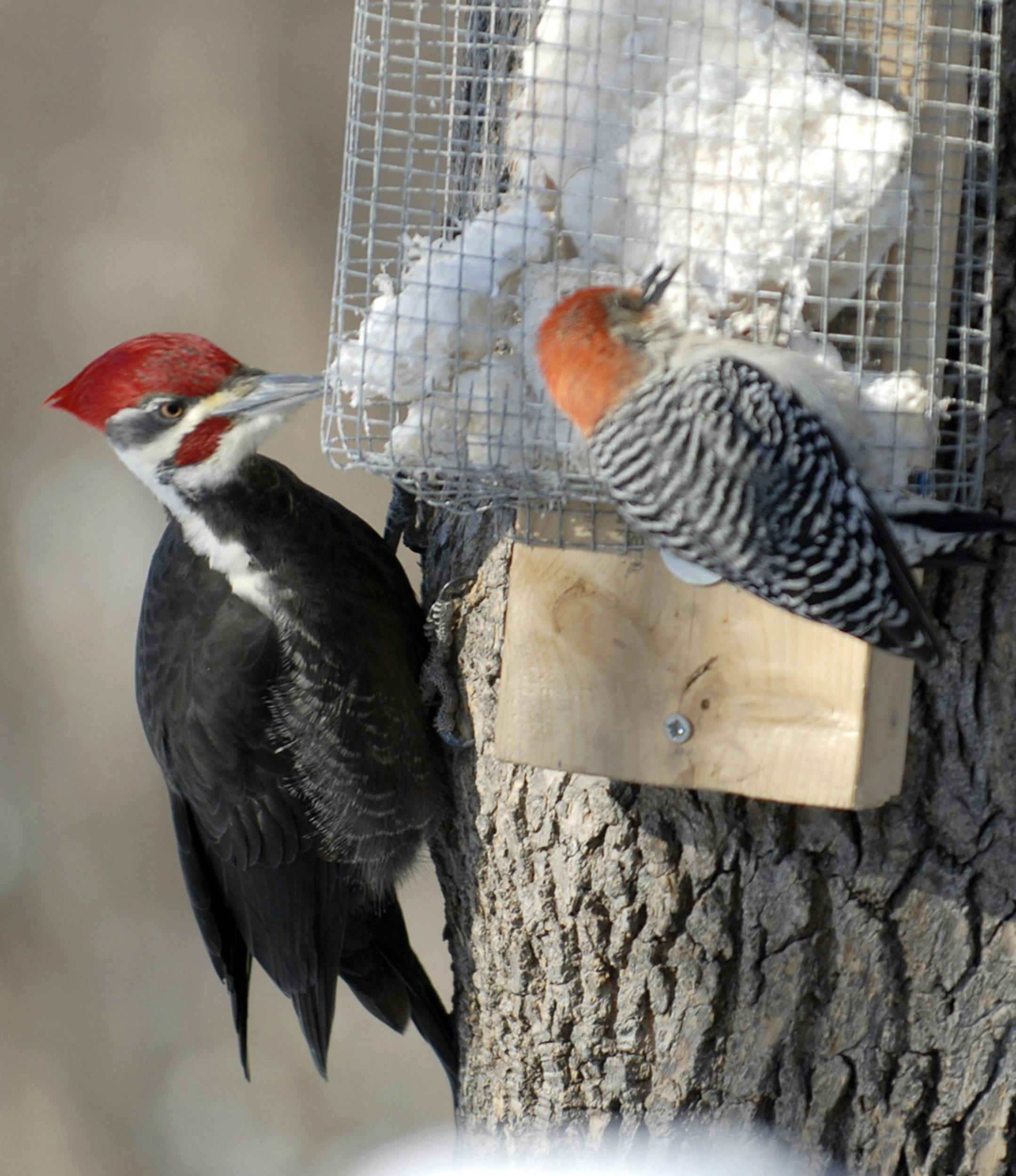
Photo by Jim Williams A red-bellied woodpecker (right), a fairly large bird in its own right, seems dwarfed by its huge relative, a pileated woodpecker, as both dine on suet.
A red-bellied woodpecker (right), a fairly large bird in its own right, seems dwarfed by its huge relative, a pileated woodpecker, as both dine on suet. (The Minnesota Star Tribune)
about the writer

about the writer

VAL CUNNINGHAM

More from Minnesota Star Tribune

See More
card image
J. SCOTT APPLEWHITE, ASSOCIATED PRESS/The Minnesota Star Tribune

The "winners" have all been Turkeys, no matter the honor's name.

In this photo taken Monday, March 6, 2017, in San Francisco, released confidential files by The University of California of a sexual misconduct case, like this one against UC Santa Cruz Latin Studies professor Hector Perla is shown. Perla was accused of raping a student during a wine-tasting outing in June 2015. Some of the files are so heavily redacted that on many pages no words are visible. Perla is one of 113 UC employees found to have violated the system's sexual misconduct policies in rece