

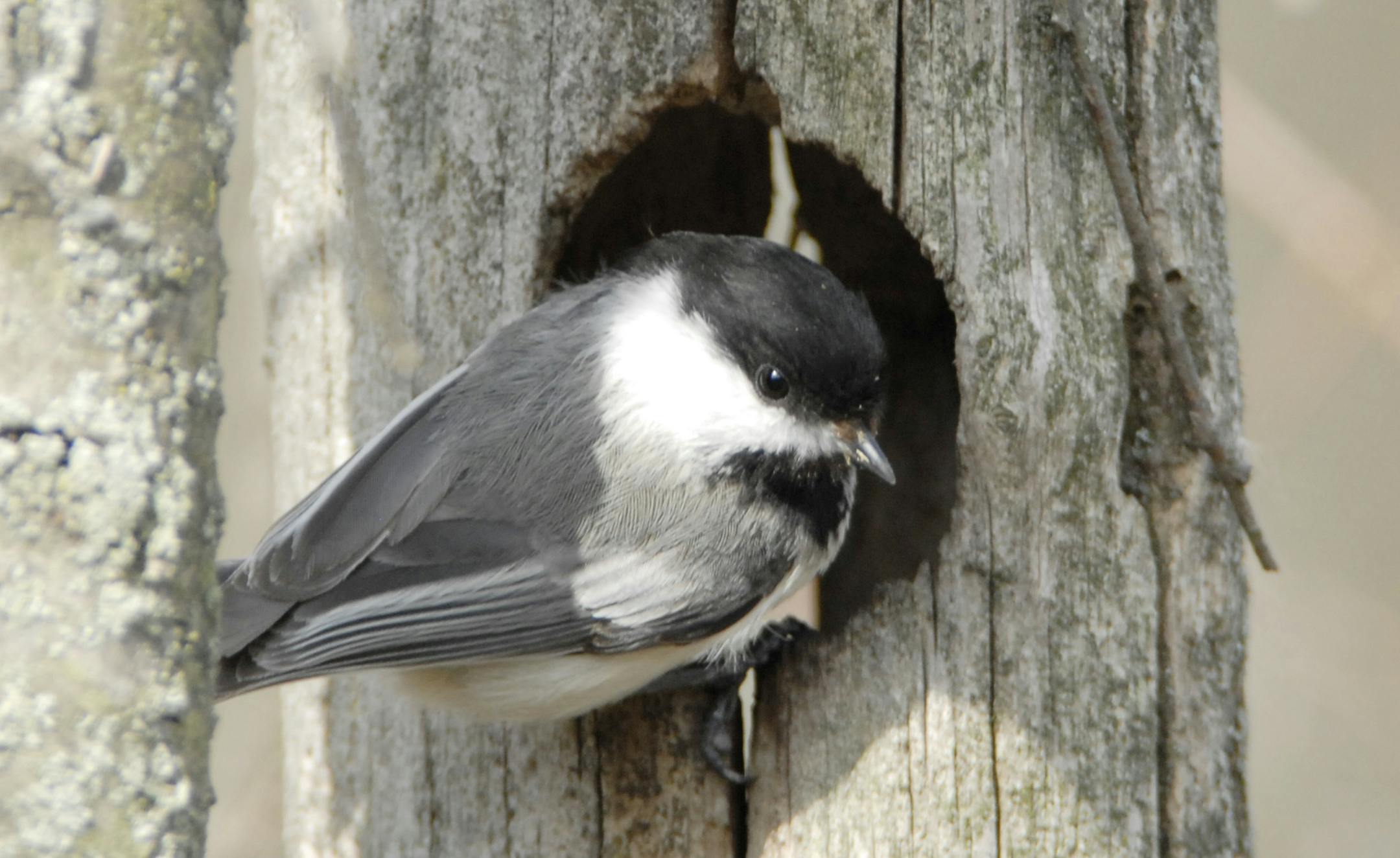
Q: I've read about winter roost boxes for birds and have heard that many kinds of birds will gather in them at night to share body heat. Are they a good idea, and are they available locally or do we have to build one?
A: That's a very timely question, since roost boxes are designed to help cavity-nesting birds make it through winter nights. Many such birds will sleep in a nest box (bird house), but a roost box conserves a bird's heat better by setting the entrance hole low on the front. And dowels inside the box provide perches for several birds, allowing them to share their heat overnight. This might appeal to birds like chickadees, woodpeckers, nuthatches, house sparrows, starlings and screech owls. (We had a roost box attached to a big tree in the back yard for a number of years but I never once saw a bird enter or leave this structure.) Roost boxes are available locally at wild bird supply stores and you can find directions for building them at http://tinyurl.com/cmb78ud (scroll down). Also check out the plans for a chickadee winter roost box in Carrol Henderson's "Woodworking for Wildlife," 3rd edition.
No red birds
Q: We've always had lots of cardinals coming to our various feeders over the years. But starting this fall I noticed I hadn't seen any cardinals for several months. What could have happened to them?
A: It's a shame you're not seeing any cardinals at your feeders. I wonder if the birds you're used to seeing moved away from your back yard during the breeding season, then found other sources of food as the weeks passed. This is how it works in my back yard: The cardinals disappear in the summer and early fall, then start appearing again on or below the feeders sometime in late October. In January and February we sometimes observe 15 or more red birds gathering near the feeders late in the afternoon. I hope by now you're seeing cardinals again, watch for them early in the morning and late in the day.
Dove oasis
Q: We have a heated bird bath and like to watch the mourning doves gather at dusk around the rim. They seem to enjoy the warm steam that comes off the water and then they stick their heads right into the basin. Why do they do that?
A: I think you're right, that the doves come in to warm up a bit around the birdbath before nightfall. I enjoy watching them at my birdbath late on winter afternoons, they seem to enjoy each other's company and a respite from the cold. That head-dunking thing is how they take a drink of water. Doves drink by submerging their heads almost up to the eyes and then using their throat muscles to pump up water. Songbirds drink in an entirely different way, dipping their beaks into water, and then lifting their heads to tilt the water down their throats.
Band data
Q: I'm wondering whether you keep track of banded birds? I watched one all summer and wondered about where the band came from.
A: There's an agency within the federal government that tracks banded birds. If you can read the code on the band, you can ask the Bird Banding Laboratory for information about that bird. It's on the Web at: http://tinyurl.com/ll86lng.


