

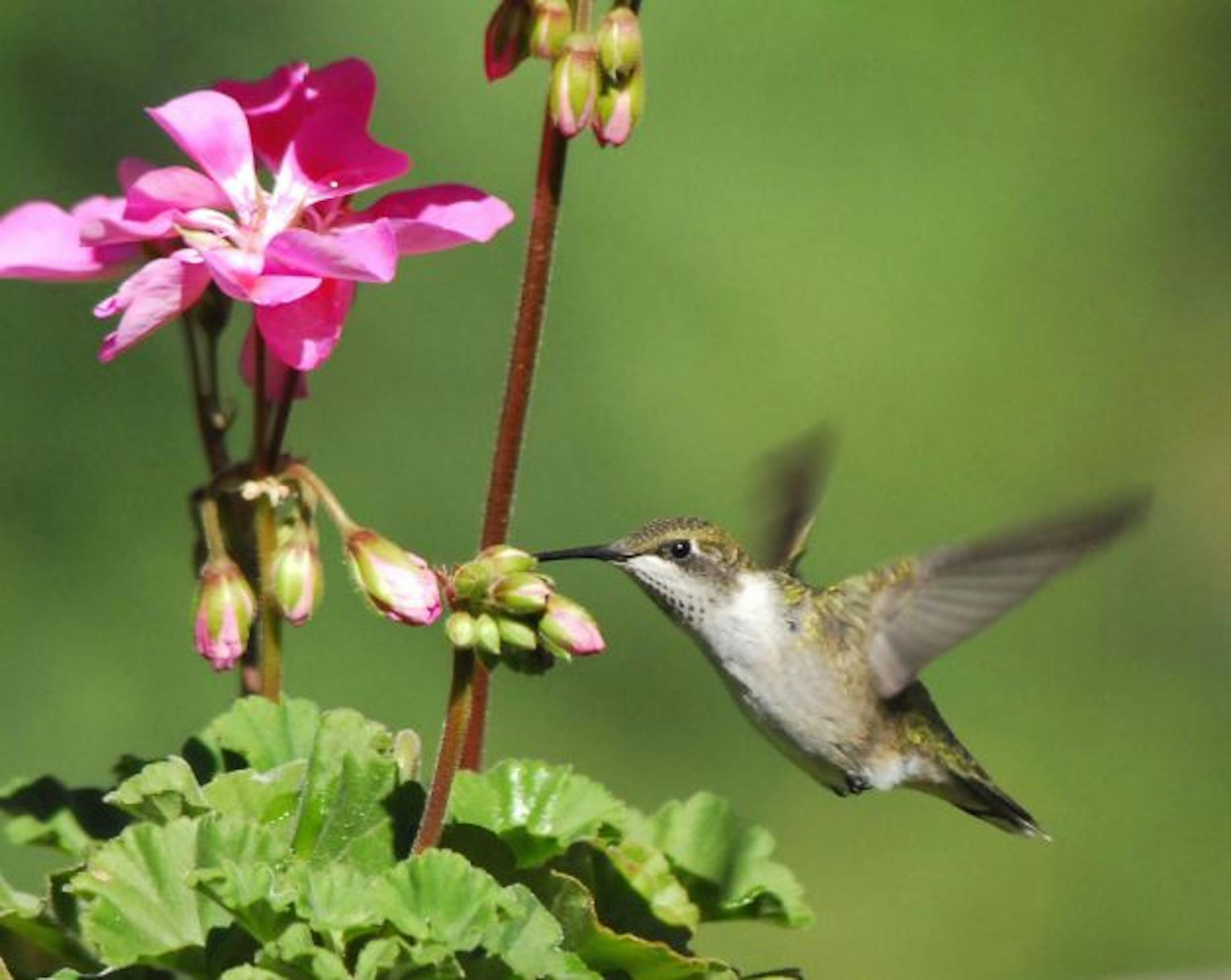
We're coming into late summer, when millions of birds make the grueling marathon of a flight we call migration.
Minnesota's summer birds, including tiny ruby-throated hummingbirds and wrens as well as great blue herons and sandhill cranes, don't leave to escape the coming cold as much as to find food. In fact, many of our summer visitors could skip migration if they could find enough to eat. But winter locks away most food sources, so most of our migrating birds fly hundreds or even thousands of miles south, where insects, fruit and fishable waters are still abundant.
When the shorter days signal that it's time to go, they start on a flight so filled with hazards that only about half the birds return in spring to claim breeding territories. On that flight, they face wind, weather, predators and a lack of places to stop and refuel. Plus, the birds whose autumn migration takes them across the Gulf of Mexico have to contend with hurricane season.
Still tiny hummingbirds, who tip the scales at one-tenth of an ounce, travel up to 2,500 miles to reach their winter habitat. Warblers, some weighing less than half an ounce, might cover more than 4,000 miles to get to the tropics.
Trip prep
Even though birds don't train like human marathoners, they do change their diet. They switch from eating insects to meals heavy on fruits and grains, which convert quickly to energy-rich fat. By fall, many birds weigh half again as much as they did in summer.
Just when birds need high-energy food, shrubs and trees are rife with the berries and fruit that supply sugars and fatty acids. Songbirds such as robins, catbirds, rose-breasted grosbeaks and white-throated sparrows grow plump on grape, dogwood and viburnum berries.
It would be reassuring to think of the young birds that hatched this year flying with their parents down to Mexico, Panama or Brazil. But, unlike with cranes, ducks, Canada geese and flocking birds such as purple martins and swallows, that's not what happens. Young songbirds must make their own way, using a map imprinted in their brains. Next spring, some of them will return along the same route, with their map augmented with visual cues, such as rivers and mountain ranges.


