

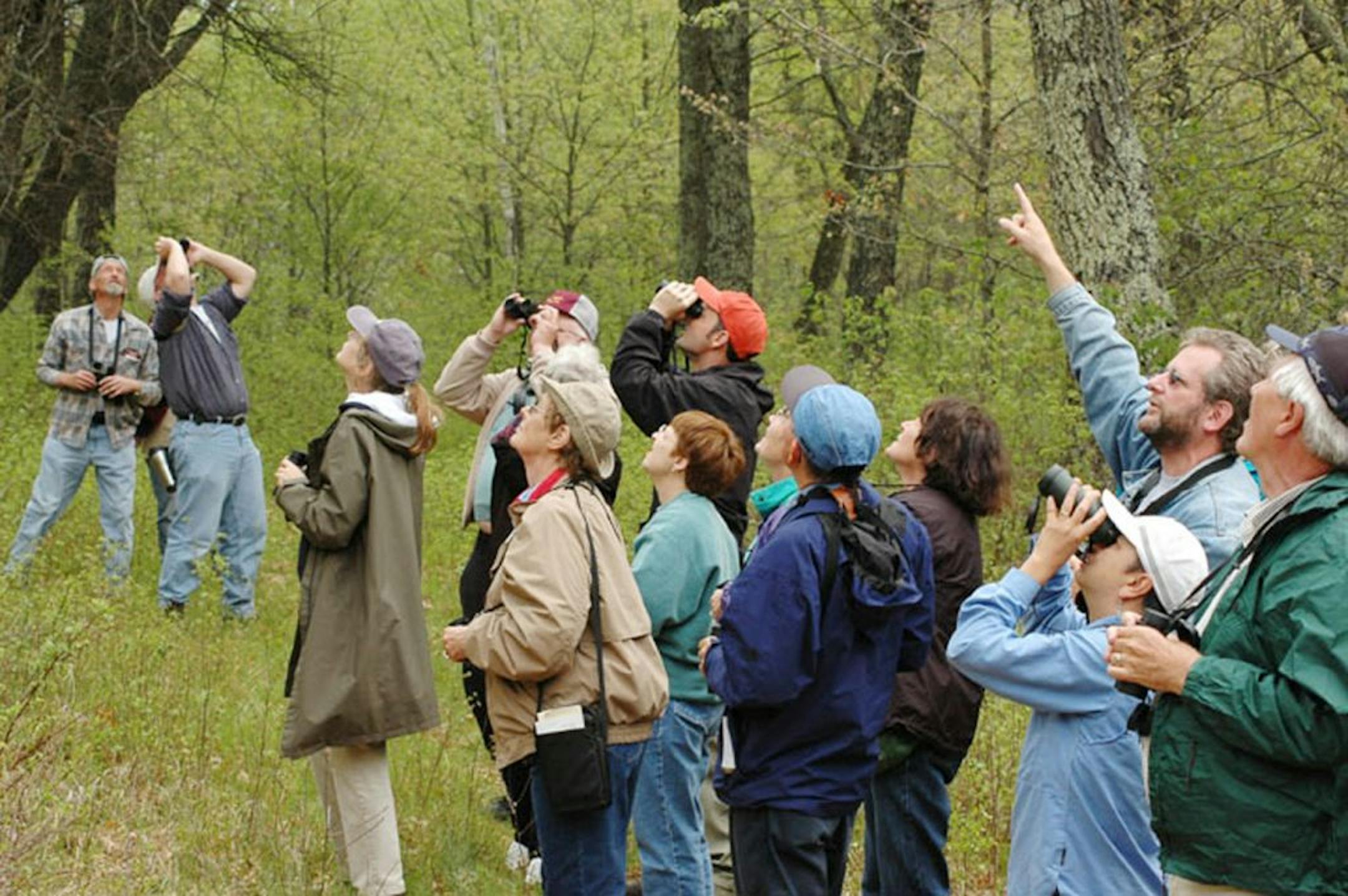
Worried that the future of the nation's wild places may rest with an increasingly diverse population that has little experience in the outdoors, the U.S. Fish and Wildlife Service is looking to an unusual savior: birding.
On Saturday, black, Hispanic and female birders, nature photographers, teachers and professors will gather at the Minnesota Valley National Wildlife Refuge in Bloomington to share ideas and brainstorm about how to bring more minorities into birding.
Counter to its little-old-lady-with-binoculars image, birding is an ideal way to lure young people into the natural world, said U.S. Fish and Wildlife's Paula Ogden-Muse.
"This is about saving the kids, but also about how to save the planet," said Ogden-Muse, visitor services manager for the Upper Mississippi River National Wildlife and Fish Refuge near La Crosse, Wis. "We need to get the people we don't see into the refuge, and stop talking to the choir."
Ogden-Muse said her own interest in birds was sparked by a mentor who kept bringing up his bird sightings in conversation.
"He would say, 'Did you see the hawks migrating?' I would say, 'No,' and then think, why am I not paying attention to what's going on around me?" she said.
Charlie Blair, manager of the Bloomington refuge, said it's not hyperbole to say the future of wild places is tied to broad participation in activities like birding.
"In [U.S. Fish and Wildlife], we tend to be very white and until recently, very male," he said. "We need to broaden who's involved if we want future support for these wildlife refuges."


