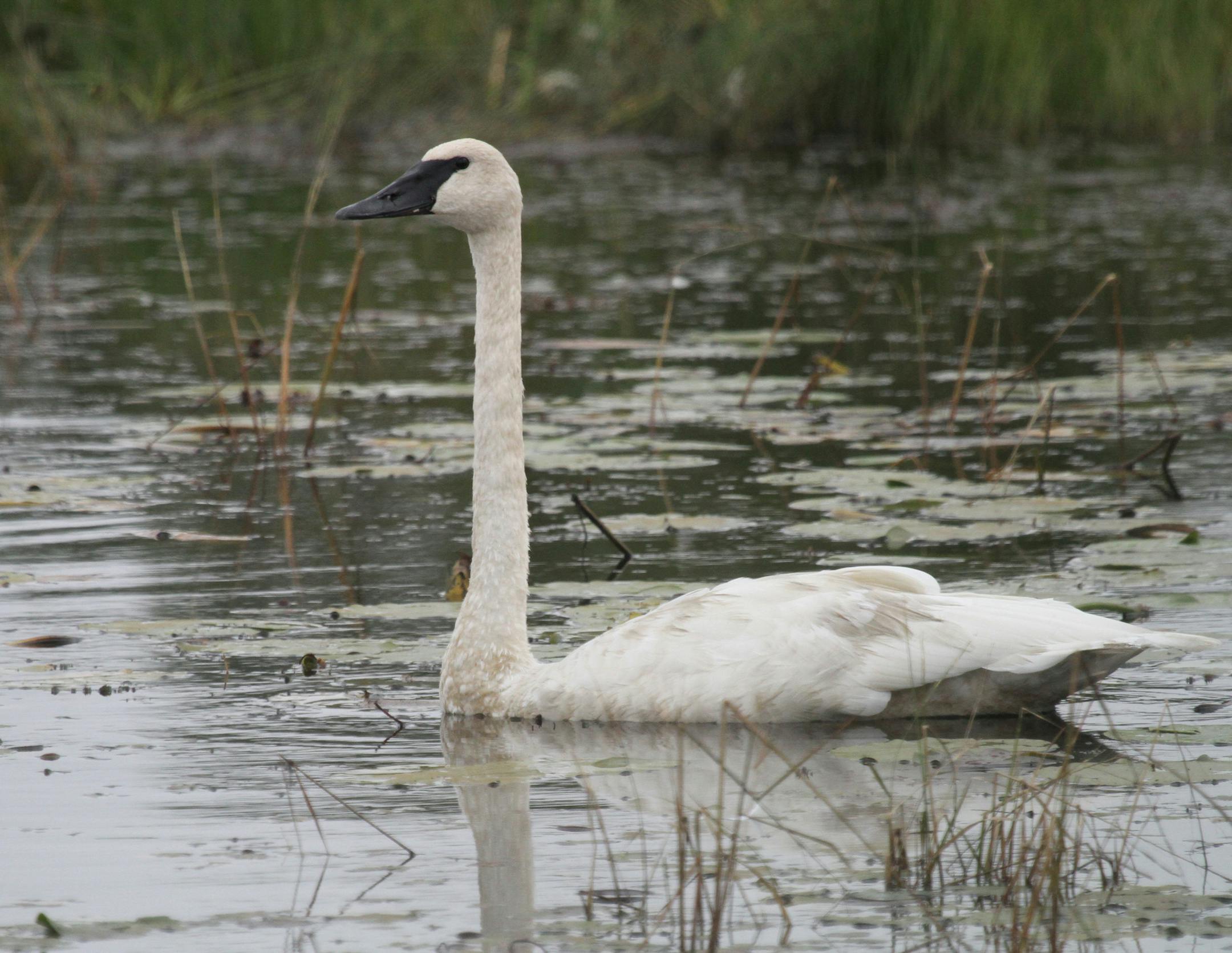
Q: There's been a white swan on our small pond for several weeks. It doesn't appear to be injured, but we are concerned that there might be something wrong with it. Is this unusual behavior for a swan?
A: I asked Madeleine Linck, a knowledgeable naturalist at Three Rivers Park District and local liaison for the Trumpeter Swan Society, for her take on the lonely swan. She says that your midsummer sighting makes it likely that it's a trumpeter swan. The bird might have been molting new feathers and temporarily unable to fly or might be a young bird seeking out a new, temporary home. If the swan holds its wings up close to its body, then they're probably not injured, and if it doesn't seem weak and lethargic (symptoms of lead poisoning) it's probably healthy and should eventually fly off. Linck also noted that Minnesota now has about 6,000 trumpeter swans, an amazing success story for a bird once driven out of the state.
High-rise hazard
Q: You recently advised a reader how to get more birds to visit his 20th-floor balcony. I'd like to point out that birds poop whenever they feel like it — just look at your car. So what happens to the guy who lives on the 19th floor?
A: You make a good point and I neglected to consider this aspect of feeding birds in my response to the reader on the 20th floor. But in my experience, most birds — with the exception of goldfinches, starlings and mourning doves — don't poop right where they eat. If you can keep the latter two species, especially, away from feeders, you shouldn't have much of a mess.
Bird or bug?
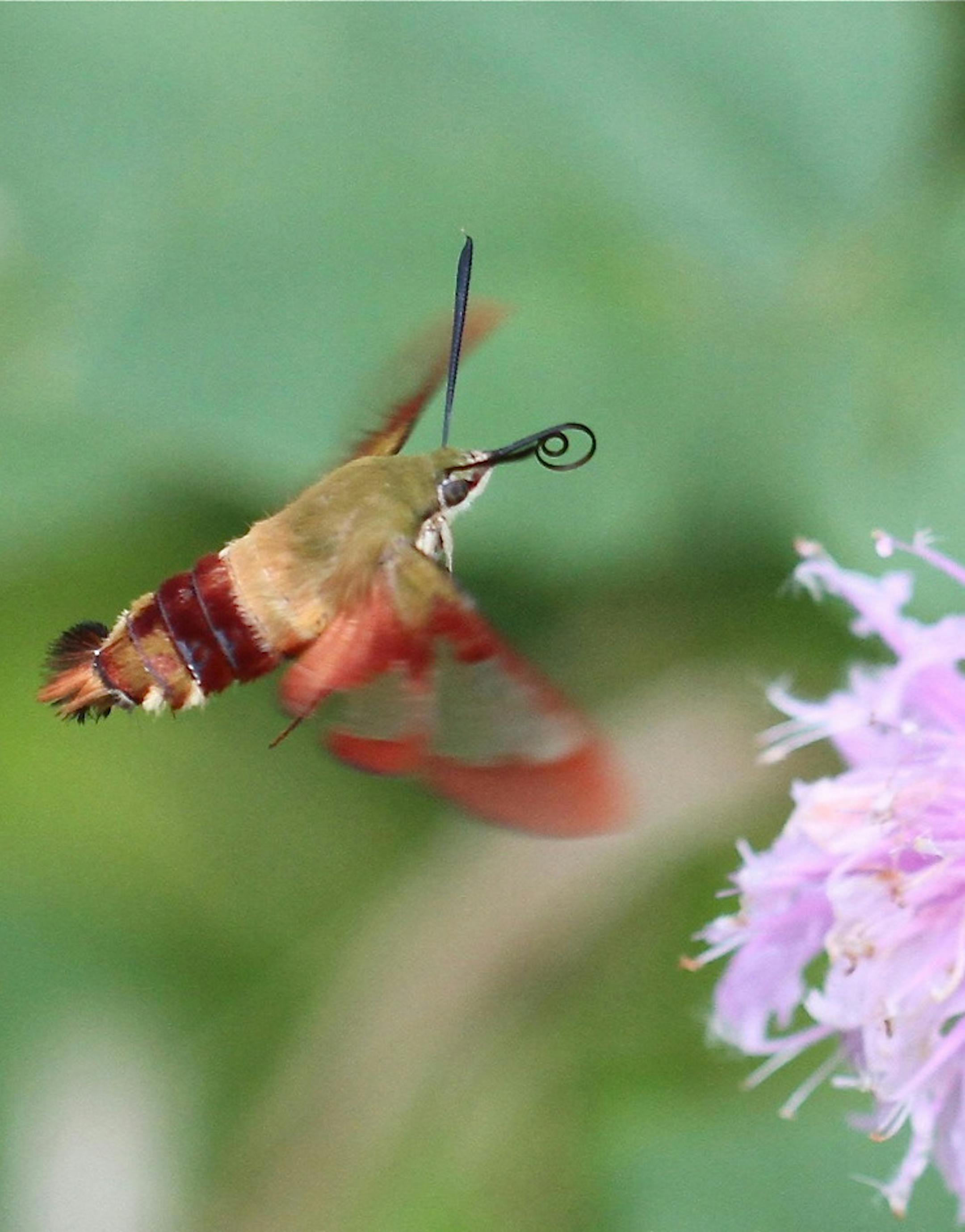
Q: I was very excited to see an unusual bird among the petunias. My daughter looked it up on her smartphone and says it was a hummingbird moth. Is it a bug or bird?
A: Even though it acted very much like a hummingbird, your visitor definitely was an insect, a hummingbird clearwing moth. Many of us mistake these beautiful moths for hummingbirds, since their behaviors are so similar: The moths hover at flowers to draw up nectar through their long, thin proboscis, which resembles a long tongue. They're named for their transparent wings, which create a humming sound as the insect flies. Look for these moths among the bee balm, phlox and honeysuckle during the summer.
Telling loons apart
Q: Can loons be identified by their vertical neck patterns, and could researchers tell them apart this way, without having to band them?
A: This is a very interesting question, and I turned to Carrol Henderson, who heads up the DNR's Nongame Wildlife Program, for the answer. "Yes, the necklace markings on loons often have distinctive aspects that would allow a person to tell them apart, but I don't know that it's been used as a research tool," he said. Henderson says that it's not known whether the necklace stays the same through yearly molts as the bird ages. For the answer to your question, a researcher would need to study the necklace markings on leg-banded loons over some years.