

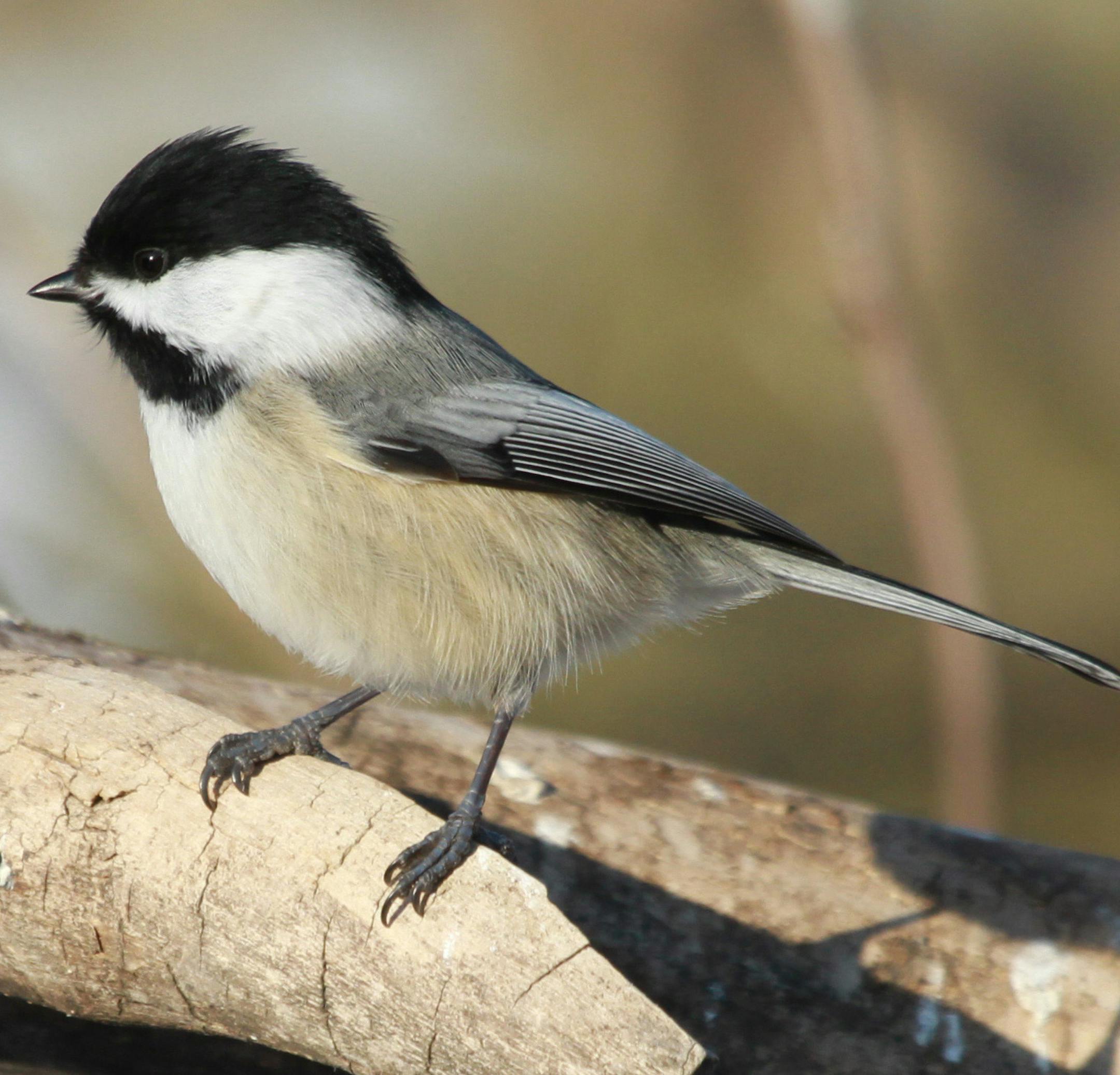
Do we really need highly trained meteorologists to tell us when a storm is coming? Not if we watch the birds at our feeders, and notice when they pick up the pace, snatching seeds in a near frenzy. Birds like black-capped chickadees may not have access to satellites and computer models, but they have something even better — their inner ears hold an extremely sensitive receptor that senses even tiny changes in barometric pressure.
When air pressure starts falling, chickadees begin feasting, just in case dense snow or ice covers all their usual food sources in the days ahead. Once a storm has passed, however, even on the most inclement days, chickadees will be out and about, looking for food in the form of dormant spiders and insects hidden away in trees and shrubs. Evergreen cone seeds are another important winter food, as are dried berries, and bird feeders can be a significant source of calories, at times.
Provident birds
Chickadees prudently gather food throughout the fall, stuffing seeds and insects behind bark, under leaves, inside knotholes, in clusters of pine needles and even in snow.
These little birds are hardy and resilient, but winter is tough on them (as it is for all wild birds). Days are shorter, meaning less time to search for food (pity the chickadees of Anchorage, Alaska, where a late December day lasts less than 5 ½ hours), and nights are very cold, meaning more calories are required to keep their metabolic furnaces stoked.
Their high energy lifestyle burns a lot of calories, so they forage up to 20 times longer each day than they do in spring's warmth. These sprites are active when it's 10 below (or even colder), while they maintain an internal temperature of 104 degrees. A chickadee is essentially a small, glowing red coal of activity in the barren winter landscape.
What keeps all that heat inside the bird? It's feathers, the greatest natural insulating material, holding heat in and cold out very effectively. Chickadees are so well insulated that heat loss occurs mainly around their (uncovered) beak and eyes.
All-night shivers
Just before dark a chickadee heads for its night roost, often a tree cavity or a dense tangle of vegetation, tucking its head into shoulder feathers to reduce heat loss from eyes and beak. As the temperature drops, chickadees begin shivering to generate heat and will continue throughout the night.
They have an additional — and amazing — nighttime survival strategy: On those days when a 'dee hasn't found enough food to maintain its body temperature during the long night ahead, it will drop its internal temperature by as much as 12 degrees. This process, called regulated hypothermia, stretches fat reserves to last until morning. By the time the sun comes up, a 'dee may have lost more than 10 percent of its body weight.


