

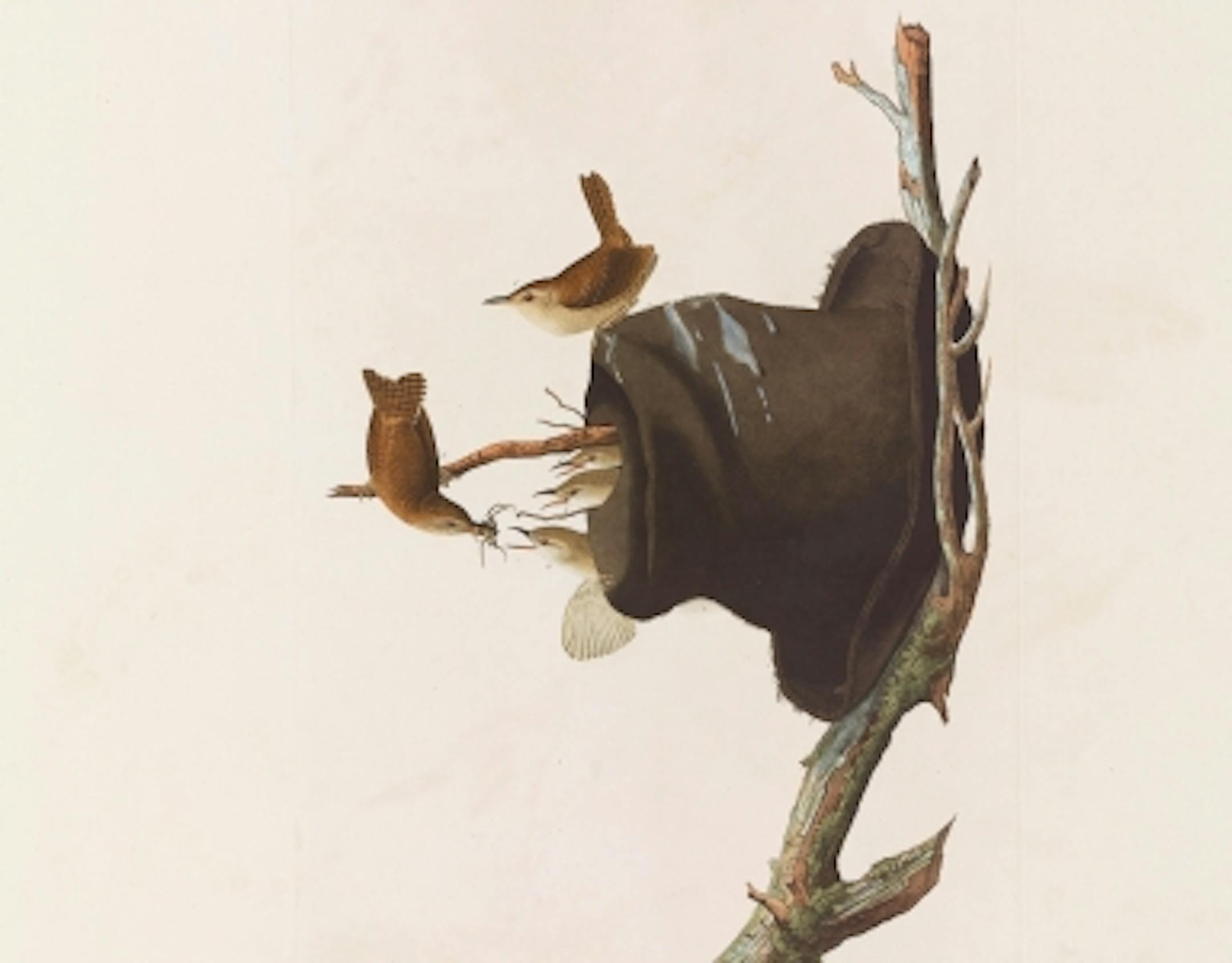
Most of us have heard his name and know he painted birds. But what's less well-known about John James Audubon is that he accomplished something extraordinary in his time — bringing birds to life on canvas and paper, sparking an interest in birds and their conservation that reverberates to this day.
Audubon set out more than 200 years ago to paint all the birds in America, an immense challenge in a country largely unexplored by Europeans, with not much known about the animals and plants in the vast, new land. Audubon lived the life of an outdoorsman while he observed and then drew the birds he encountered, most of which he'd never seen before.
Years in the making, the result was a stunning, four-volume book containing 435 hand-colored engravings of birds, about half the species in North America. And unlike the work of other artists and naturalists up to that time, Audubon's birds seemed alive, almost ready to fly off the page.
Some 35 of Audubon's works and those by about 70 by other artists, from before and after his time, are currently on display at the Bell Museum of Natural History on the Minneapolis campus of the University of Minnesota, in a show titled "Audubon and the Art of Birds." This beautifully organized exhibit shows how bird art evolved from the 1500s to the present day and illustrates Audubon's unique genius.
Drama and action
"Audubon watched birds and their behaviors closely in order to make them come to life in his paintings and drawings," says Don Luce, curator at the Bell Museum, who put the show together. "His works are dramatic, full of action and emotion, and this was completely unprecedented.
"His work struck a chord with the public and changed people's attitudes about birds: They could see that birds led interesting lives, they did interesting things and they had value," Luce added.
There's nothing subtle or static about an Audubon painting, filled with details that tell a species' story. The Bell show features Audubon's shrikes squabbling over the mouse held by one bird; in another, electric with energy, an Arctic tern plunges dramatically from the air into the sea. In one of Audubon's more famous works, a brilliant red flamingo sieves along a shoreline for food. All birds are depicted life-size (he bent the flamingo into an awkward posture to fit on the page), and so true-to-life that his paintings are as much science as art.
Many early naturalist/artists had never seen the birds they painted, instead often using taxidermied specimens as their guide. And it looked like it: Their works were two-dimensional, formulaic and lifeless. The show clearly makes the case for how dramatically different Audubon's works were in his own time, and the impact he had on future artists.


