Humans have tried for centuries to achieve self-powered flight. Given the requirements of aerodynamics, which birds met long ago, we don't have a chance.
Flight by a 150-pound human would demand huge flight muscles. Attaching those to the body would require a breastbone extending 6 feet in front of the would-be flier's body.
Bird breastbones are prominent, but less so. You see the breastbone when you carve a chicken or turkey; it looks like a keel. The breast meat is flight muscle. Don't be misled by meat-counter chickens, however. They've been genetically manipulated to achieve what might be considered, in human terms, the world's most disproportionate boob job.
Birds long ago found a way to counter gravity's downward pull. Their wings cut the air into two streams, one above the wing, one below. Bird wings are airfoils, curved and the bottom side concave. As the bird moves through the air, the top of the wing, the convex side, pushes air up. There is resistance. In a very simplified explanation, resistance forces the air above the wing to flow faster, increasing its pressure. A law of physics requires air to seek pressure balance, so air below the wing flows upward. This upward movement creates lift. Viola! Birds 1, gravity 0.
Staying up is one thing. Moving forward while doing so is another. Wings also produce thrust — forward motion — by moving not just up and down but also twisting slightly as they flap. The wing twists forward on the downstroke and backward on the upstroke. (The bird moves forward only.)
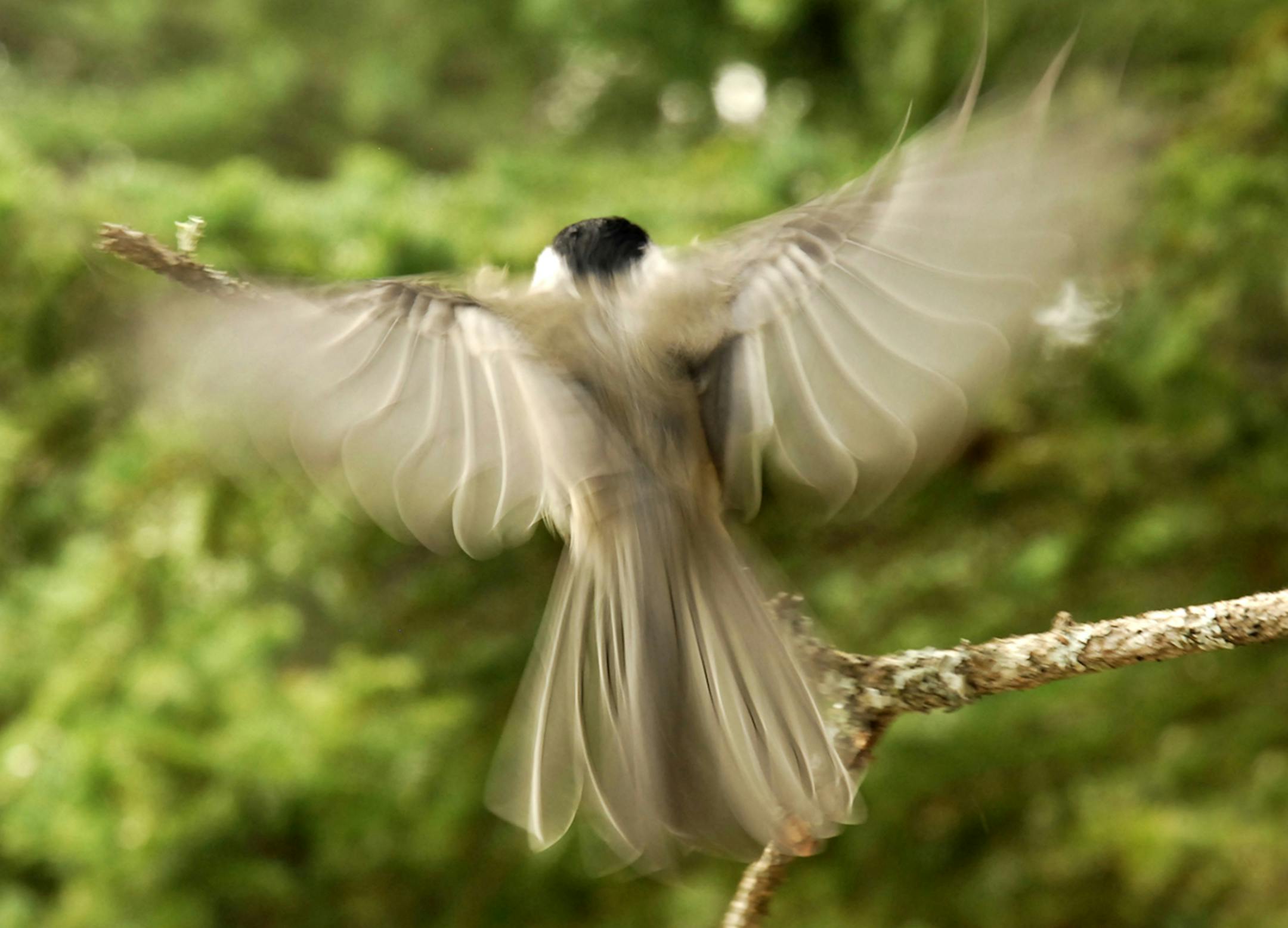
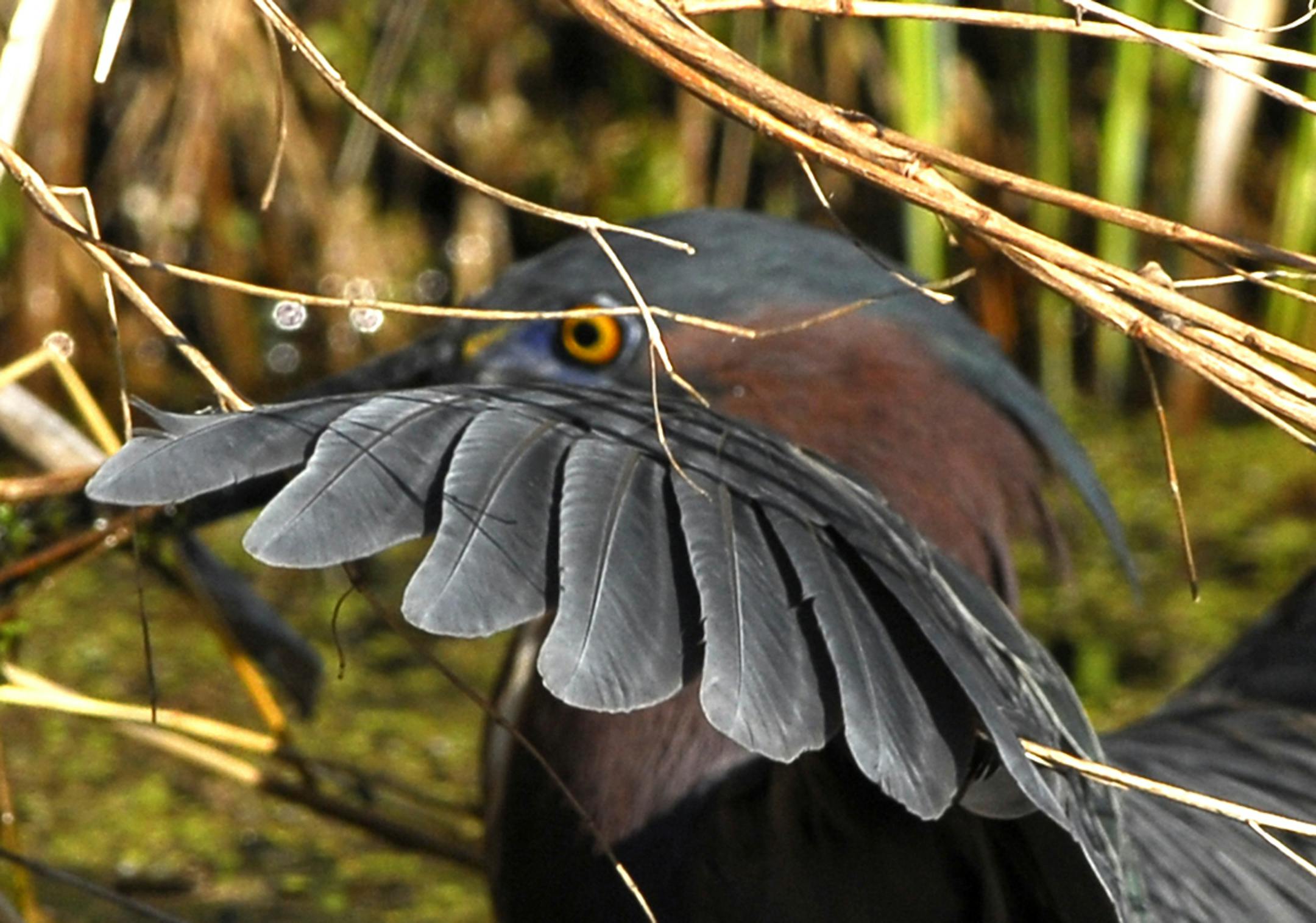
Wing feathers twist during flight. They close tightly against one another during the downstroke, to increase lift. On the upstroke, feathers twist open, like venetian blinds, to allow air to flow through them. Recovery for the next downstroke then requires less energy. Wings also can be manipulated to vary lift, to change direction of flight, to allow hovering, diving, climbing, and to slow forward motion as the bird lands.
Bird flight might look simple. It's not.
Flight patterns vary from species to species. Many birds can be identified by family if not by species by watching the way they move through the air.