

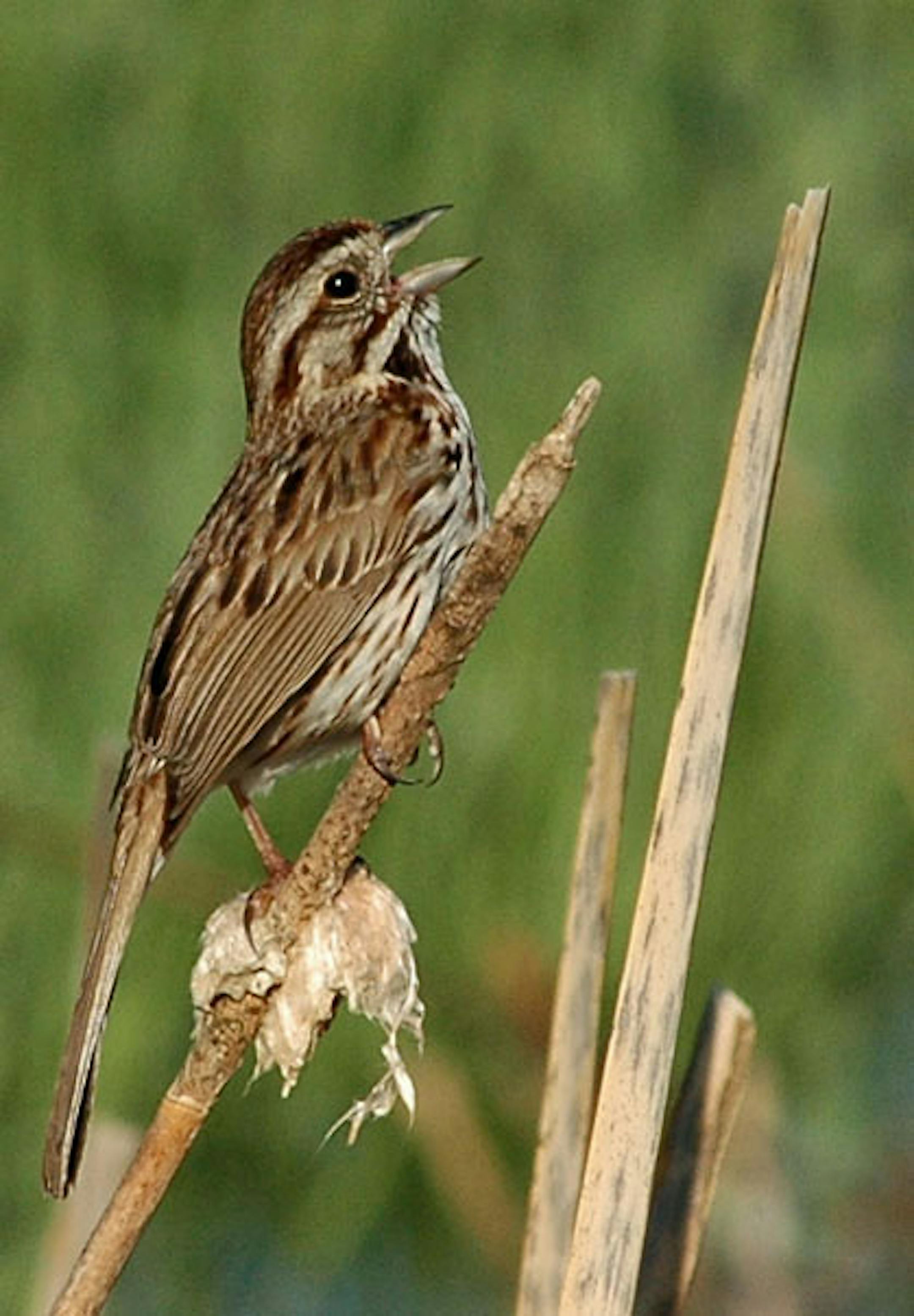
The silence of winter is being supplanted by the exuberant springtime sounds of birds. Soon the full, noisy symphony called the dawn chorus will begin: Birds will wake up singing with the sunrise and their combined songs will build to a crescendo for several hours as the day advances. By mid-May, when most migrant birds have returned, this joyous chorus can jolt even the soundest sleepers awake.
As beautiful as birds can sound to our ears, they don't sing to sweeten our springs. They're communicating with each other, signaling the male's desire to leave his mark on the gene pool.
Robins, orioles, sparrows and cardinals are creating audio billboards designed to draw in a mate and ward off other males. Females listen closely, using a male's songs to gauge his fitness as a potential mate and ability to hold onto a breeding territory. (In a few species, such as cardinals and rose-breasted grosbeaks, females also sing.)
Song is an essential feature for birds, and its relative loudness is fairly unique in the animal kingdom, where most creatures prefer to remain as inconspicuous as possible. For birds, the danger presented by coming to a predator's attention is offset by a strong singer's success in breeding.
Practice makes perfect
We used to think that all birds hatched with their songs already stored in their brains.
Some species (such as phoebes, loons, ducks, owls and woodpeckers) do hatch knowing their species' songs. And there are a few accomplished mimic birds, such as the European starling and mockingbird, that pick up new sounds throughout their lives, but they're the exception.
But most songbirds -- about half of the birds we see -- must learn their songs in their first year, while their brains are flexible. Here's how:


