

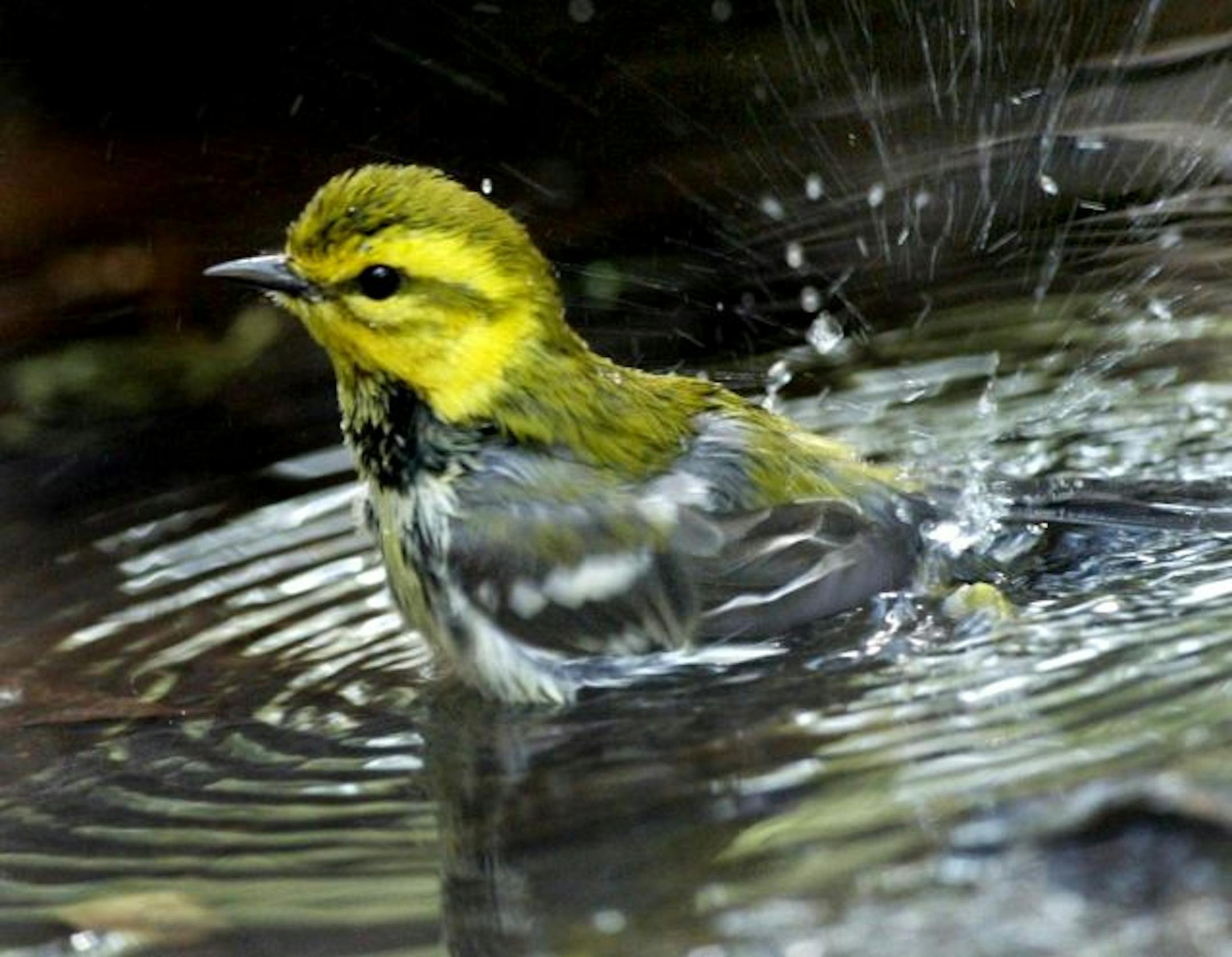
Q I want to put a heater in the birdbath so birds can have a drink this winter, but I'm worried they'll take baths then freeze to death.
A A heated birdbath is a great idea, since birds do need a place to drink when all other open water is frozen solid. And you're right to be concerned about birds bathing: If the temperature sinks below zero, it's a good idea to put boards or other materials across the birdbath so birds can drink but not bathe. Another idea was suggested on a bird listserv recently -- cut a circle of bubble wrap to fit over the water, leaving about an inch all around for drinking.
When should 'snowbirds' stop feeding? Q Since we're going to be away from home from January through April I'm wondering whether I should stop feeding birds now, to get them ready.
A Go ahead and continue filling the bird feeders through December, to help your birds remain in good condition to face the coming winter. Then, before you leave, take down the feeders, clean them and store them for the season. Or try asking your neighbors to hang the feeders in their yard and keep them filled.
Migratory cruising altitude Q How high do birds fly when they're migrating?
A Most songbirds lift into the night sky and fly at an altitude of between 2,000 and 4,000 feet. The air at this level is fairly still and cold, providing cooling as birds' muscles heat up in flight, without exposing them to the extreme cold higher up.
Most blue jays stick around Q I didn't think blue jays were migratory because I see them all winter, but lately I've been seeing big flocks of them. Does this mean we're in for a cold winter?
A Rest assured that blue jays are not good predictors of winter weather. What you're seeing is typical for these jays: About 20 percent of the population migrates in the fall. Some of our summer jays move several hundred miles south, and are replaced by birds from farther north. Most blue jays are year-round residents.


