If she intends to write fiction, Virginia Woolf proclaimed in 1929, "a woman must have money and a room of her own."
Woolf had both. And she made the most of them. One of the great modernists of the 20th century, she produced more than a dozen books, including "Mrs. Dalloway" and "To the Lighthouse."
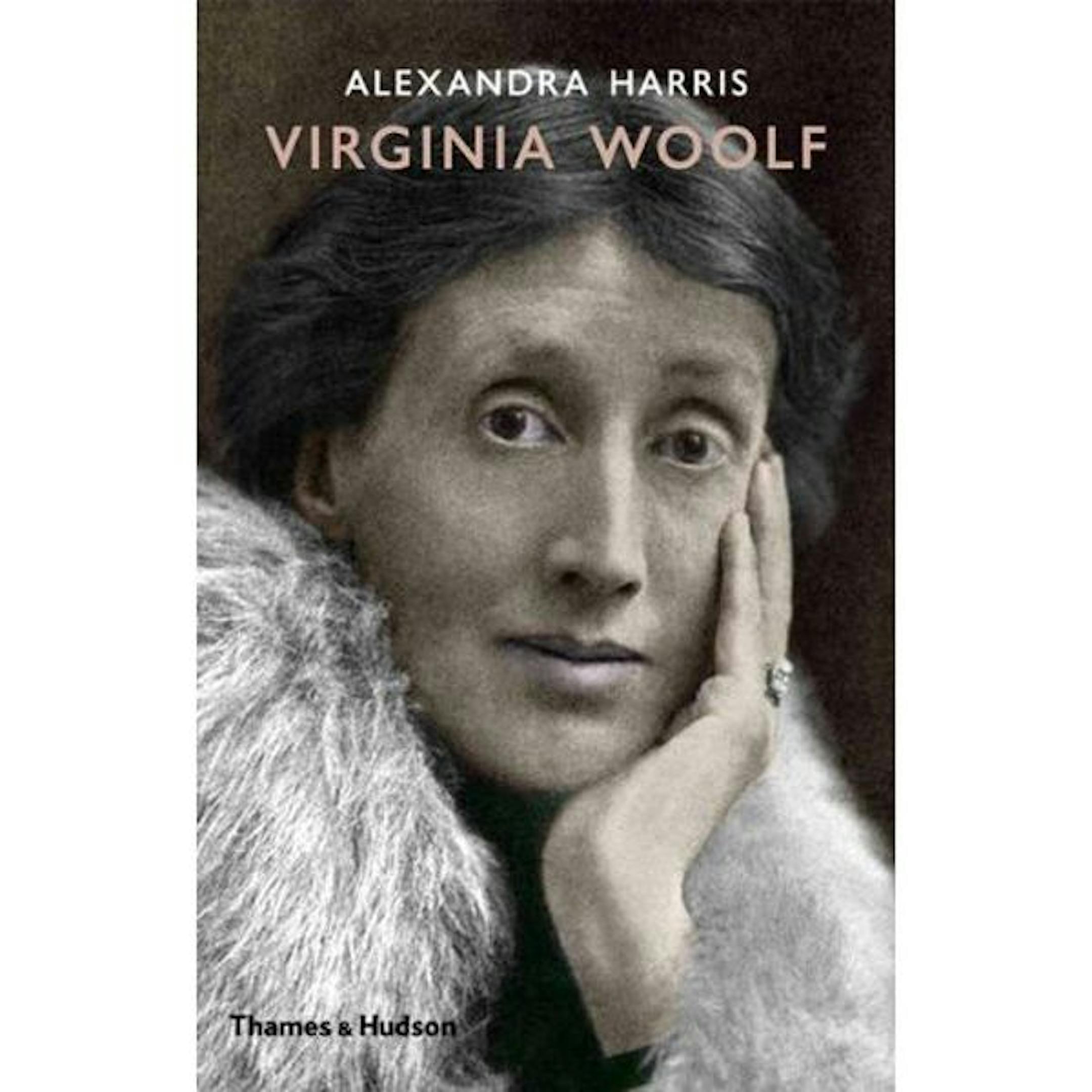
In "Virginia Woolf," Alexandra Harris, the author of "Romantic Moderns," provides an elegant biography, which accompanies her subject from a Victorian childhood, to relationships (intellectual, emotional and sexual) with the legendary Bloomsbury set, to her last days during World War II. Informative and incisive about the novels as well as the life, Harris wants to assure readers that they need not be afraid of Virginia Woolf. Try as she might, however, Harris does not, and perhaps cannot, satisfy both of her intended audiences: readers new to Woolf and those familiar with her work.
Harris endorses the view that Woolf is best understood not as a delicate aesthete, but as an ambitious and engaged woman, confronting life's transience by "feeling for the significance of unremarkable things" and "getting on with the main performance." Woolf, Harris suggests, never stopped asking "how much is set from the start and how far we are free to invent ourselves."
Harris packs a lot into 191 pages. She doesn't often enough settle into a room of her own in which she can elaborate -- or set the context. Painter and art critic Roger Fry, Harris claims, had a "deep, sustained, influence" on Woolf, but she doesn't tell us what it was. Woolf enjoyed "the glow & the flattery & the festival" of Vita Sackville-West for years, but we learn little about this force of nature who became the model for the gender-bending Orlando.
The uninitiated may be puzzled as well by Harris' subtle, and at times abstract analysis of Woolf's work. What does Harris mean, for example, that the question "Why is there not a discovery in life" reverberates through "To the Lighthouse"? Or that the characters in "The Waves" "are at some level 'all one'"?
Not surprisingly, Woolf insisted that her novels speak for themselves. And yet, I suspect, she might not have objected if her readers got some help. In "Virginia Woolf," Alexandra Harris has used a telescope, with skill and sophistication, to identify patterns and themes in Woolf's life and thought. She acknowledges, however, that the microscope also "has its role." We need one, in my view, if we hope to take the full measure of this brilliant, lyrical, romantic modernist, who wanted to be the hare, "a long way ahead of the hounds of my critics."
- Glenn C. Altschuler is the Thomas and Dorothy Litwin Professor of American Studies at Cornell University.