

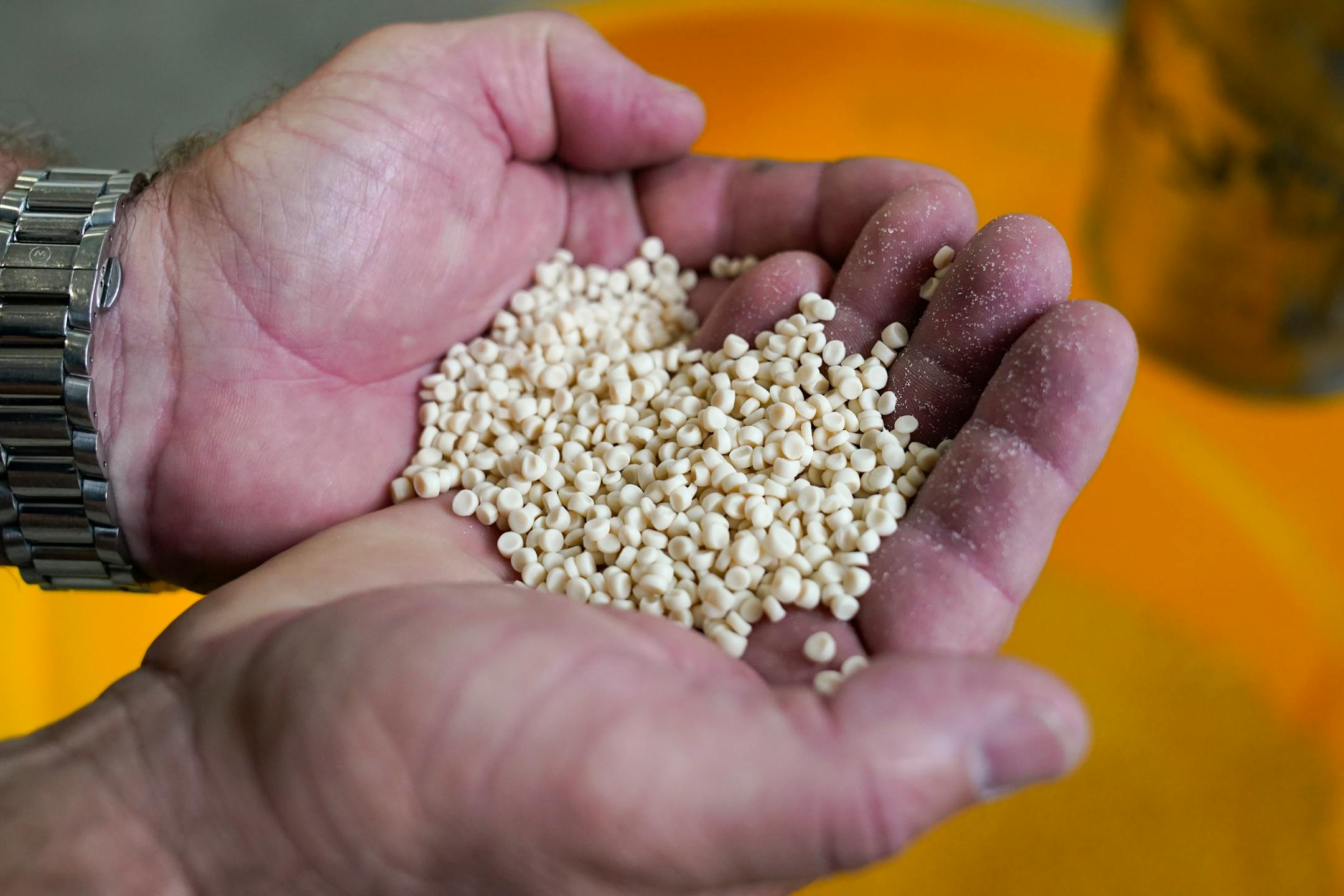
In a world increasingly troubled by the persistent harm that plastic — manufactured in petrochemical plants — has had on the environment, companies including Cargill are investing billions of dollars to ramp up production of plastics made from natural, renewable materials.
The result is products that can be safely composted or can biodegrade under the right conditions. These products have long been used in medical applications. Think stitches that dissolve harmlessly into your body.
But the nascent bioplastics industry envisions a far bigger role for materials made from corn, sugar, vegetable oils and other renewable materials in the hope of grabbing a larger share of a nearly $600 billion global plastic market.
Since large-scale production began in the 1950s, fossil fuel plastics have made food safer to consume and vehicles safer to drive, for example. Yet plastics are seen as one of the world's leading environmental threats with its production responsible for emitting millions of tons of greenhouse gases each year.
Of the 9 billion tons of fossil fuel plastic produced since the 1950s, only 9% has been recycled, studies have shown. The rest has been buried in landfills, burned or has polluted land and waterways. The chemical structure of fossil fuel plastic means it can never fully disintegrate and instead breaks down into smaller and smaller particles.
For now, bioplastic represents just 1% of global plastic production. If plastic made with fossil fuels is the enormous Mall of America in Bloomington, bioplastics would be a 7-Eleven.
Companies and investors see opportunities. Data from i3 Connect show investment in bioplastic manufacturing reached $500 million in the first three months of 2022, exceeding the previous high of $350 million in the last quarter of 2021. The money is coming in from both corporations and venture capitalists.
Zion Market Research estimates the bioplastics market will surge from $10.5 billion in 2021 to some $29 billion in 2028.


