My legs trembled and I wasn't sure if it was from exhaustion or fear. The loud roar was disorienting. Just inside a freeway tunnel high in the mountains of western Norway, I awkwardly climbed off my bicycle and held it as a shield between me and passing cars. They slowed to a crawl and nosed by me; it was like swimming with whales. My husband's taillight blinked in the distance, a red dot moving uphill in blackness.
It was day two of retracing my grandparents' World War II bike ride across Norway. In the summer of 1940, just a few months into the German occupation, Asta and Kristoffer Ladstein caught a ferry boat from Finnøy, their small island near Stavanger, and pedaled 200 miles into eastern Norway on their single-speed bicycles. Their 2-year-old daughter rode in the handlebar basket. We would do the trip in six days, 18 speeds, plenty of lycra and no toddlers.
When my grandmother told me about her ride, I was impressed with her athleticism. To her American grandchildren, life under German occupation was as mysterious as the flashlight my grandfather kept in the shed. It ground out a weak ribbon of light when we pumped a little lever with our thumbs. "This is what we had during the war," he said.
When I asked my grandmother why they made the bike trip she shrugged and said, "There wasn't anything else to do."
More than a decade after their deaths, I wanted to understand people like this. People who biked up mountains when life got tough.
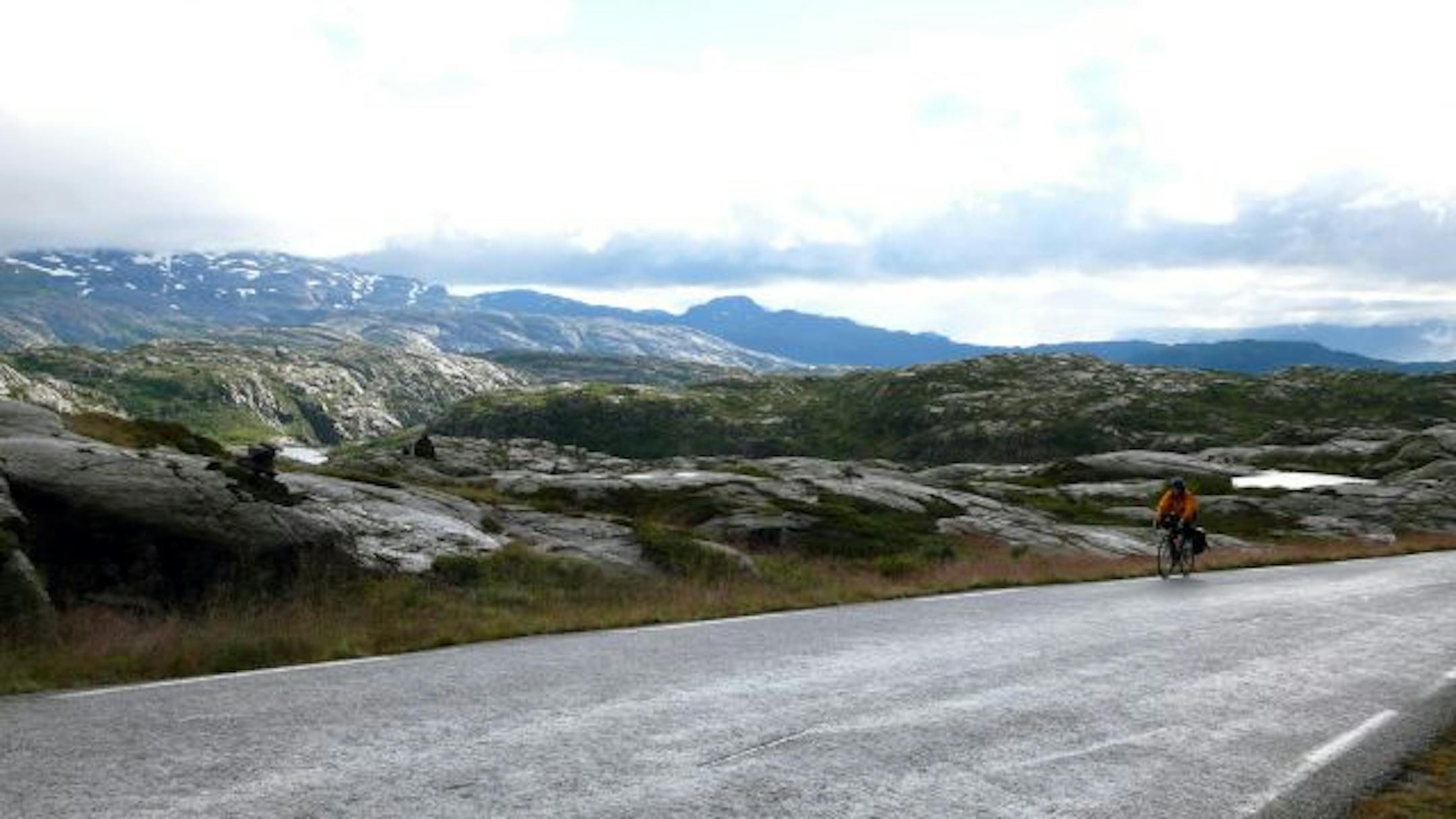
My trip had gotten off to a rough start the moment my husband, Leif, and I got off the ferry in Sauda and began pedaling in the rain. The road was slick with sheep pellets from herds enjoying their end-of-summer alpine grazing. The rain grew colder as we climbed out of verdant river valleys. Snow encroached on grazing sheep when we reached the stony, wind-swept high plateau.
I inched my bike along a stone shelf cut over waterfalls. Leif carefully asked if we needed to turn back. I couldn't. For a year I had been e-mailing my Norwegian relatives about this dream of mine. At first, there was silence. "They're a little worried about your trip," my mother explained.
Biking the Paul Bunyan Trail in Pequot Lakes hadn't exactly prepared me for this.