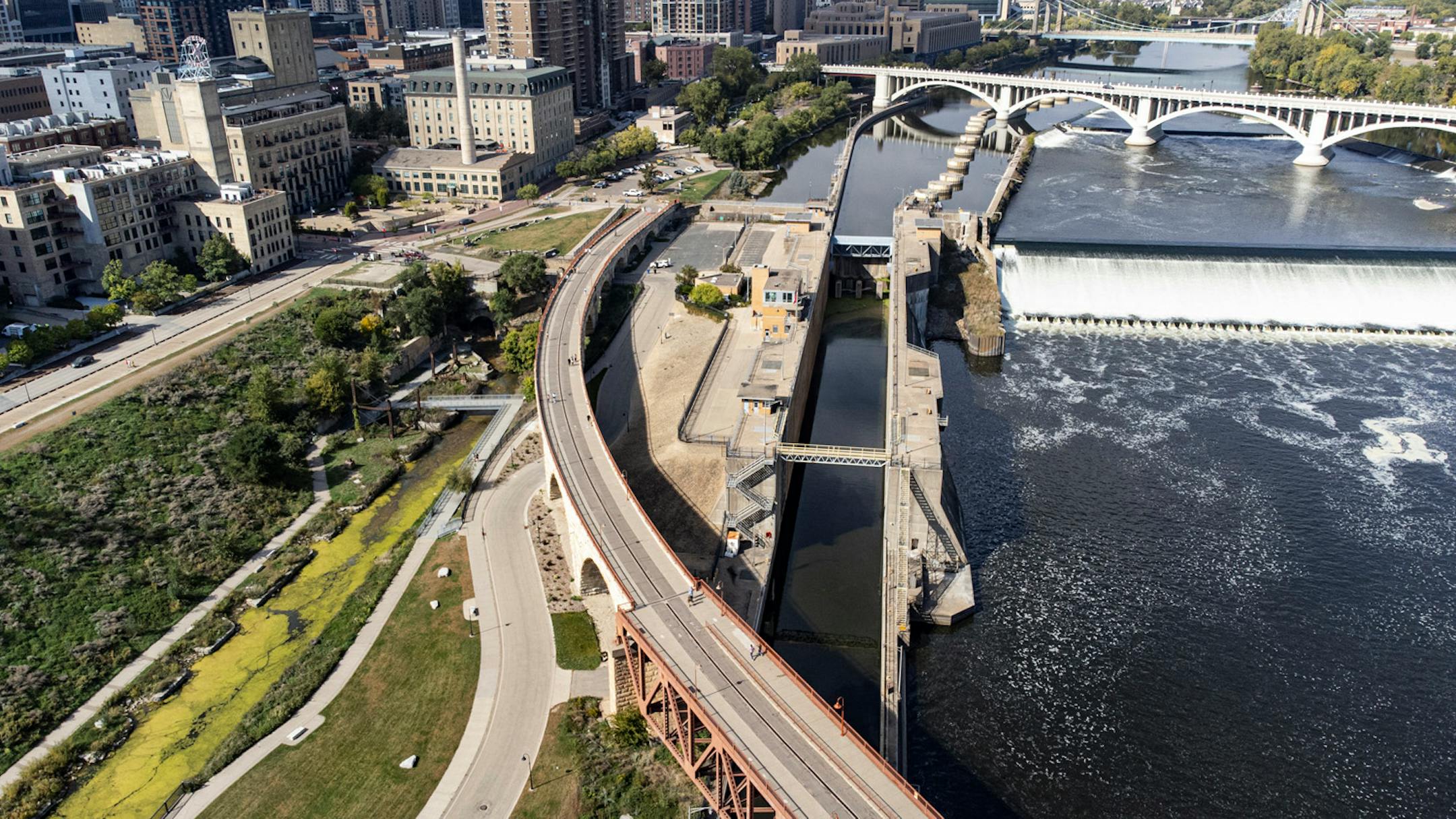
After nearly two centuries of industrialization, the Dakota-led nonprofit Owámniyomni Okhódayapi is transforming the land and water at Owámniyomni (St. Anthony Falls) into a place of restoration, education, healing and connection.
Over 200 years ago, before construction of the Stone Arch Bridge or the current lock and dams, the Mississippi River flowed freely and cascaded 50 feet down Owámniyomni, a sacred Dakota site.
Now, after nearly a decade of thoughtful relationship building and community engagement, the restoration of Owámniyomni will begin this year. The recently announced design restores 5.2 acres of land, water and bluff conditions on the Minneapolis central waterfront. It will also connect an additional three acres of Minneapolis parkland, allowing visitors to experience the waterfront seamlessly as a living monument.
“By centering Dakota voices, we’ve developed a design that emphasizes interconnectedness – uplifting the intrinsic relationship between land, water and other relatives – while restoring habitat and creating a welcoming space that will benefit community for generations to come,” said Shelley Buck, president of Owámniyomni Okhódayapi.
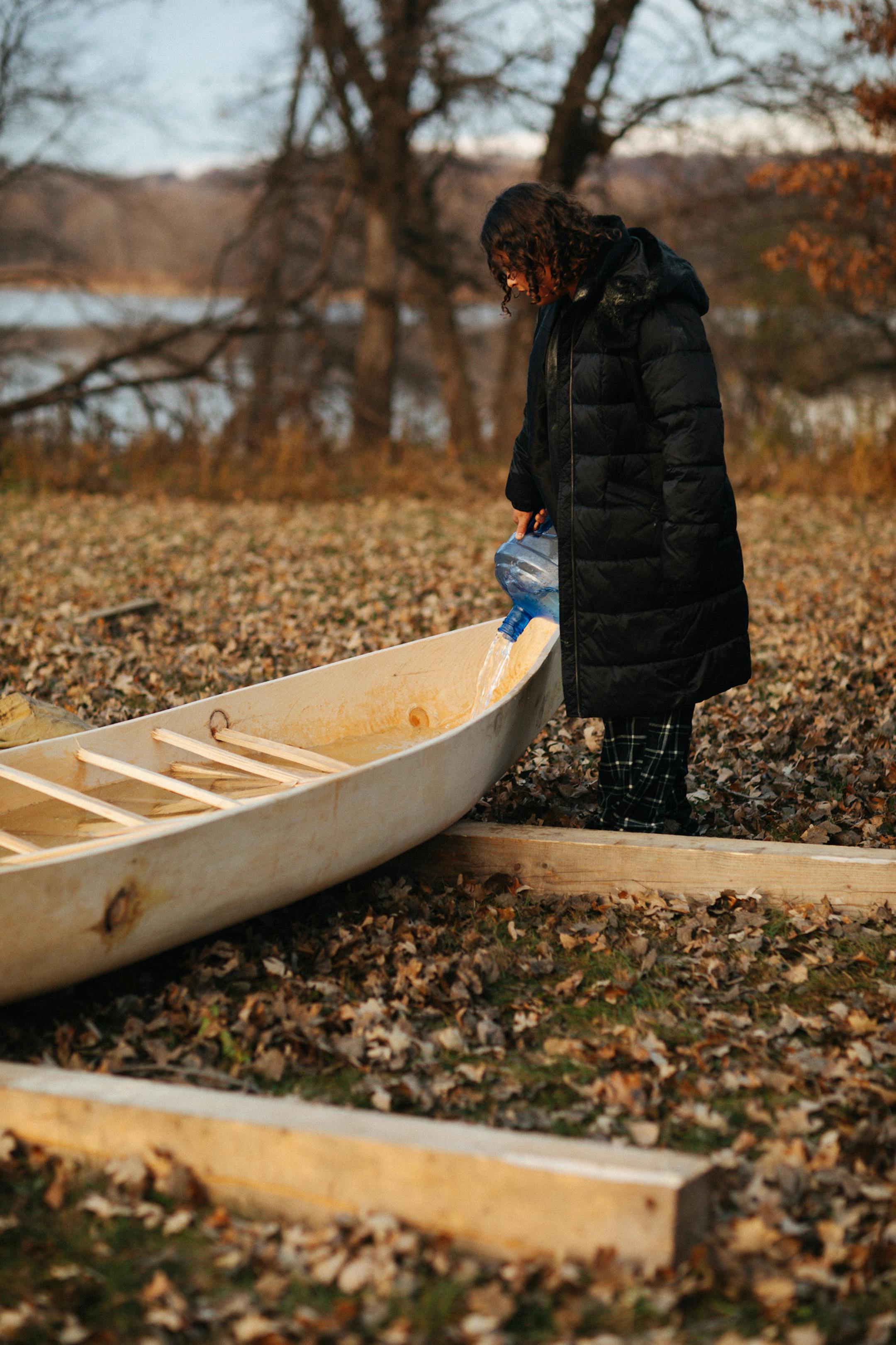
The reciprocal relationship with the water will be felt right away through Owámniyomni Okhódayapi’s programming, guided by the Dakota concept of Awaŋyaŋkapi – a wholistic approach to site care that benefits all relatives – the land, water, plants, animals and two-leggeds (people). Programming will return traditional Dakota lifeways to the central Riverfront and invite Native and non-Native people alike to connect with the water and learn about Dakota culture. One example is through the return of handmade dugout canoes.
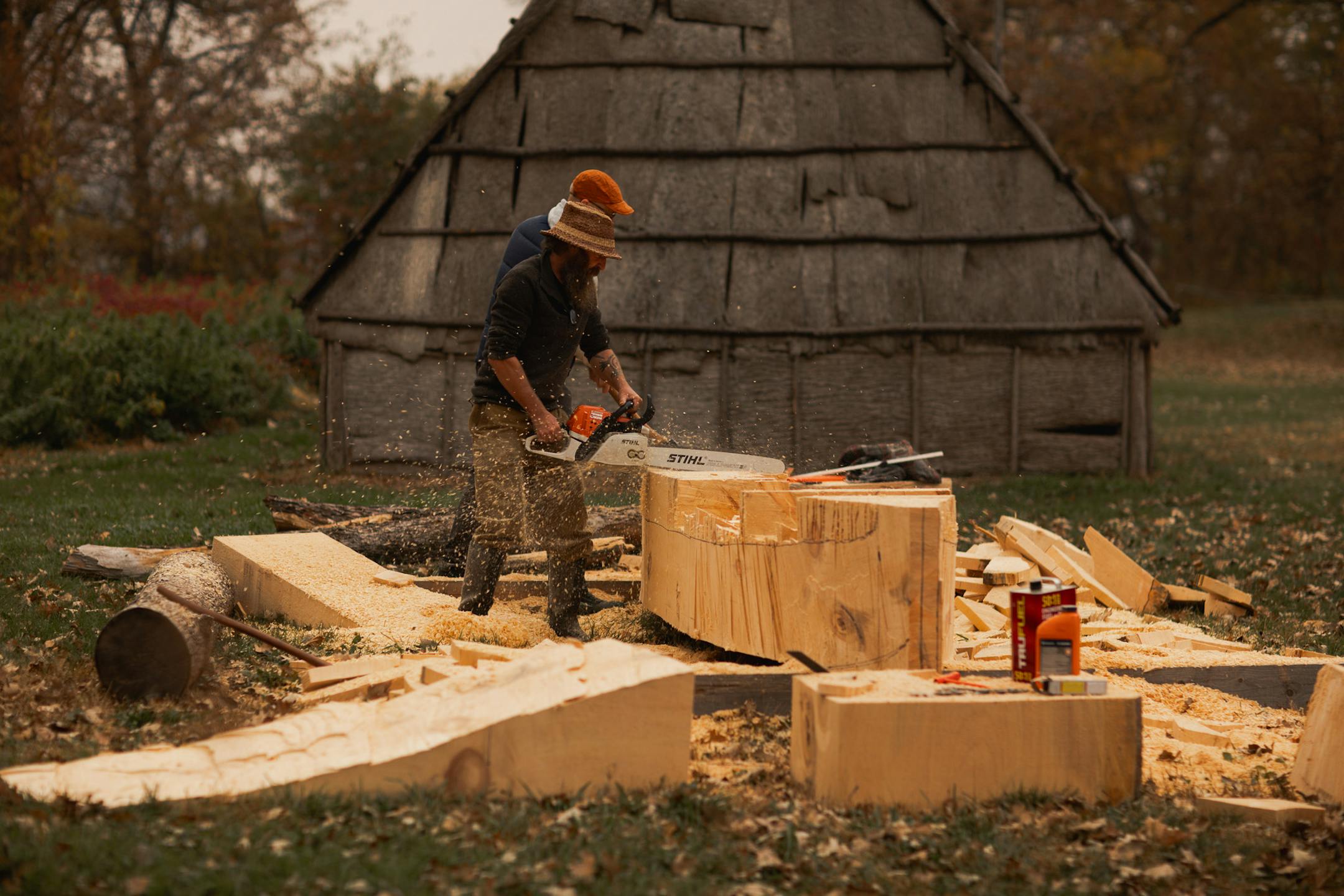
Long before modern transportation networks, waterways were central to Dakota culture and survival. Canoes served as essential tools to navigate, trade, fish and gather rice. Canwanzi Wata, or Dakota style dugout canoes, are carved from a single log. Owámniyomni Okhódayapi looked to experts from the Lower Sioux Indian Community who have been working to revitalize dugout canoes and others for guidance.

“As we craft the dugout canoe, we are sharing Dakota teachings and honoring traditional methods from start to finish,” said Owámniyomni Okhódayapi Program Director Barry Hand. “Of course, the canoe-building process starts with the tree. We had to be patient and wait for the right tree to present itself.”
The tree used in Owámniyomni Okhódayapi’s first canoe build stood at an impressive stature of nearly 100 feet before being damaged in a storm. The approximately 175-year-old white pine from Rice Lake had been growing since before the first dams were built at the falls and before the 1851 U.S.-Dakota treaty was signed.