

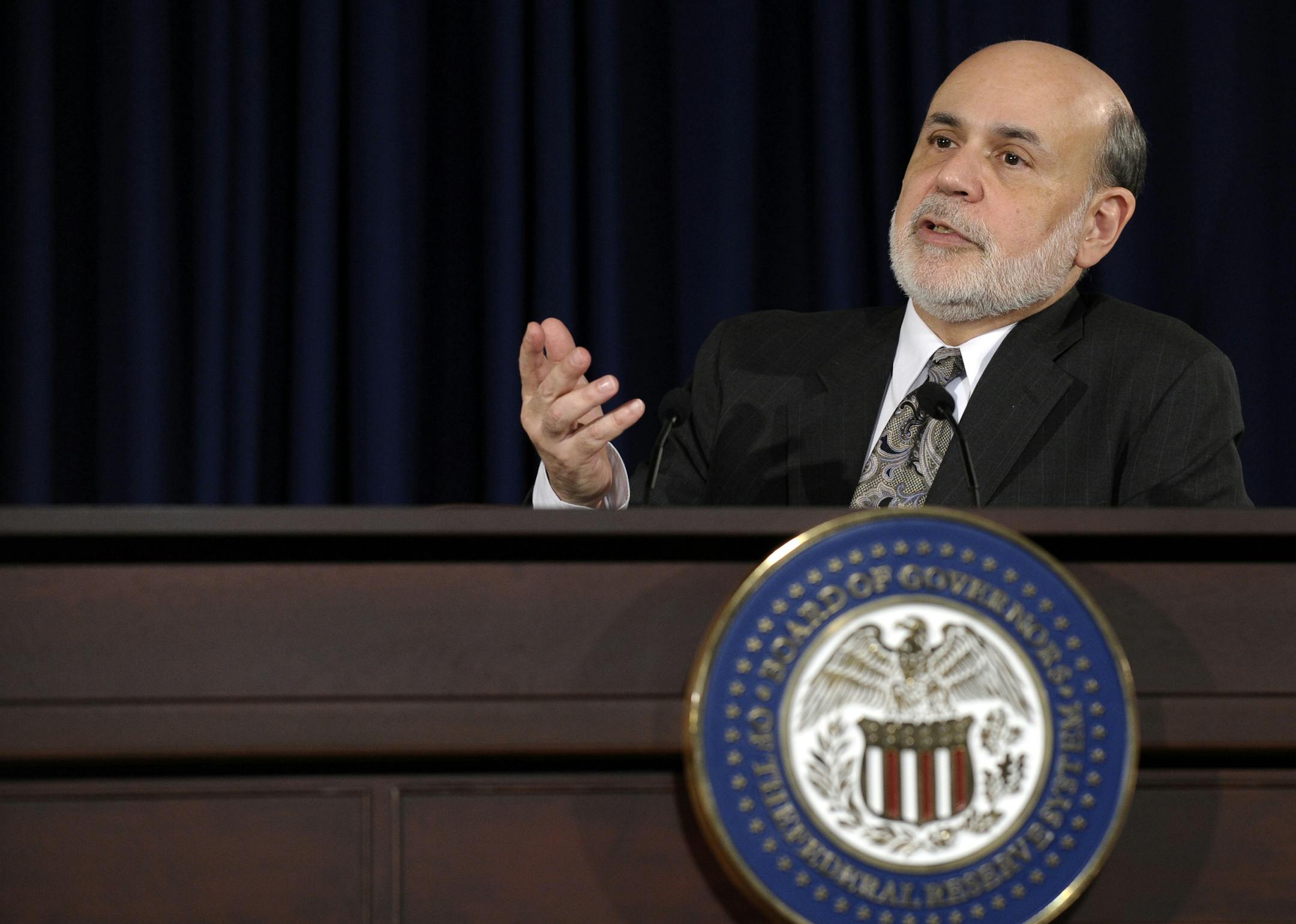
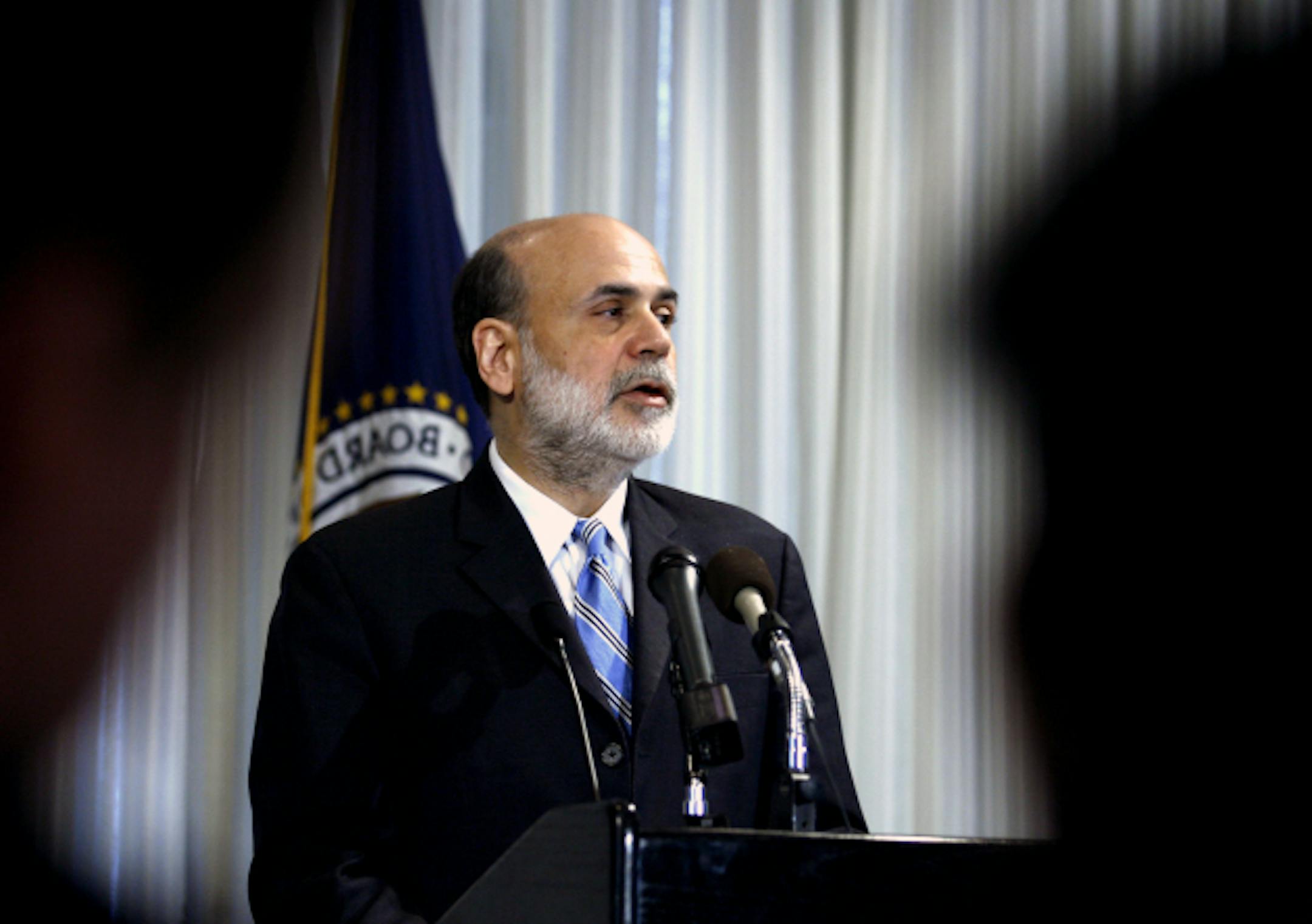
There's lots to digest from the not-released-until-this-morning transcripts of Federal Reserve meetings and conference calls in 2008. The transcripts give us an inside look at the thinking of America's top central bankers when the financial crisis hit. (Binyamin Appelbaum for the NYT has a good story here.)
Below I've excerpted comments from Ben Bernanke on Oct. 7, 2008, pgs. 12-15. I picked this passage out of many because it shows how the Open Market Committee was thinking at a really key moment.
The Dow was on a 25 percent one-month crash as the Federal Reserve's Open Market Committee deliberated. The bankruptcy a month earlier of Lehman Bros., a major Wall Street firm, had shown everybody the problems in the financial markets were grave.
Bernanke and several other Fed officials were on a confernce call trying to decide whether to cut interset rates in concert with several other central banks around the world. Not everyone (St. Lous Fed representative Robert Rasche, for instance) agreed this was a good idea, and Bernanke tried to make the case.
Here's what he said. I hope to annotate this as the day goes by. I underlined some key parts, and then bracketed and bolded my notes.
--
CHAIRMAN BERNANKE. Thank you. Other questions? All right. If not, let me just say a few words. I will be brief. It's more than obvious that we have an extraordinary situation. It is not a single market. It's not like the 1987 stock market crash or the 1970 commercial paper crisis. Virtually all the markets—particularly the credit markets—are not functioning or are in extreme stress. It's really an extraordinary situation, and I think everyone can agree that it's creating enormous risks for the global economy.
What to do about it? The exchange we just had suggests that we may have disagreements about the benefits of liquidity provision. I personally think that it has been helpful. [Not 100% sure what "liquidity provision" means here, but I think it refers to the then small level of Fed purchases of mortgage-backed securities to keep the market liquid.] But I think we can agree that it is obviously not a panacea because, as the Vice Chairman points out, it doesn't address the underlying capital issues. That suggests that the right solutions probably have a significant fiscal element to them. However, one feature of the last few days is how striking, how uncoordinated, and how erratic some of the fiscal approaches have been—particularly in Europe, where there has been a remarkable lack of coordination in the European Union. So the fiscal solutions are coming, but they're not there yet, and it is going to be a while. We need greater clarity on those issues. We had a meeting today on the Treasury's authority [to create TARP, the $700 billion financial industry rescue fund], and they are hoping in the next few weeks to begin to provide greater clarity, which will be very helpful. But I think that, if we can find some kind of bridge, it would be helpful, and that's what this meeting is about.


