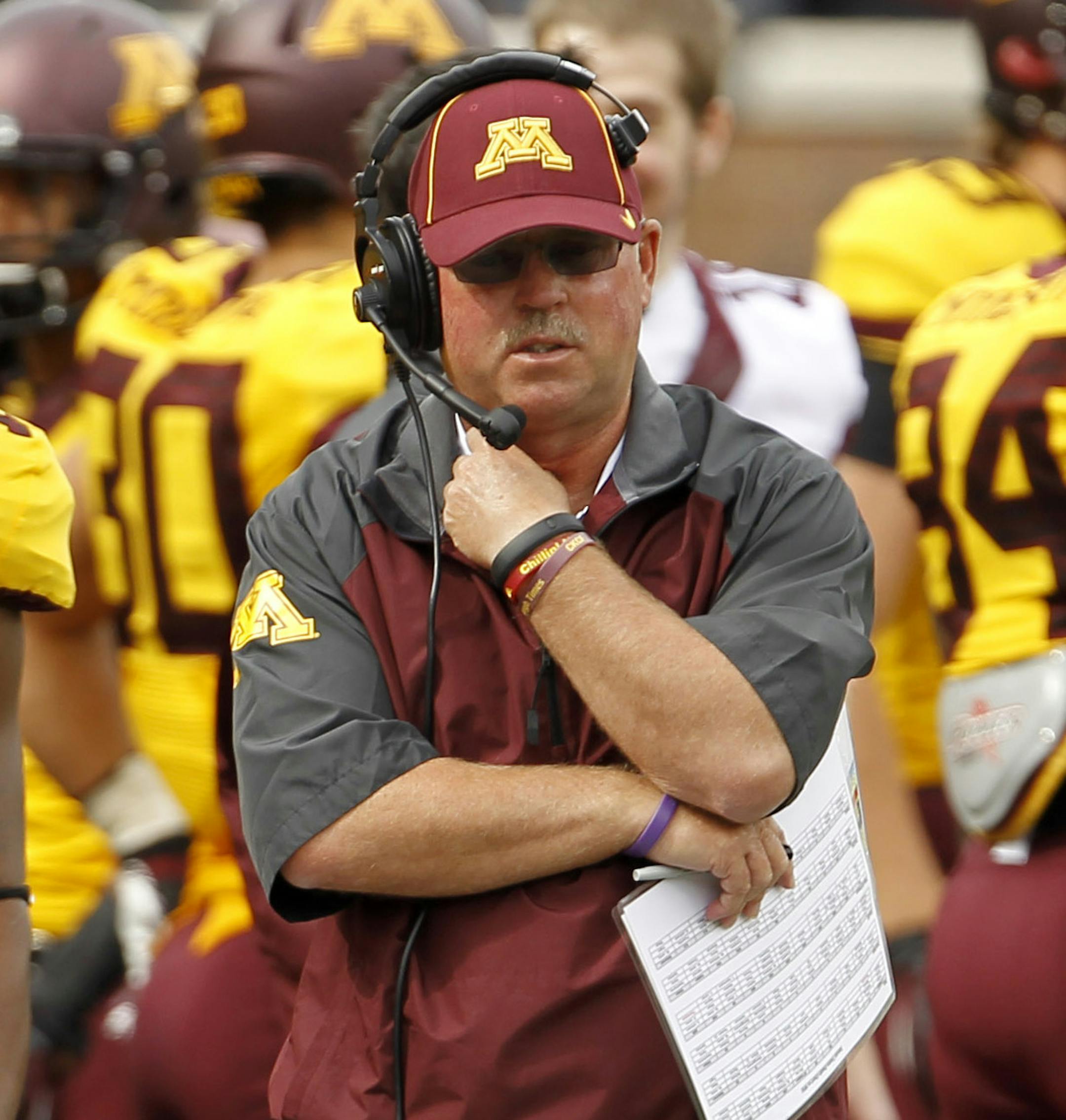
When a seizure forced Gophers football coach Jerry Kill to be absent during the second half of last week's game against Western Illinois, how much did he really miss?
Perhaps not as much as some football fans might think, according to those who know exactly what a head coach typically does during a game.
Most decisions the Gophers made after halftime were ones Kill and many head coaches delegate to assistants. Players typically have more interaction with position coaches than Kill during games.
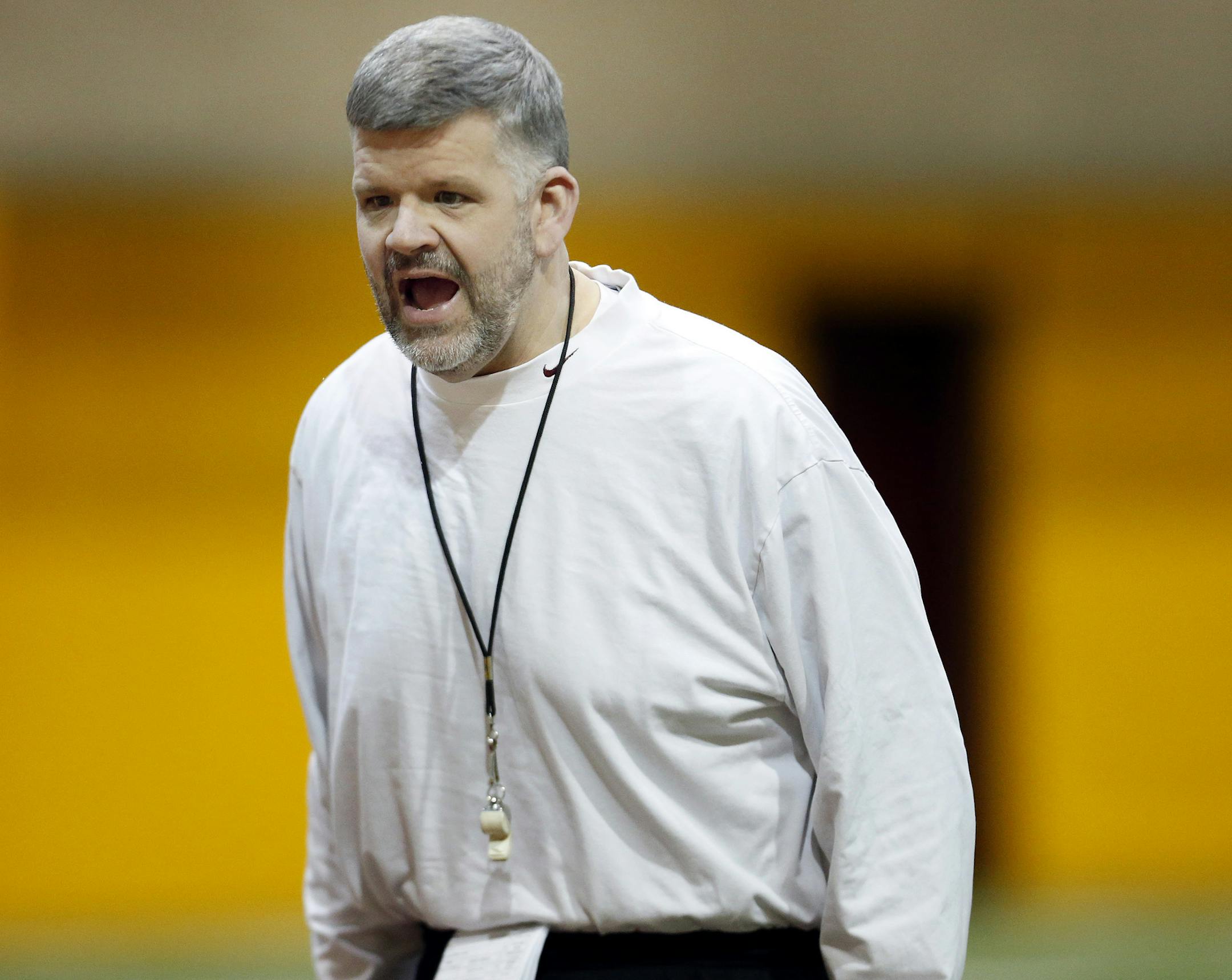
"You don't want to minimize his role in the whole scheme of things," Gophers offensive coordinator Matt Limegrover said. "But I think because we've all been with him so long, we really kind of think on the same page."
With Kill set to return to the sideline for Saturday's game against San Jose State, his situation is distinctive. Most of his assistants have served under him for at least 13 years, and he leans on them heavily.
Some head coaches — including Penn State's Bill O'Brien, Florida State's Jimbo Fisher and USC's Lane Kiffin — call their own offensive plays. Others, such as Alabama's Nick Saban, Florida's Will Muschamp and Northwestern's Pat Fitzgerald, are more hands-on with their defense.
But many coaches are like Kill, relying on coordinators to run most of a game and soliciting input before making key decisions, such as when to call timeout, attempt an onside kick or go for it on fourth down.
"I didn't call any offensive plays and didn't call defensive plays, but I knew what was being called," said former Gophers coach Glen Mason, now an analyst with the Big Ten Network. "I always thought my role was to manage the game, so all the major decisions that took place, I made.