

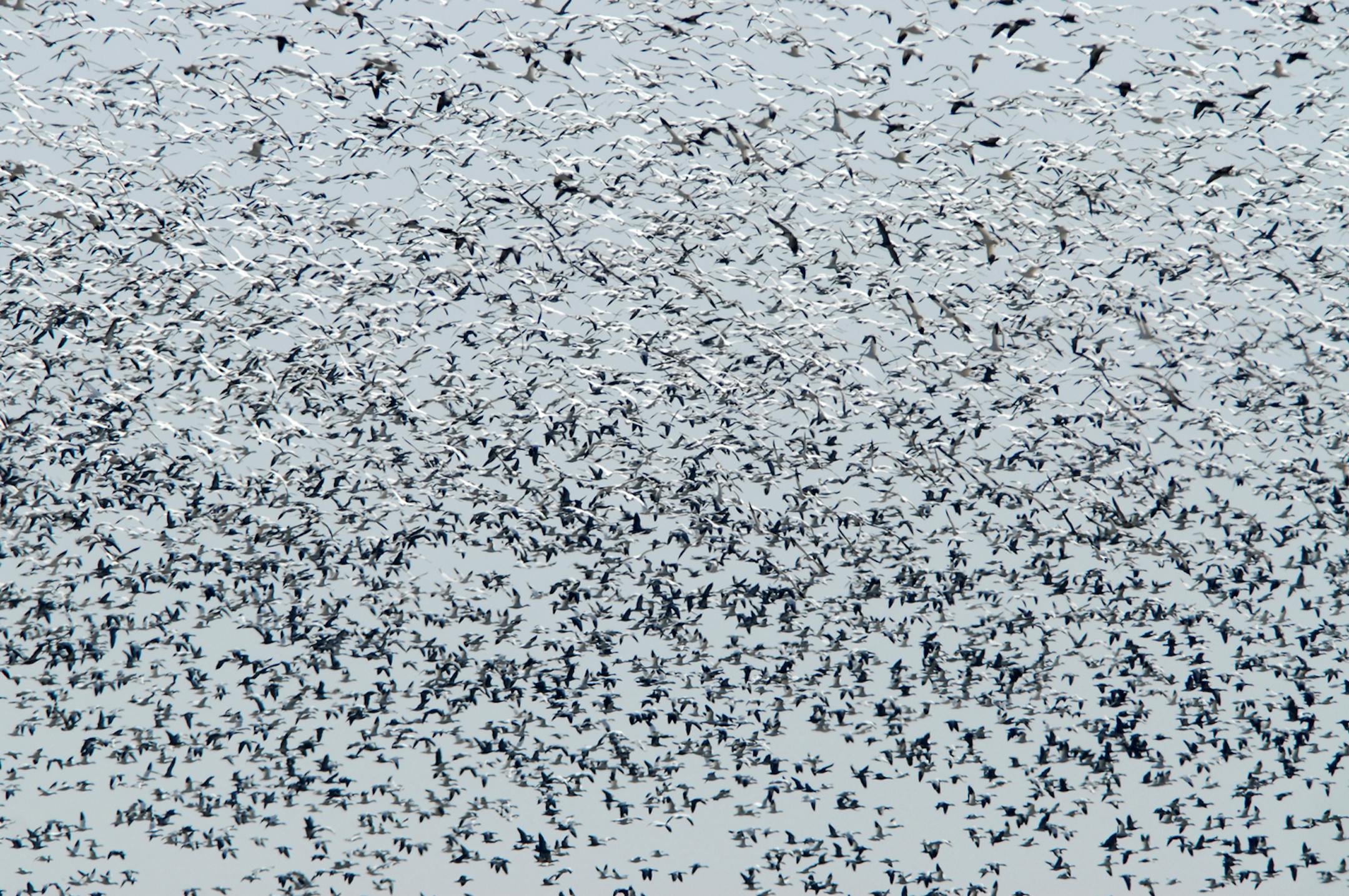
What you see is what you know.
That makes it hard for me to explain clearly what it was like 30 or 40 years ago when there were more birds in the woods or our yards than you or I see now.
I would be trying to make you understand what is called my baseline, the number of individual birds I saw 40 years ago. Call it my impression of quantity. But your baseline is likely newer than mine, making it different, sometimes much different.
This sliding standard is known as shifting baseline syndrome — a gradual change in our accepted norm for ecological conditions.
The phrase describes an incremental lowering of standards that results with each new generation lacking knowledge of the historical, and presumably more natural, condition of the environment. It can happen to birds, mammals, plants, insects — to any living thing.
That shift can make discussion of declining bird numbers difficult, whether we're talking about stadium glass or habitat loss or cats on the prowl. This is important when bird conservation is discussed. Someone with a baseline formed decades ago could see more urgency to the issue than might a newer birder.
What does fewer mean? What does it look like?
Can you visualize a sky darkened for hours by the passage of millions of passenger pigeons? This is a commonly described image when the history of this extinct species is discussed.


