

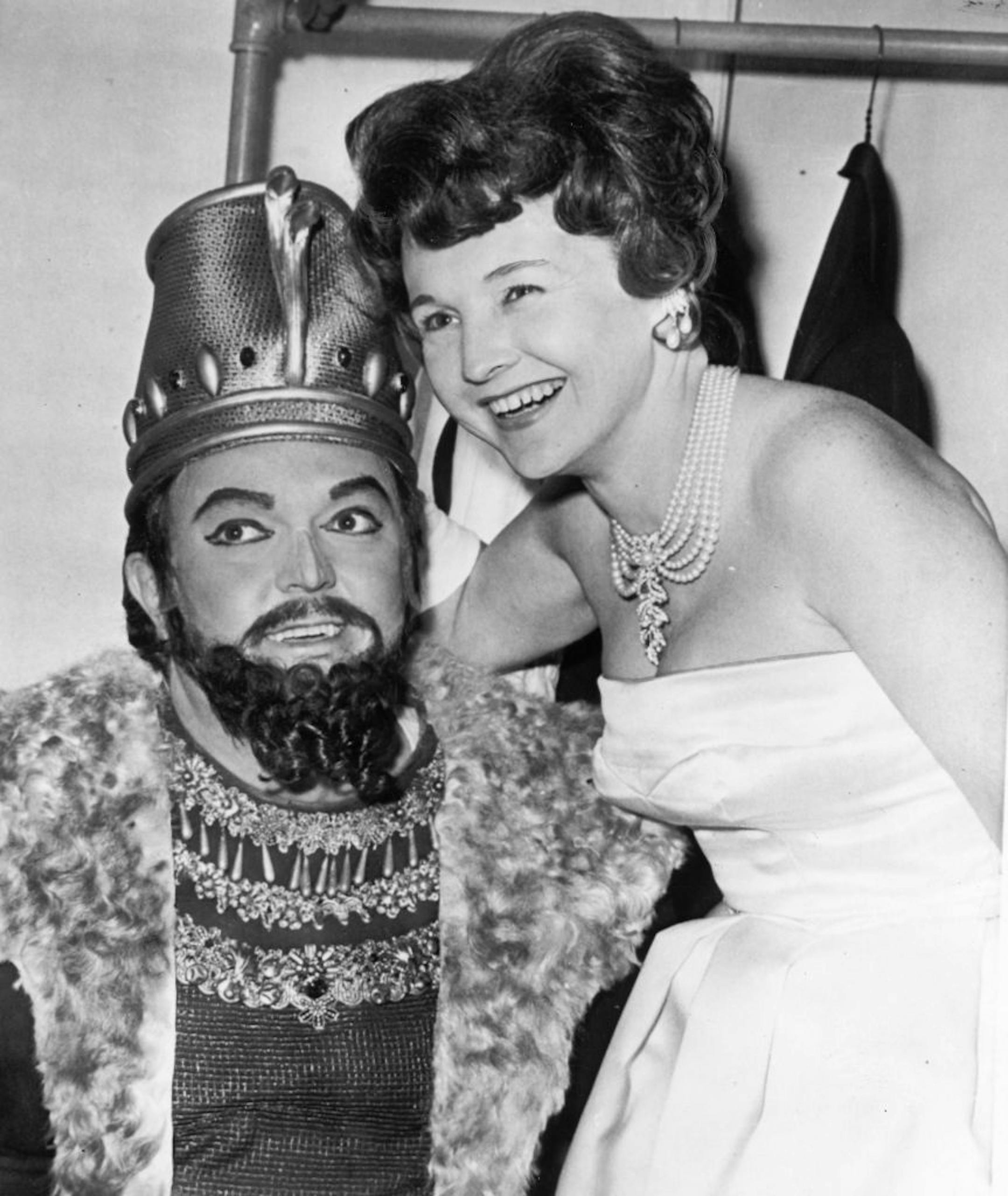
Even as a kid growing up in the Twin Cities, Cornell MacNeil wanted to have a career in music, but when his mom signed him up for piano lessons he balked and refused to practice. Though he went on to become a legendary baritone, and sang 26 roles in more than 600 Metropolitan Opera performances, he always regretted his childhood obstinacy.
"It came around and bit me on the keister for the rest of my career, because I was not a trained musician," MacNeil told Opera News in 2007.
MacNeil, 88, died July 15 in an assisted-living facility in Charlottesville, Va.
In a career that spanned more than 40 years, he was best known for his mastery of the Italian repertoire, especially Verdi roles. His 1959 debut as Carlo in Verdi's "Ernani," at La Scala in Milan was so successful that the prestigious opera house offered him a contract. Instead he returned to the United States and, just 16 days later, made his debut at the Met, substituting for the great Robert Merrill as the lead in Verdi's "Rigoletto." Signed by the Met, he went on to sing that role more than 100 times at the New York opera house.
"The Verdi baritone is a fairly unique and celebrated voice type," said Allan Naplan, president and general director of the Minnesota Opera. "It takes special endurance, volume and intensity. ... He was in a rare group of stars."
Born Sept. 24, 1922, in Minneapolis, MacNeil grew up in Edina but attended Jefferson Junior High and West High School in Minneapolis, and graduated from St. Louis Park High School because "Edina didn't have a high school back then," he told the Minneapolis Tribune in 1977. His father was a dentist and his mother a professionally coached singer. He was rejected by the military draft because of severe asthma, which persisted until age 20.
During the war he worked as a lathe operator and later sang in the Radio City Music Hall Glee Club. Bit parts in Broadway musicals sustained him until 1950, when he made his opera debut in Philadelphia.
During his long association with the Met, he often sang starring roles on annual Midwest tours including performances at Northrop Auditorium in Minneapolis.


