Squeaks drifted across the cool night air as our group, each of us wearing ice cleats, slowly stepped up the side of Maligne Canyon. The sun had set long ago in this dimple pressed into Canada's Jasper National Park, but our compact headlamps shed just enough light to keep us safely on the narrow, snowy trail.
Suddenly, our guide, Aaron Marr, stopped to point out a small waterfall frozen against the opposite canyon wall. As Marr illuminated the icy sculpture for us with a massive flashlight, cameras began clicking. No one knew this eye-catching formation was a mere teaser.
We continued on for another 20 minutes until Marr stopped again, this time motioning us to duck under a guardrail, then pick our way down an icy slope to the canyon floor. We were then standing on the frozen Maligne River, he said, and needed to take care; the week's warm temps had pockmarked our path with slushy spots. "You might sink in a few inches if you step on a bad spot," he said, "but don't worry -- you won't fall through."
"It's probably a good thing we can't really see where we're going," whispered one of the older women.
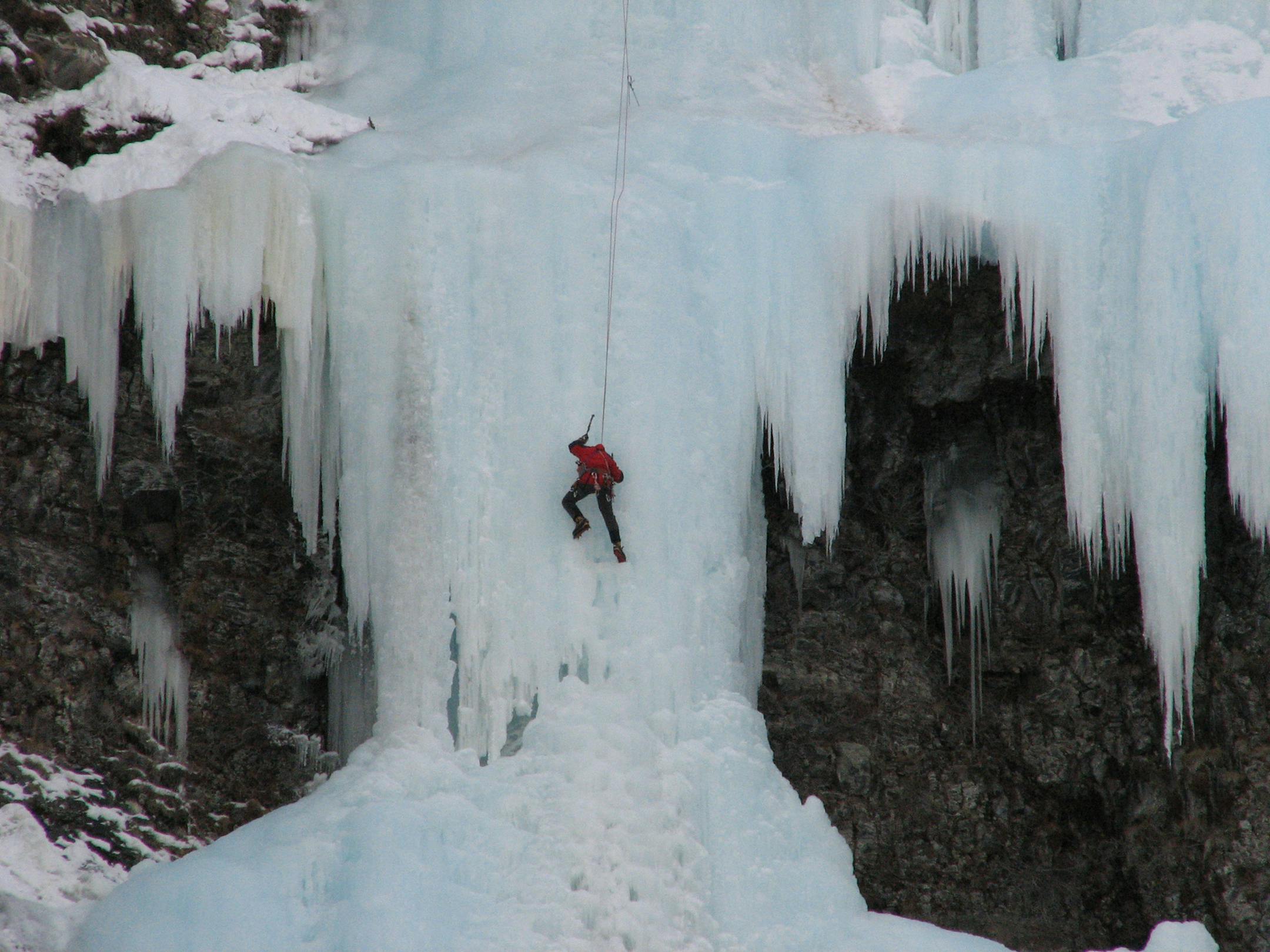
Crunching and skidding, we inched down the river until Marr halted our progress again. Snapping on his flashlight, he illuminated a waterfall a mere yard or so in front of us. Its thin outer layer was frozen in a delicate, lacy sheet, while a torrent of water angrily rushed behind it into a small pool. People squealed and gasped, and then the camera flashes commenced again in earnest.
We would have stood there forever, but Marr urged us on to the next wonder -- the immense Queen of Maligne waterfall, frozen 89 feet below the canyon rim into an intricate crystalline sculpture.
Before we headed back, Marr asked us to stop, turn off our headlamps and drink it all in: The canyon's rugged, towering walls. The thick silence. The sweet, frosty air. And the deep indigo sky, now completely smothered in stars, from bright novas to the most delicate stardust.
Three towns, three styles