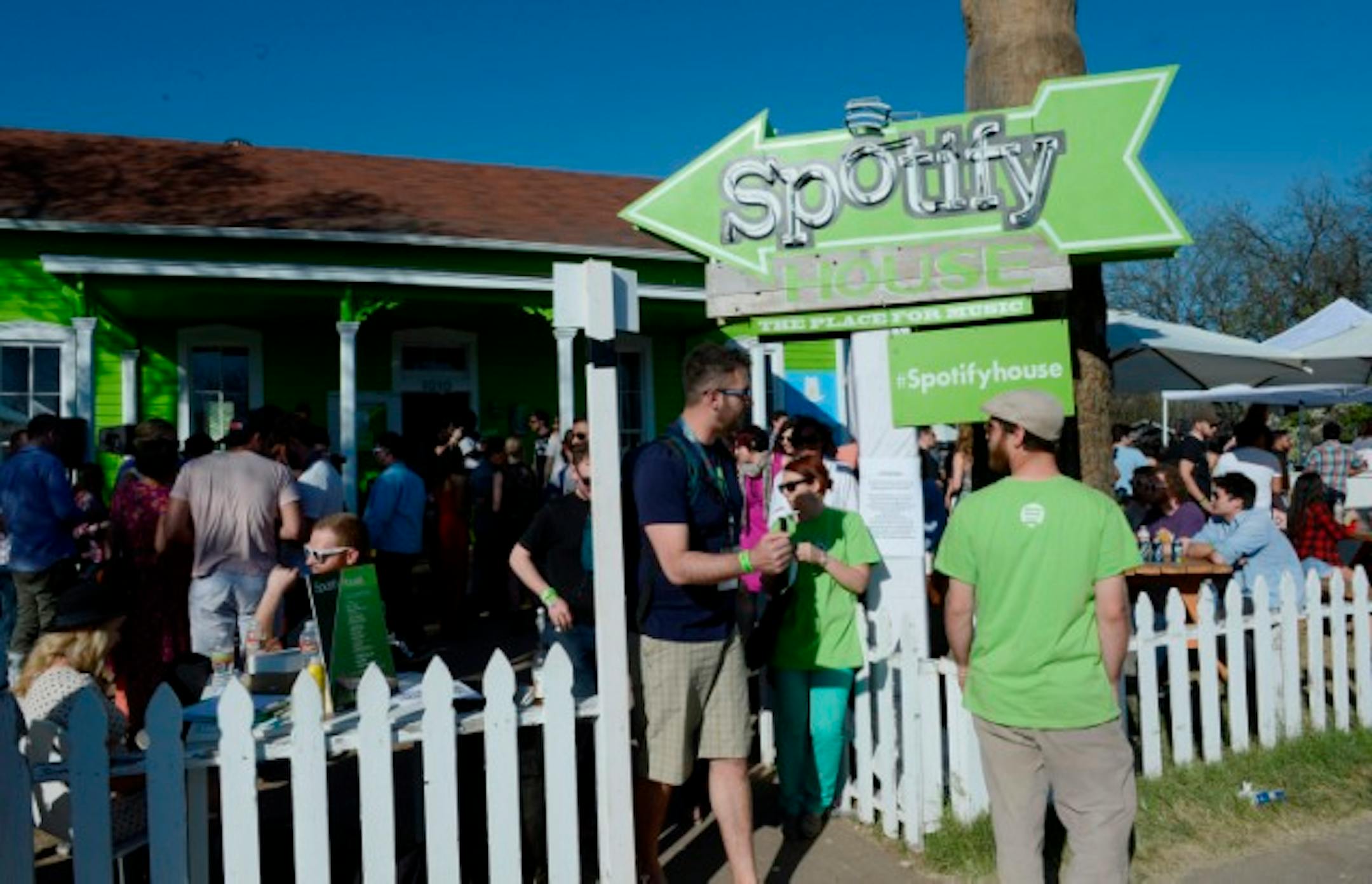
AUSTIN, TEXAS – Like many of the hot spots at this week's South by Southwest Music Conference, the Spotify House had hipster fans lined up outside the entrance Thursday afternoon.
What's different is that these music lovers weren't there for any band — there wasn't even one playing — but for a brand.
The next big thing in music isn't any rapper or rock groups. It's streaming services such as Spotify, Pandora and Rdio, which offer vast music catalogs to listeners through subscriptions, either paid or free with advertising. This burgeoning new form of music consumption is being driven by consumers' rapid shift to iPhones and other mobile devices for their music listening.
"It wasn't a gradual move to mobile," said Pandora official Chris Harrison. "It was a giant rush, really just over the last eight months."
With elaborate party sites, all three services sought to take center stage at South by Southwest — the music biz's biggest annual mashup of new talent and marketing opportunities — in hopes of gaining a foothold before Apple unveils its own streaming-service answer to iTunes, which dominates the digital-download market.
Pandora currently claims about 67 million subscribers worldwide and about 70 percent of the U.S. streaming-subscription market. Spotify has been quick to rise, too, since entering the U.S. market in 2011. A Swedish company founded in 2008, it now claims about 24 million subscribers worldwide, 6 million of them paying customers.
This sea change has some singing the blues, however. Music-streaming companies only pay pennies in royalty fees to artists, a hot-button issue for musicians and record labels.
"At this point, I'm not sure if I'd be able to buy a single copy of my own record with the money I've earned from streaming services," said Twin Cities hip-hop star Dessa, one of dozens of Minnesota acts who made the trek to perform at SXSW.