

When word of a Delhi court's ban on the film "India's Daughter" reached Leslee Udwin, the filmmaker was faced with a dilemma. Udwin was working on some final edits, and she was forced to decide between continuing that work and risking interrogation and arrest.
"I called seven lawyers, and every one of them said I should flee India," Udwin said. "Six of them said I should get on the next plane, and a seventh said I should get in a car right then and drive across the border to Nepal. I was going to leave, and then I thought, 'the whole point of the movie is making your voice heard against evil forces.' So I didn't go anywhere."
This week, Udwin began raising her rallying cry on these shores. She was able to leave India unharmed several days after the ban, and was speaking backstage shortly before her film was to make its U.S. premiere at a starry but serious-minded event in downtown Manhattan, ahead of an airing on PBS later this year.
In the space of a few days, Udwin's film has become a touchstone for women's equality worldwide, even as it can't legally be shown in its home country.
"India's Daughter" documents the brutal assault on Jyoti Singh, a 23-year-old Delhi medical student who, boarding a bus to return home after seeing a movie with a male friend in 2012, was gang-raped by a group of male passengers. The incident was gruesome; it involved not just repeated rapes but an onslaught that at one point had the attackers pulling out Singh's intestines. She died several days after the assault.
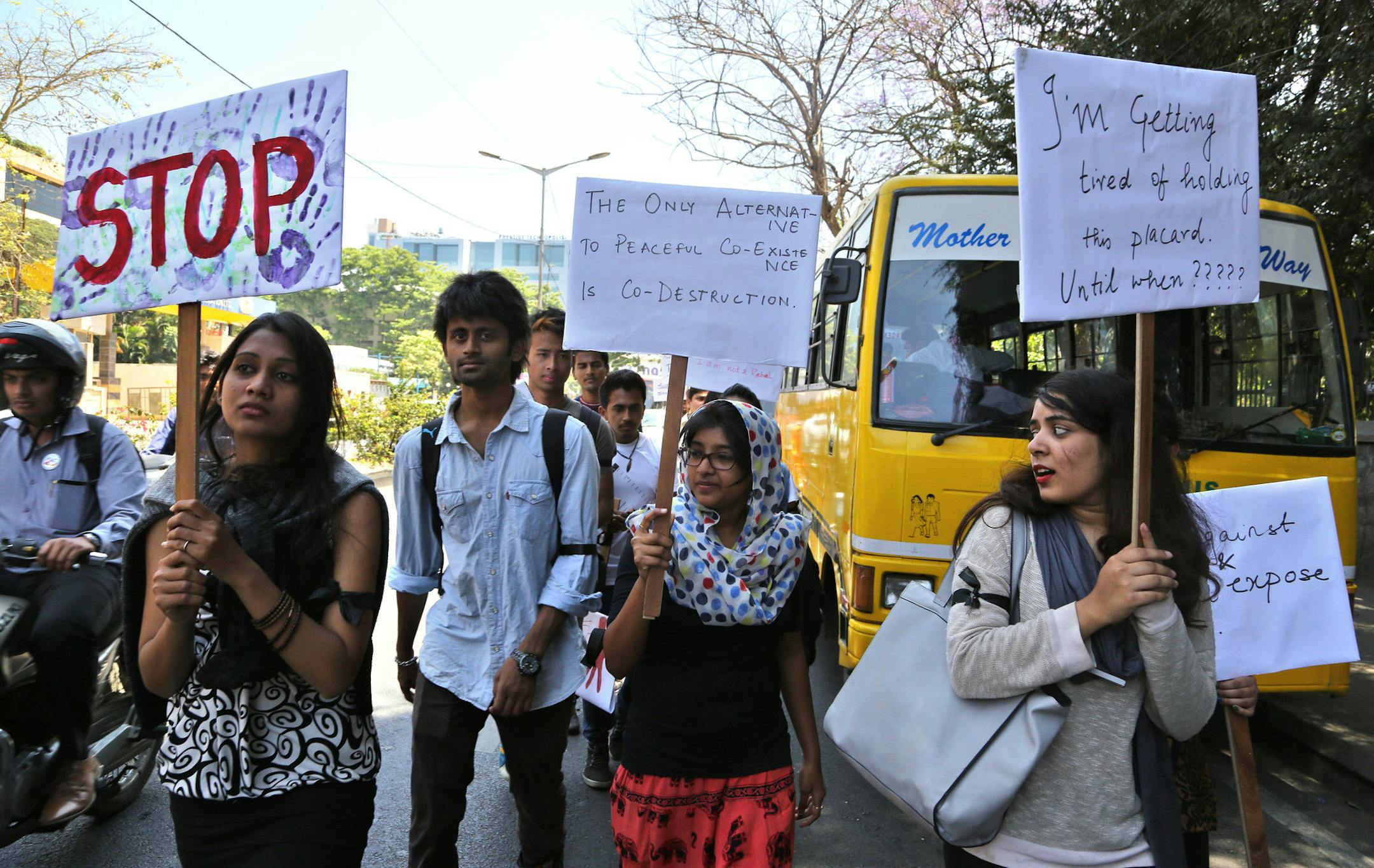
Four men were convicted in the attack and sentenced to death, and the massive protests against the rape that followed became a referendum for women's rights both on the subcontinent and around the world.
Produced by the BBC, the film features harrowing interviews with Jyoti's parents, including her mother describing her poignant last moments with her daughter at the hospital, as well as her father's controlled anger at his daughter's killers.
"To call them human is an insult to the word humanity," he says in the movie.


