

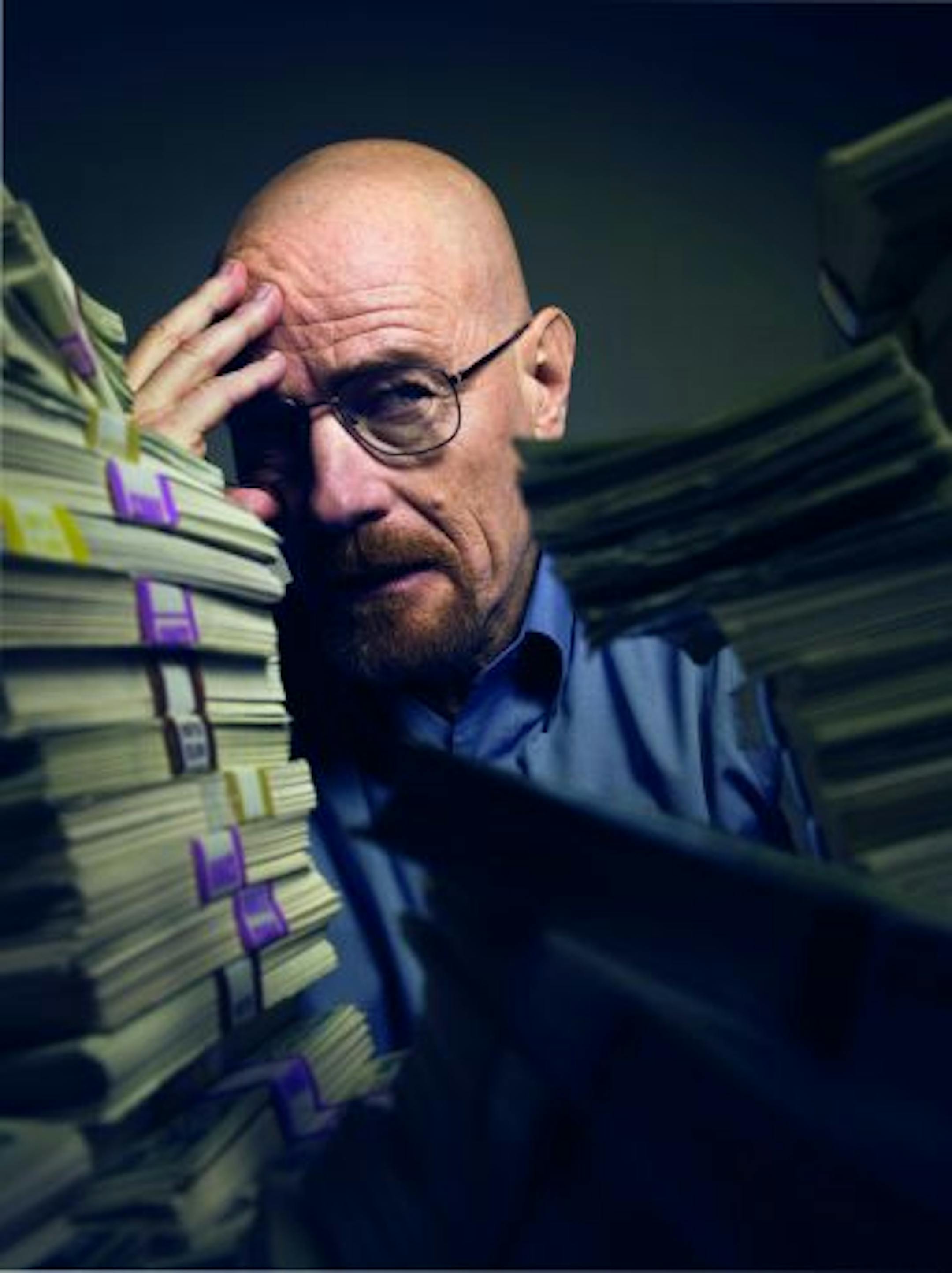
In its first two seasons, "Breaking Bad" set the despicable-behavior bar pretty high.
Walter White, an underemployed high-school chemistry teacher and good-hearted family man, thinks he's dying of cancer. To leave enough money behind for his pregnant wife and a teenage son with cerebral palsy, he "breaks bad," pairing up with a ne'er-do-well former student to cook and sell mass quantities of meth.
His low point does not come when he lies to his wife and DEA-agent brother-in-law about going AWOL because he was in a "fugue state" when he actually had been kidnapped by vicious drug lord Tuco. It comes when he watches his partner Jesse's passed-out junkie girlfriend, who is trying to extort money from Walt, choke on vomit and die.
Walt, played by Bryan Cranston, sounds like a guy who's only a rung or two up the morality ladder from rapists and serial killers. Yet "Bad" fans can't get enough -- partly because Cranston, formerly the hapless dad on "Malcolm in the Middle," deserves his rare back-to-back Emmys for best actor, and partly because the story lines keep even the most jaded viewers guessing.
If you prefer predictable story lines, your endings pat and your good guys easily differentiated from the bad, "Breaking Bad" isn't your cup of strong coffee, and creator/producer/writer Vince Gilligan is well aware of that.
"The experiment we're performing -- pardon the chemistry pun -- is transforming Walt from a very good man, through baby steps, fits and starts, into someone darker and darker," said Gilligan. "I never wanted this to be white hats vs. black hats, because in life we experience a lot more gray hats."
And that's the biggest continuing risk for a show that takes big ones every week. In Season 3, premiering Sunday, will Walt become too bad for people to sympathize with and lose his cult following?
"No audience is monolithic," Gilligan said. "As things progress, people may drop out. They say, 'It's great acting, but I can't root for this guy anymore.' Hopefully, they'll be replaced by newer fans. This hyper-serialized kind of show, one you have to watch closely to get all the echoes of the past, does demand a commitment from viewers, their full undivided attention, and a lot of people aren't willing to give that to a TV show. It's OK to have fewer, if they're the intense fanatics."


