
Advertisement

Back to school: Put safety at forefront

Time to remind kids — and parents — to be careful out there.

For the Minnesota Star Tribune
September 3, 2011 at 8:08PM
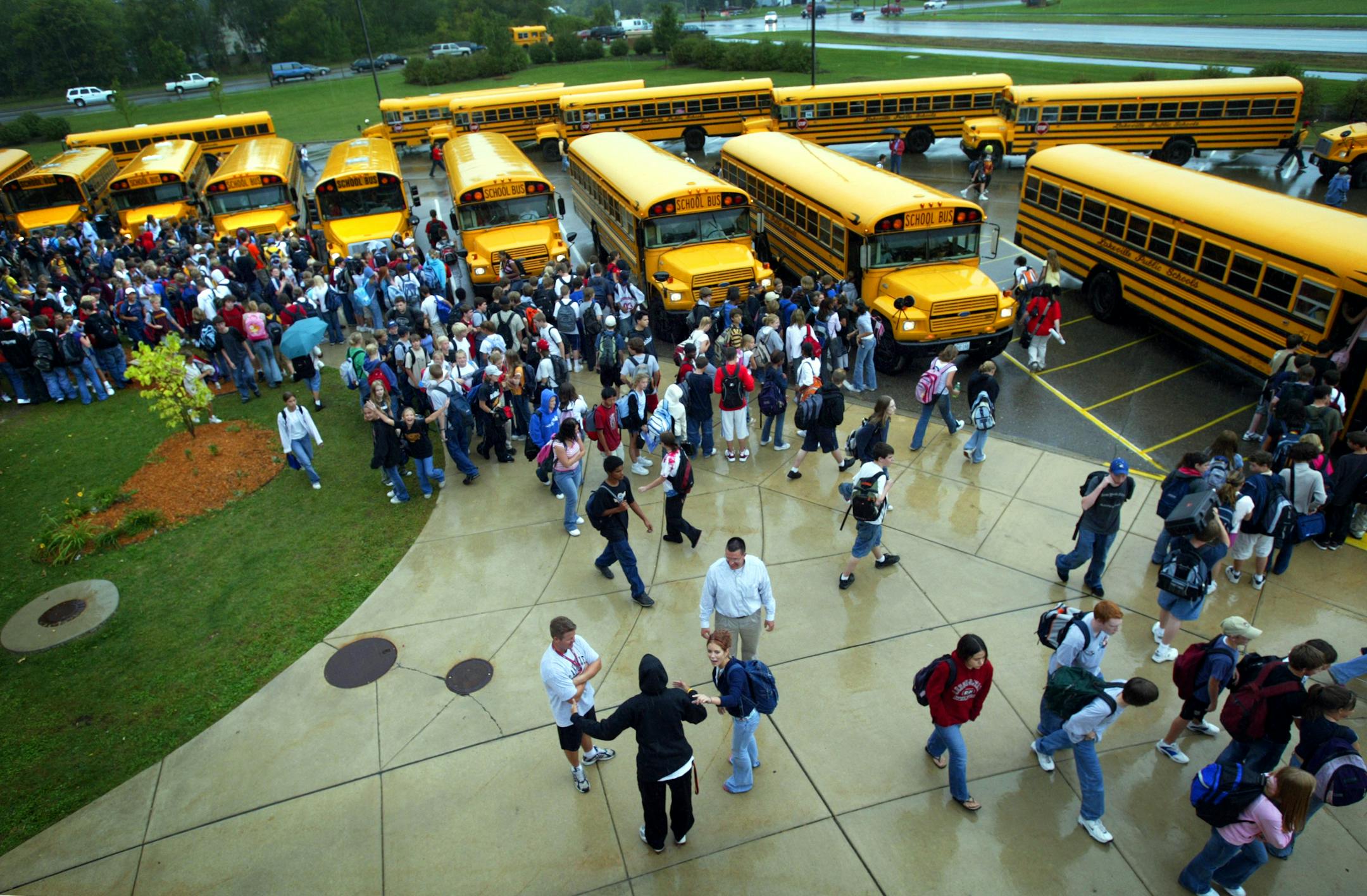
If your child rides the bus to school, spend a few minutes reviewing common bus safety practices.
If your child rides the bus to school, spend a few minutes reviewing common bus safety practices. (Renée Jones Schneider/The Minnesota Star Tribune)
Advertisement

As students head back to school, it’s a good time for families to talk about the rules of the road when it comes to traveling so kids stay safe until the moment they walk through the school doors.

“These are chaotic parts of the day,” said Julie Danzl, coordinator of the Healthy Kids Focused Students program for Minneapolis Public Schools.

Arrival and dismissal times at schools offer the most potential for danger. “Buses, cars and kids are descending on the school at once and, in the morning, they are all generally funneling toward one door,” said Danzl.

To help minimize the chaos, Danzl suggests that parents find out exactly what the dropoff and pickup policies are for their child’s school. Pay attention to the signs posted around the school and obey them -- don’t stop or park in the wrong zones.

Another key reminder for parents concerns cellphones. Don’t use them in a school zone; even if you are waiting for a child after school, the phone is still a distraction.

“Remove the temptation to answer calls during that waiting period by leaving a message on your cellphone that you will be unavailable for the next half-hour or so,” said Erin Petersen, family safety programs coordinator for the Minnesota Safety Council.

If your child rides the bus to school, spend a few minutes reviewing common bus safety practices. Kids should leave the house in plenty of time so they aren’t running for the bus. They should find a safe place to stand, well off the road (no running into the street to look for the bus) and stay there until the bus arrives and stops.

Petersen said a review of onboard bus policies -- clearing the aisles, staying in the seat, getting on and off in an orderly fashion -- is also a good idea for students of all ages.

Advertisement

A neighborhood plan

There’s another kind of transportation that parents might want to consider for their neighborhood: a “walking” school bus. This is a group of children who live in proximity to one another and walk to and from school together, accompanied by one or two parent volunteers.

“The walking school buses can be loosely structured or highly organized. Some designate specific meeting points in the neighborhood and pickup times,” said Danzl, adding that she knows of several local neighborhoods currently implementing this concept. “Other groups travel from house to house picking up kids, and then they all walk to school together along a specified route.”

Some parent volunteers will wear an orange safety vest; others carry a “Stop” paddle or school safety-patrol flag for the intersections. There is a minimal time commitment for parents to accompany the walking school bus -- often parents will divide the schedule with parents of other participating kids.

“It can be a really great community-building activity for school families,” said Danzl. “It is great for the kids. We know that given the option, kids will always tell you they want to walk to school. The walking school bus gives them time to interact with their peers and a chance to be active in the morning, which can enhance positive behavior in school.”

Step-by-step carefully

Less than 15 percent of today’s kids are walkers or bikers, according to Safe Routes to School National Partnership. In 1969, more than 87 percent of all children who lived within a mile of their school walked or rode a bike.

If your child walks to school, Petersen said, parents should go over a few pedestrian safety rules.

Advertisement

“While we want to remind drivers to take extra time to look for children in school zones, kids share in the responsibility to be alert,” she said. “Even though cars are supposed to stop at pedestrian crosswalks, kids cannot assume they will stop. Remind children to stop at every corner and look both ways -- twice.”

“Kids need to be predictable walkers,” added Petersen. “Especially as fall goes on and it gets darker in the morning, it is so important for both drivers and walkers to pay really close attention to the road.”

Julie Pfitzinger is a West St. Paul freelance writer.

about the writer

about the writer

JULIE PFITZINGER

More from Lifestyle

See More
card image
Mai Vu

Readers poured their hearts out to sweethearts, family members, friends and others, proving there’s lots of love out there.

card image
card image
Advertisement