

Opinion editor's note: Star Tribune Opinion publishes a mix of national and local commentaries online and in print each day. To contribute, click here.
•••
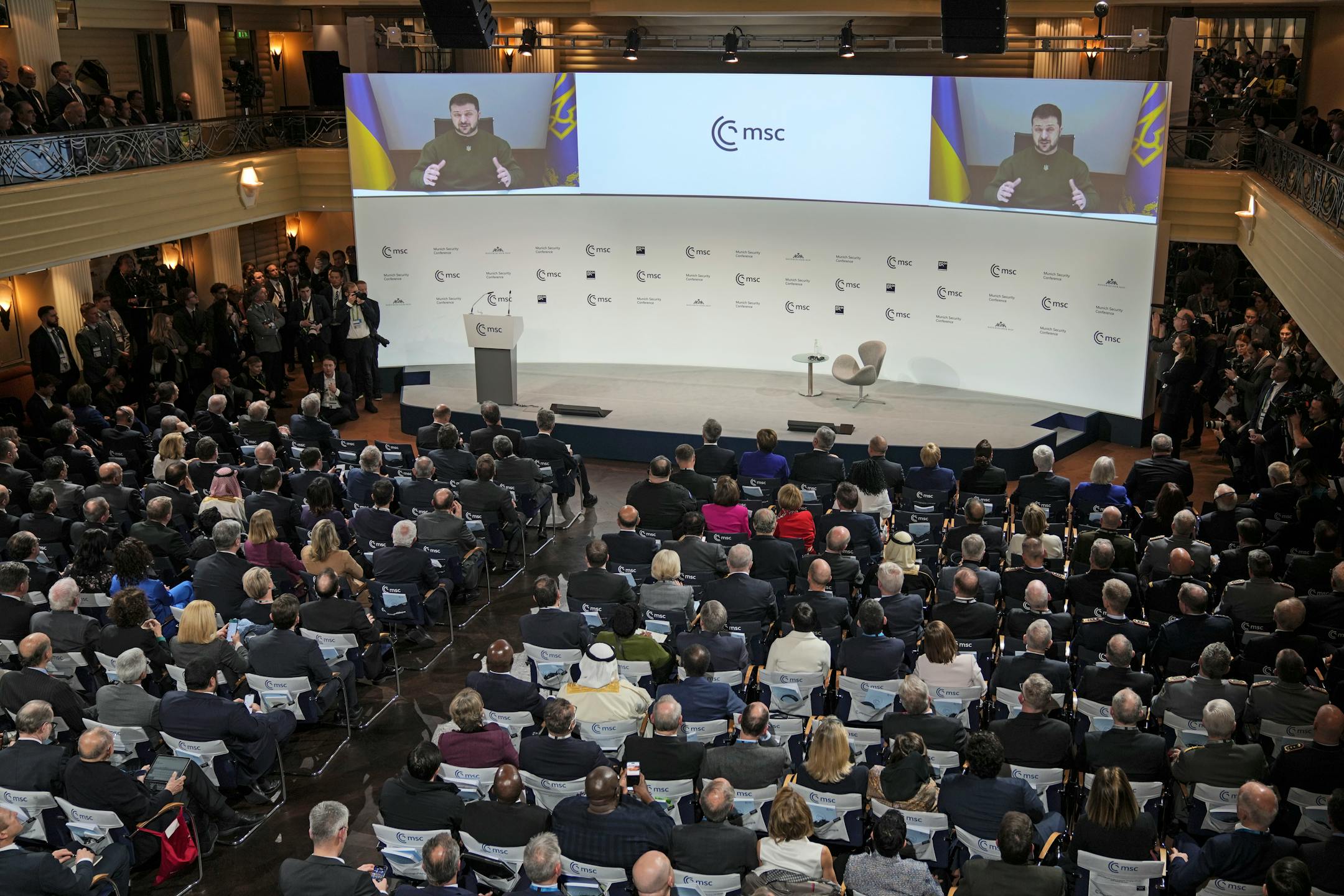
World leaders gathering this weekend at the Munich Security Conference look to decisively distance their governments from "Munich."
Munich, the city, became "Munich" the symbol in 1938, when French and British leaders at the Munich Conference acquiesced to Hitler's takeover of Czechoslovakia in hopes of avoiding further European warfare. The "Munich Analogy" became shorthand for appeasement.
The shorthand has had a long tail, invoked in countless conflicts since then. Including in recent years, when Western leaders appeased Russia after its 2008 invasion of Georgia and its 2014 annexation of Crimea and destabilization of Eastern Ukraine.
Ukrainian President Volodymyr Zelenskyy himself chastised gathered leaders at last year's conference for failing to curb Russia's revanchism. Days later, on Feb. 24, Russia invaded Ukraine, creating a geopolitical jolt that will be the focal point of this year's Munich conference.
For the first time in 20 years, Russia isn't invited. The U.S. delegation will be led by Vice President Kamala Harris, backed by a bipartisan delegation of about 50 members of Congress. The administration, which has rallied allies to Kyiv's cause, will focus on "transatlantic unity," said Michael Kimmage, a history professor at the Catholic University of America and a senior associate at the Center for Strategic and International Studies. They'll also stress that "there are no cracks in the edifice of the alliance or the coalition behind Ukraine; that this coalition is in it for the long haul; and that in terms of providing what Ukraine needs in the next couple of months that there's going to be a very strong commitment."
These messages are not "new," "abstract" or "complicated," Kimmage said, adding that while there is an ongoing debate — particularly in more Kremlin-friendly countries like Hungary — of a negotiated settlement, steeling Kyiv for the fight will be the focus of most conferees. "In that sense, not to evoke the ghosts of Munich." Instead, there's a desire "to overcome that past and not have it seem salient."


