

WASHINGTON – President Donald Trump loves to set the day's narrative at dawn, but the deeper story of his White House is best told at night.
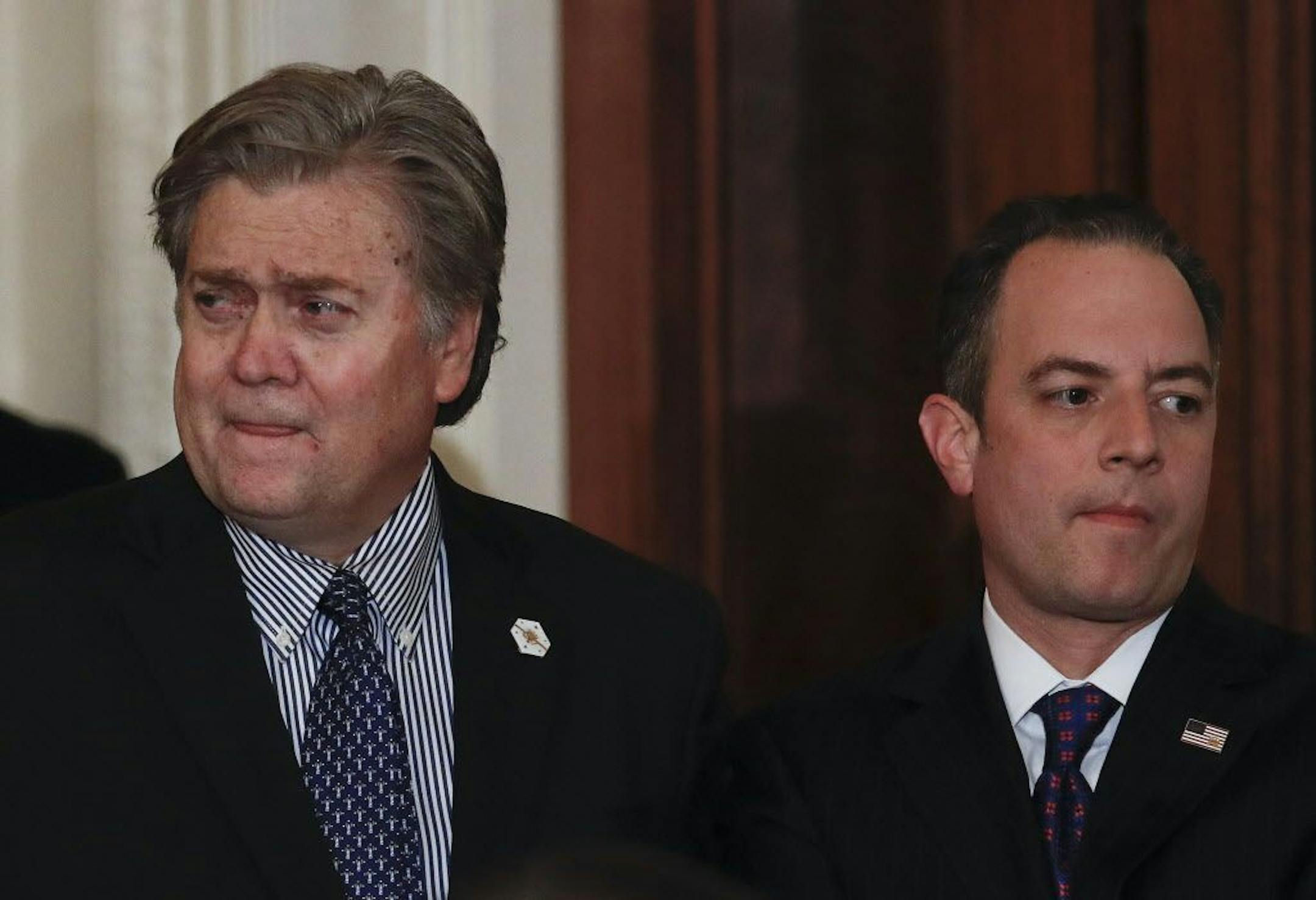
Aides confer in the dark because they cannot figure out how to operate the light switches in the Cabinet room. Visitors conclude their meetings and then wander around, testing doorknobs until finding one that leads to an exit. In a darkened, mostly empty West Wing, Trump's provocative chief strategist, Stephen Bannon, finishes another 16-hour day planning new lines of attack.
Usually around 6:30 p.m., or sometimes later, Trump retires upstairs to the residence to recharge, vent and intermittently use Twitter. With his wife, Melania, and young son, Barron, staying in New York, he is almost always by himself, sometimes in the protective presence of his imposing longtime aide and former security chief, Keith Schiller. When Trump is not watching television in his bathrobe or on his phone reaching out to old campaign hands and advisers, he will sometimes set off to explore the unfamiliar surroundings of his new home.
During his first two dizzying weeks in office, Trump, an outsider president working with a surprisingly small crew of no more than a half-dozen empowered aides with virtually no familiarity with the workings of the White House or federal government, sent shock waves at home and overseas with a succession of executive orders designed to fulfill campaign promises and taunt foreign leaders.
"We are moving big and we are moving fast," Bannon said, when asked about the upheaval of the first two weeks. "We didn't come here to do small things."
But one thing has become apparent to his allies and his opponents: When it comes to governing, speed does not always guarantee success.
The bungled rollout of his executive order barring immigrants from seven predominantly Muslim countries, a flurry of other miscues and embarrassments and an approval rating lower than that of any comparable first-term president in the history of polling have Trump and his top staff rethinking an improvisational approach to governing that mirrors his chaotic presidential campaign, administration officials and Trump insiders said.
This account of the early days of the Trump White House is based on interviews with dozens of government officials, congressional aides, former staff members and other observers of the new administration, many of whom requested anonymity. At the center of the story, according to these sources, is a president determined to go big but increasingly frustrated by the efforts of his small team to contain the backlash.


