

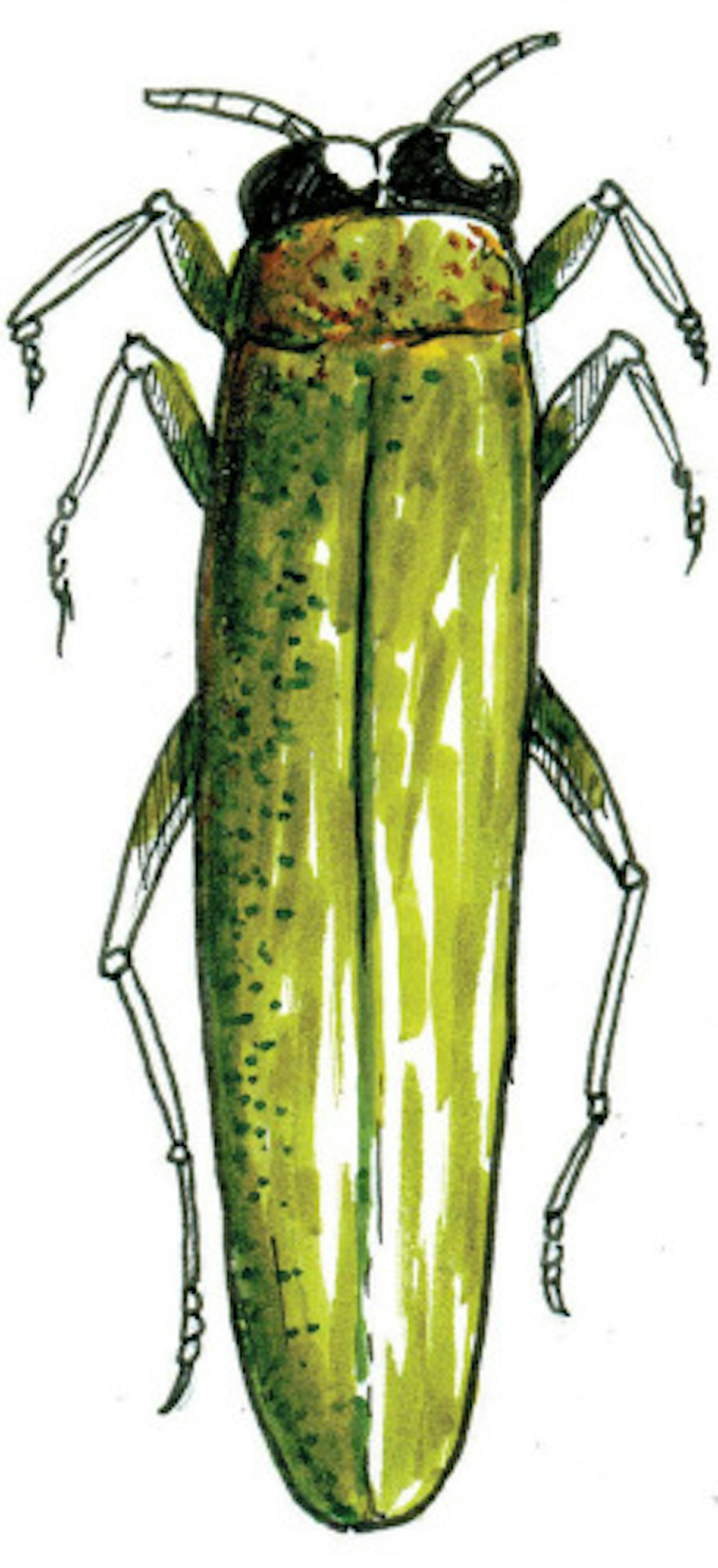
The word about potential damage from emerald ash borer has spread. Perhaps too well.
News that the voracious beetle was discovered in Wisconsin has had some worried homeowners seeking a preventive treatment. But tree experts are saying "not so fast."
"We're not going to offer treatment for emerald ash borer until it's here," said John Lloyd, director of research and science for Rainbow Treecare. "It's throwing bad money after good."
Jeff Hahn, an entomologist with the University of Minnesota Extension Service, agreed. Hahn explained that experts from states already infected with emerald ash borers advise that homeowners wait until an infestation has been confirmed nearby (within 15 miles) to treat trees with an insectcide, which is costly and must be applied annually.
"When emerald ash borer gets here, we'll have time to react," said Hahn. "It [treatment] would be a waste of money right now."
So what can you do to help your trees?
When you're stocking up for winter, don't transport firewood, even within the state. Experts say that the bug is being spread when traveling undetected in loads of firewood.
And, instead of treating trees, water them. Many trees are showing signs of drought stress, including wilted leaves, early leaf drop and early coloring. So, if the dry weather continues, water all of your trees well, even mature trees, at least once a week through fall.


