The debate over immigration policy is fast taking on more economic significance as the aging Minnesota and Midwestern labor force is shrinking.
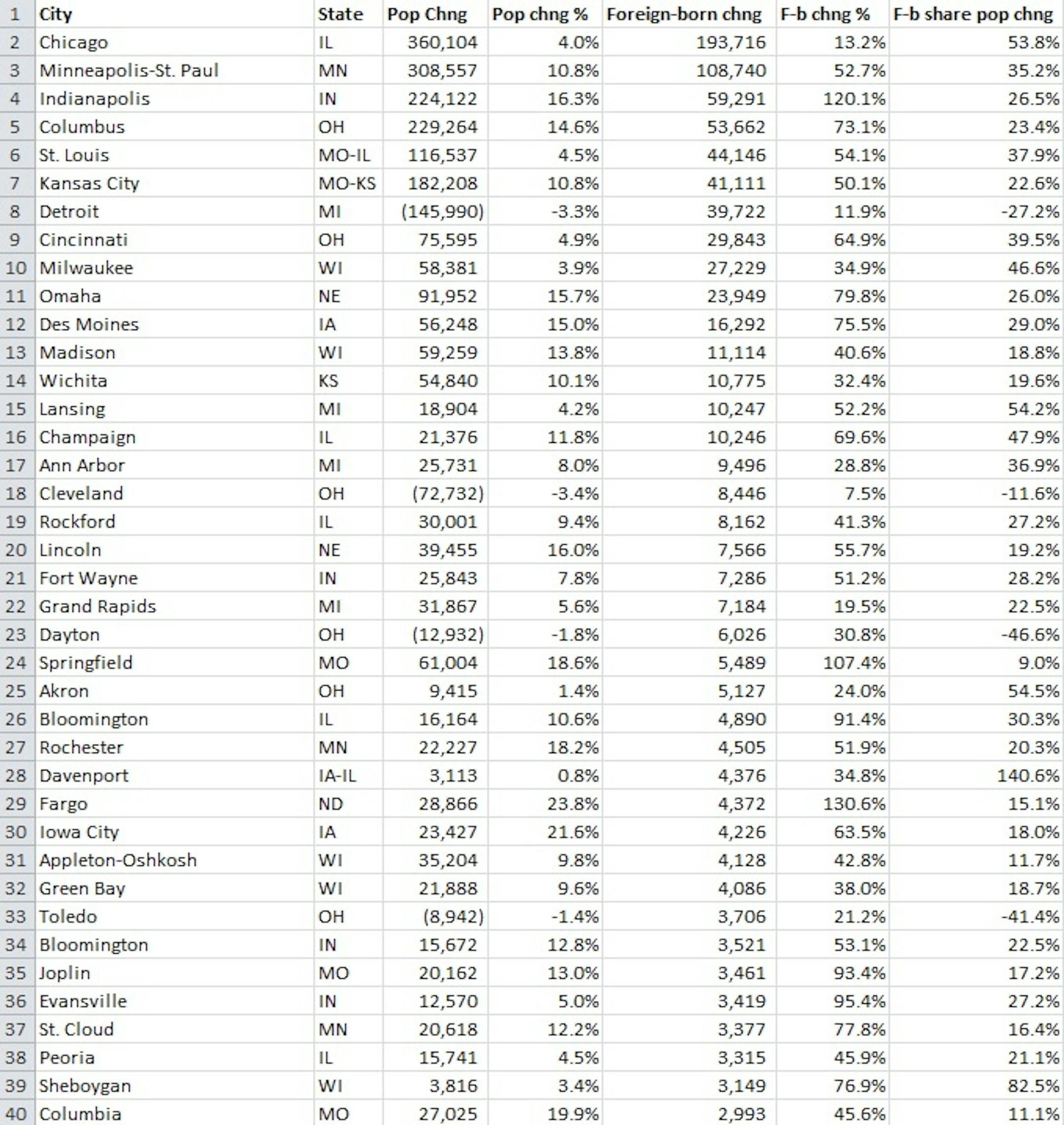
The Minneapolis-St. Paul metro area added 108,000 immigrants to its population in the first decade of the millennium, more than any metro area in the Midwest other than Chicago and at a far faster rate than Chicago. It appears immigration has allowed the Twin Cities labor force to keep growing even as the overall workforce in Minnesota has started to decline.
The immigrant population statistics are laid out in a report published a month ago by the Chicago Council on Global Affairs. Whatever your politics, the figures illustrate that job markets in the Midwest are quietly beckoning a lot of people from other countries, as more baby boomers retire, leaving companies to search for employees in a smaller pool of workers.
Mark Brunswick wrote about this report already for the Strib, but at a time when the state labor economist says the workforce is hitting a 15-year period of little or no growth, it's worth looking at the data a little more, and discussing why businesses are pushing for immigration reform.
The Minnesota labor force has shrunk each of the past four months, after peaking just over 3 million strong in the spring.
As baby boomers retire, "businesses that are going to want to expand are going to have to compete hand over fist, and tooth and nail for qualified workers," said Steve Hine, economist at the Minnesota Department of Employment and Economic Development, in June.
Enter immigration, and the rapid growth of it in the Midwest.
More than a third of the population gain between 2000 and 2010 in Minneapolis-St. Paul, Chicago, Milwaukee, Cincinnati, St. Louis, Ann Arbor and Topeka was immigrant population growth.