

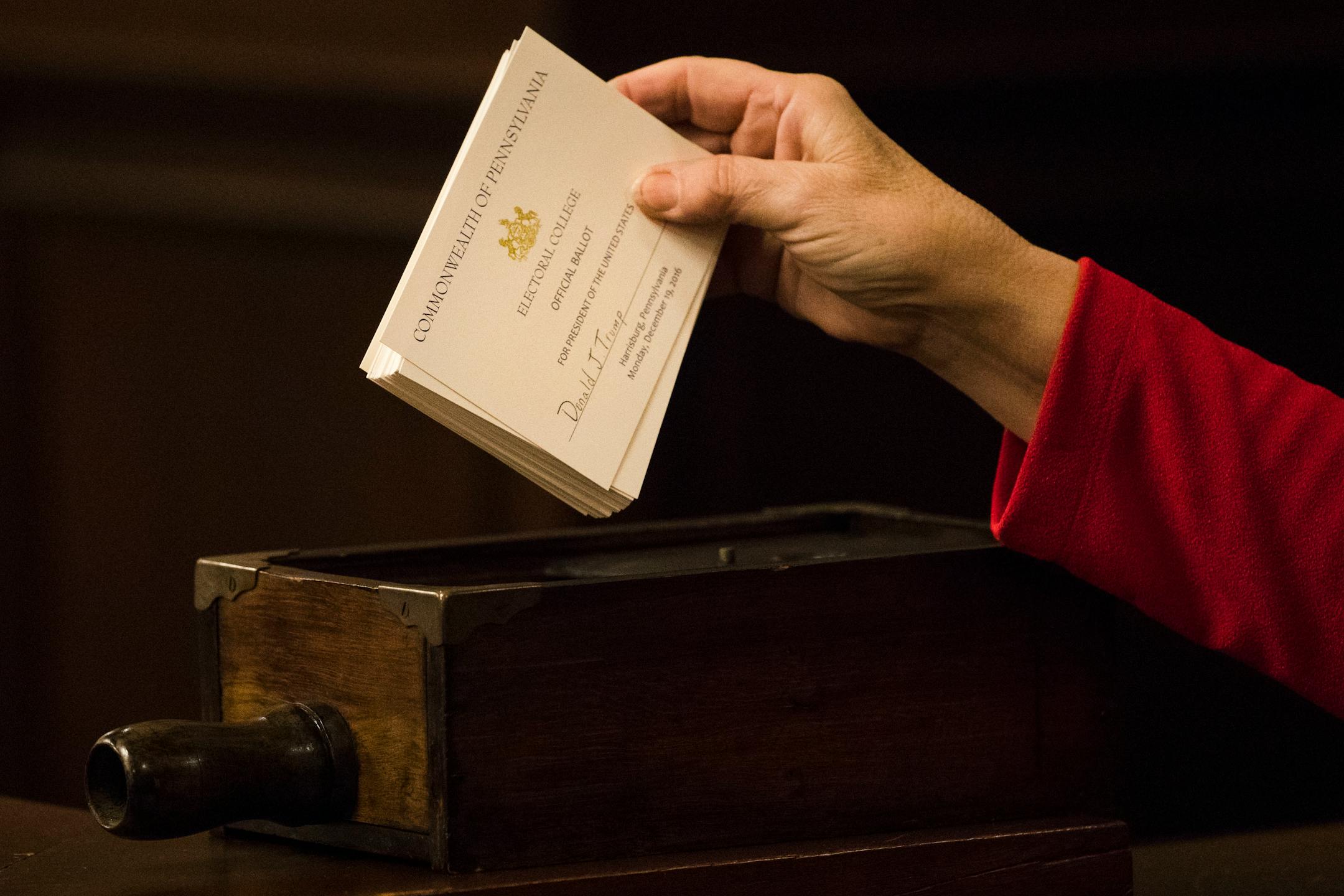
When the Electoral College meets Monday, its detractors hope it marks the beginning of the end of a system that twice this century has vaulted the loser of the popular vote to the presidency.
This year's presidential race provides the latest motivation for change to supporters of the National Popular Vote Interstate Compact. While Democrat Joe Biden scored a decisive win over President Donald Trump in both the popular vote and Electoral College, the race came down to narrow margins in a handful of swing states.
If the results had turned out differently in some of those states, Trump could have lost the popular vote for the second election in a row but gained the presidency because of the Electoral College system.
"It's an old, ugly mess that frankly should have been obviated some time ago," said Virginia House of Delegates member Mark Levine, a Democrat who introduced a bill to have Virginia sign on to the National Popular Vote movement. It would compel member states to award their electoral votes to the winner of the national popular vote.
Levine's measure passed the Virginia House earlier this year. Passage by the Senate would bring the movement 13 electoral votes closer to its goal.
So far, 15 states and the District of Columbia have signed on.
For presidential candidates, 270 represents the number of Electoral College votes needed to secure a win. The move toward a national popular vote also is aiming for that magic number. It already has secured 196 and aims to gain more next year. Advocates hope, perhaps unrealistically, that it will be in place by 2024.
Under the existing system, each state's electoral votes go to the candidate who won that state's popular vote, with the runner-up getting nothing. Nebraska and Maine are the only exceptions.


