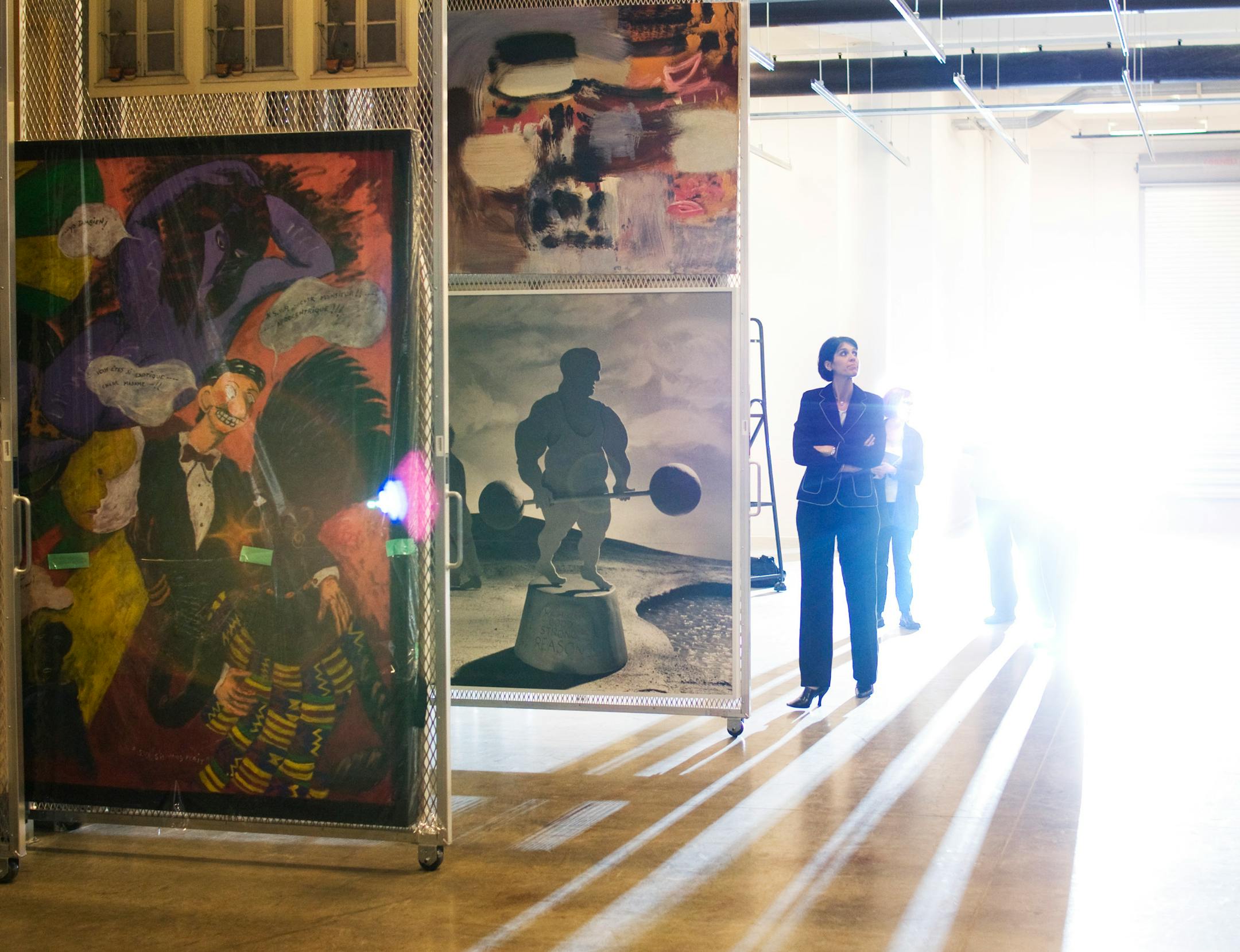
"I should have worn jeans for this, but I've got another meeting later so I couldn't," said Olga Viso, Walker Art Center's new director, welcoming visitors on a recent afternoon to her spacious white office in the museum's new wing.
She was dressed in museum-director casual: a trim black pantsuit with white piping and slingback heels that added a couple inches to her lean, 5-foot-11-inch frame. It was a tad formal for the date we had proposed -- an hour or two of spelunking in the museum's subterranean storage rooms.
Viso earned a national reputation for her fresh approach to contemporary art and special interest in Latin American artists during her 12 years at the Hirshhorn Museum in Washington, D.C., the last three as director. With the Walker collection now at her disposal, the Star Tribune was curious about what surprises she might unearth.
Like most museums, the Walker is structurally an iceberg, with a crown of gleaming galleries atop a labyrinth of stairways, frame shops, archives and storage rooms. Joe King, the museum's assistant registrar, led the expedition through a warren of back corridors and security doors to a freight elevator that plunged eight stories.
Behind more locked doors, the storage rooms with their concrete floors and cinder-block walls are glamour-free and spartan. Low-wattage motion-activated lights flick on as visitors enter, but the high-ceilinged spaces remain dim and a little gloomy.
There are separate rooms for sculpture (the most crowded), art on paper (10,000 prints, drawings and photos in immense rolling cabinets) and paintings (clipped willy-nilly to tall metal-mesh sliding racks).
"Isn't this a dream space?" gushed Viso about a room that, to anyone but a museum director, might look like an especially clean and well-ordered warehouse. There's no need to organize anything by theme or subject; every object, painting and piece of paper has a radio-frequency identity tag attached.
"Look at this wacky, wonderful thing," she said, crouching beside what appeared to be a chrome lamp topped by a ball of amber lightbulbs that flickered on and off in odd patterns. Called "Electric Flower," it's a 1967 Pop sculpture by Otto Piene, a now-obscure German whose work is enjoying a resurgence of attention, Viso said.