

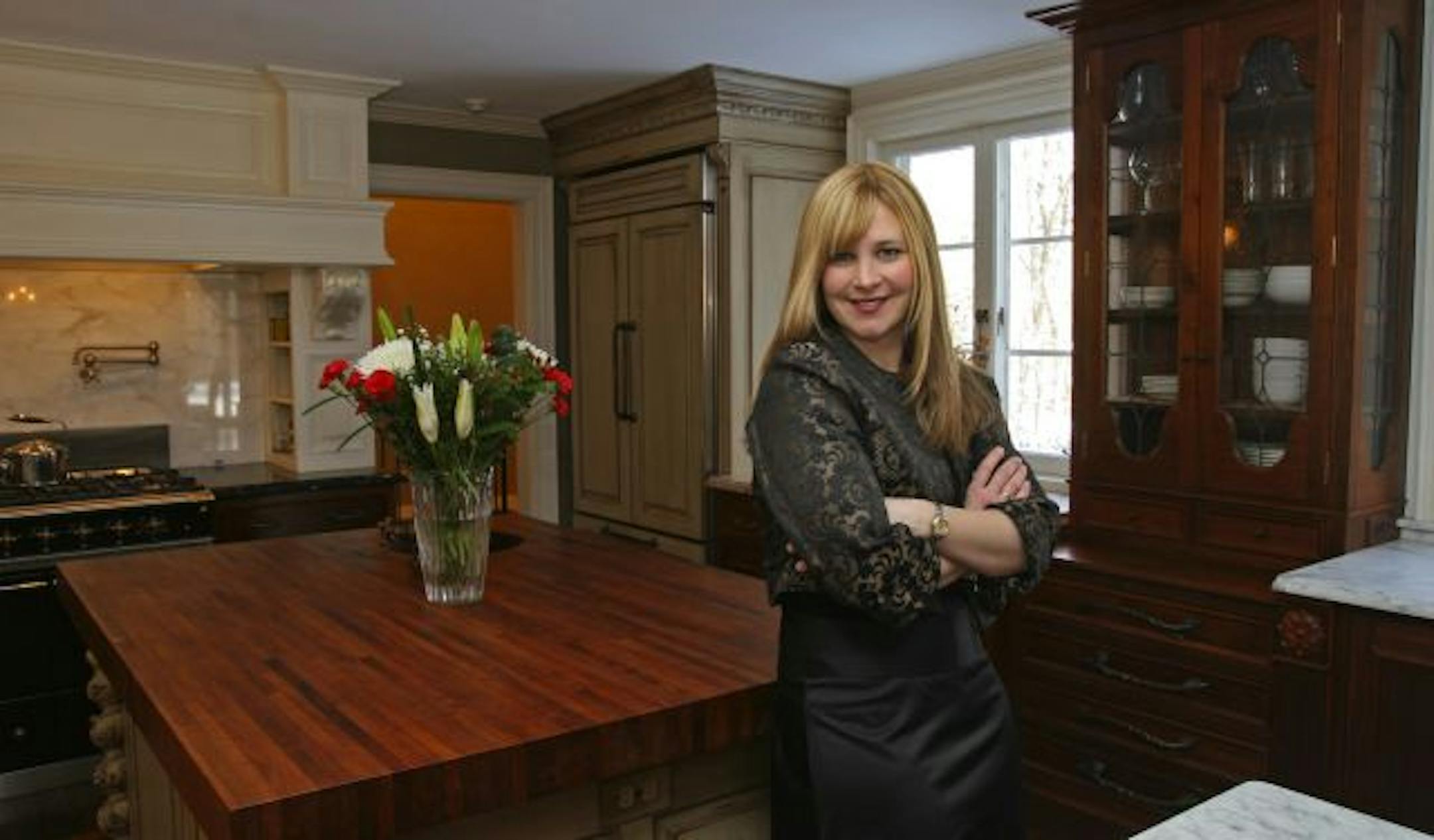
Marie Antoinette never slept in Kristi Oman's bedroom, as far as anyone knows, but the French queen would have felt right at home there.
"It's a treat to wake up in that room -- you feel like a princess," Oman said.
With its whitewashed wood paneling, gold-leaf detailing and inset floral paintings, the Oman boudoir definitely has a regal Rococo air.
Which makes sense, given that it was once part of an 18th-century Parisian chateau. The ornate Louis XVI bedroom and its Gallic-style sister, a delicately carved living room with Regency white-oak paneling, were both built in France in the early 1700s, then imported to the United States -- walls, woodwork, fireplaces and all -- about 200 years later by a French banking heiress. She apparently had so many fancy French rooms she couldn't use them all. The two rooms languished in storage in New York for a few decades before somehow ending up in Wayzata.
Bringing entire rooms over from Europe was popular (among those who could afford such luxury) during the Gilded Age but unusual by the early 1950s when Oman's house was built. "It's fairly rare around here," said Donna Haberman, senior objects conservator for the Midwest Art Conservation Center. "There are a few more examples on the East Coast."
An early teardown
The original owner was Allan J. Hill (of the Janney, Semple, Hill hardware dynasty) and his wife, Harriett, according to longtime Wayzata resident and historian Irene Stemmer. The Hills tore down a summer house, built by Prairie School architects Purcell & Elmslie, and hired architect Guy Crawford to design a new house on the 5-acre wooded site. Crawford was the go-to guy among local Francophiles in the '50s, according to Stemmer. "He did a lot of Frenchy things." For the Hills, he designed a pink brick, Normandy-style house that incorporated the original carriage house, also by Purcell & Elmslie, and the two French period rooms.
Those rooms were a big draw when Oman and her husband, Zev, bought the 6,600-square-foot house in 2004. "We've always loved old architecture," she said. "And we like things that are unique. You couldn't reproduce them [the French rooms] today."


