Art review: Soul seeker

New prints of old portraits by pioneering photographer August Sander open a tantalizing window into pre-World War II Germany.

February 28, 2008 at 10:09PM
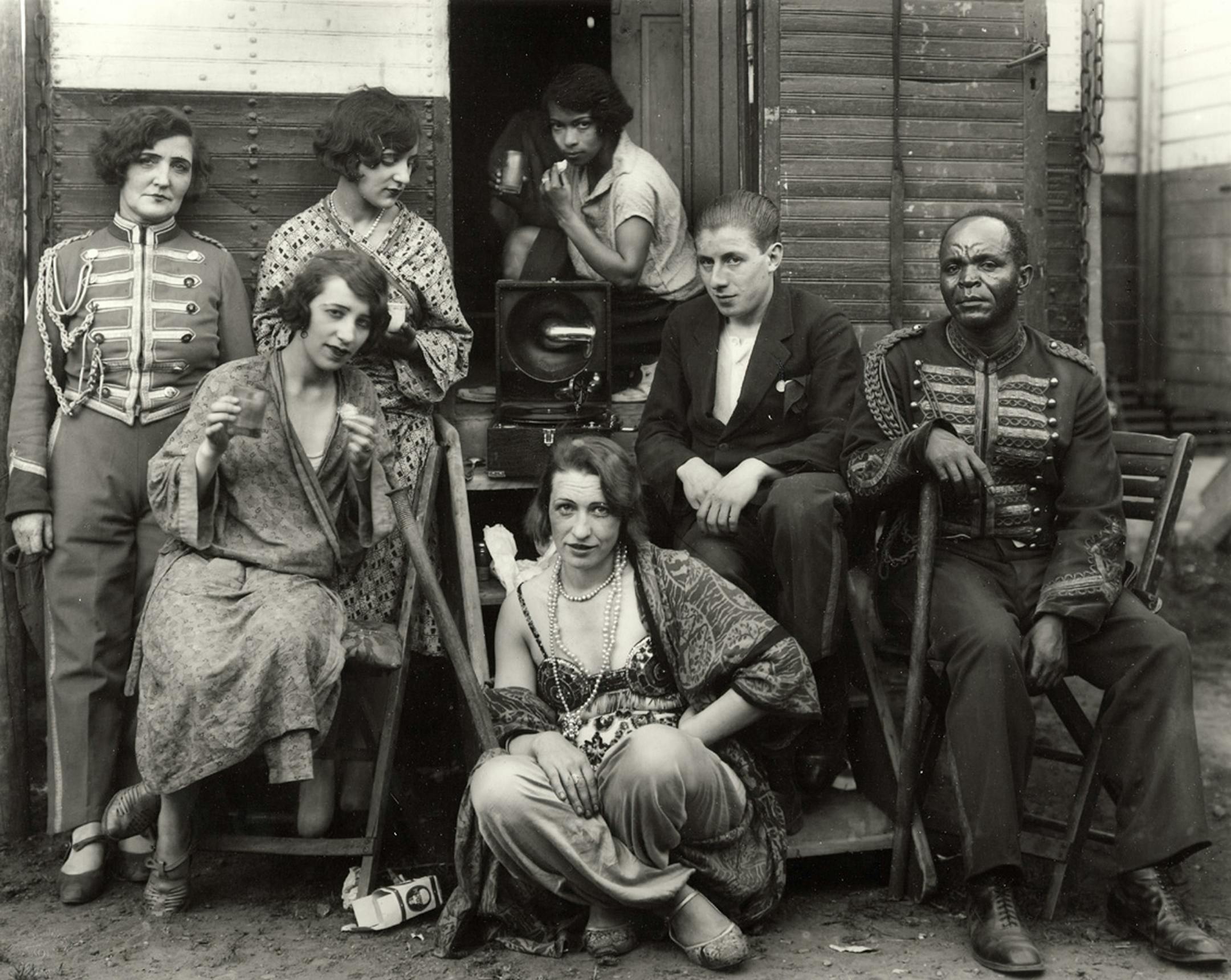
The Nazis prohibited and even destroyed some of Sander’s photographs, most likely because they did not portray an Aryan ideal. “Circus Artistes” is among his unexpected images. (Star Tribune/The Minnesota Star Tribune)

A legend among his peers, photographer August Sander aimed to document systematically all the "People of the 20th Century," as he called his masterwork. By that he really meant the people of Germany and specifically those of Cologne and its environs, where he lived and worked during the first half of the past century.

A small slice of Sander's ambitious work is on view through April 12 at Weinstein Gallery in south Minneapolis. With only 23 images, all freshly printed by Sander's grandson Gerd, the show is but a sampler of the monumental project that was still unfinished at the artist's death more than 40 years ago.

The show's significance dwarfs its scale, however, because it offers a rare firsthand encounter with a master whose spare, unvarnished style has influenced photographers from Bernd and Hilla Becher in Germany to Robert Frank, Diane Arbus and Richard Avedon in the United States.

Psychology of his time

Born and raised in a German mining town, Sander (1876-1964) was given camera equipment by an uncle and developed his technical skills in the army. By 1904 his talents were refined enough to earn him a gold medal at an international show in Paris. Settling in Cologne in 1910, he began to photograph farmers in the neighboring villages while supporting his wife and children as a commercial photographer.

Rather than the stiff studio portraits common a century ago, Sander preferred to make images in the woods and fields, showing three debonair young men strolling along a gravel road or a family eating lunch in a field beside oxen still hitched to a plow. He apparently believed that these humble figures with their appraising glances, scuffed shoes and grubby fingernails were the soul of Germany. Not the soul that the Nazis would later trumpet as the Aryan ideal, but the authentic populace. (The Nazis in fact prohibited and destroyed some of his work, no doubt because it revealed the hollowness of their ideology.)

"By capturing through absolute photography both the individual social strata and their surroundings, I hope to give a true psychology of our time and of our people," he wrote.

Post-World War II prints

Of Sander's estimated 40,000 negatives, about 10,000 survived World War II, when his studio was bombed and most of his archive burned. Very few of his prewar prints survived, so even the Sander photos now in museums and private collections are mostly prints that the artist, his son Gunther, and grandson made after the war. (Weinstein's show includes an excellent video interview with Gerd discussing his grandfather and their work.)

He rarely identified his subjects by name, which would have particularized them. Instead, he designated their profession or social status -- cafe waitress, lawyer, unemployed, member of the Hitler Youth -- to emphasize their roles as cultural archetypes.

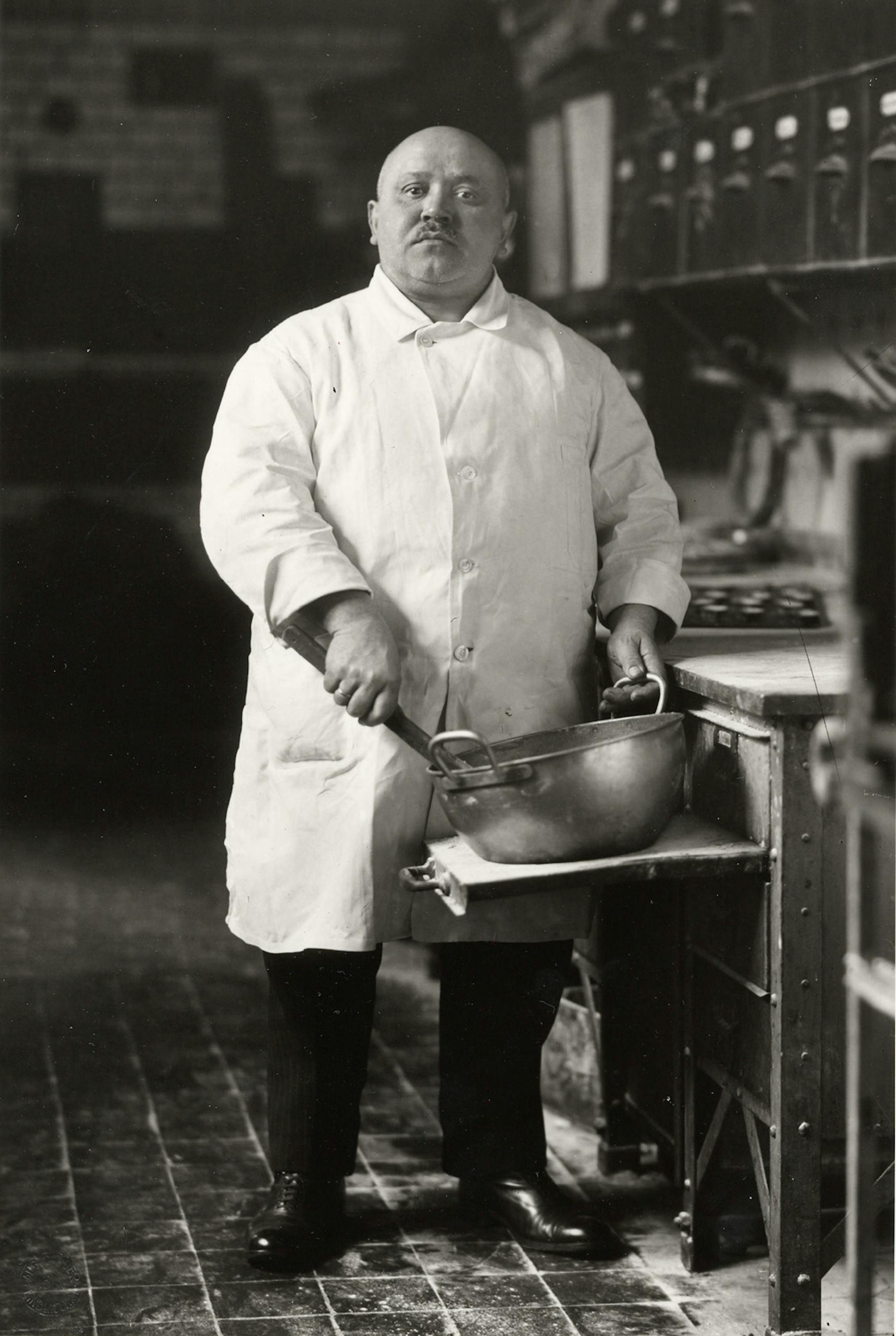
Beautifully printed from Sander's 80-year-old negatives, the Weinstein images are -- like all portraits of the now dead -- haunting in their ephemeral vitality. The proud, brawny "Pastry cook" wears spotless black shoes and flour-free trousers that prove he was not interrupted at his work but posed for his portrait. The fascinating "Painter's wife, Cologne" is a startlingly masculine creature with slicked-back hair and cigarette clenched between her teeth. And what a calculating crowd of poseurs he found in the mixed-race circus troupe in their bathrobes, gypsy beads and mock military uniforms!

A challenge to evaluate

Still, assessing the success of Sander's sociological aspirations is tricky and fraught with the perils of relativism, sentimentality and the ever-shifting judgments of history. His attempts to catalog human types devalues and diminishes the individual, even as the photos themselves raise unanswerable questions about the lives they so briefly note. It is virtually impossible to scrutinize images like these of Germans from the Weimar years and not wonder what, if anything, they signify and what became of their subjects.

Sander's 1928 photo of two "Boxers" is almost a parody of Aryan ideology, the one a blond ideal and the other a pasty-faced goofball. Did he mean to make a joke? Did they? Likewise, his 1925 picture of two "Middle-class Children" inevitably raises the question of what became of that sweet girl and somber boy in the chaos to follow. Do her perky hair bows and his checked shorts signify mother love, class affluence or merely the kid fashions of the day? Did she marry a German officer and he become a Luftwaffe pilot who bombed London or perished on the Russian front? Or did they become refugees, escape, sit out the war in a backwater or die of starvation?

"Through seeing, observing and thinking, as well as with the help of the camera and by adding a date, we can capture world history, influencing the whole of humanity through the medium of photography as a world language," Sander once wrote.

It was a noble ambition, as was his assertion that "With my objective eye, I want to open everyone's eyes."

But despite all that they record and reveal, there is something inscrutable about these photos. Their subjects remain, like most portraits, unknowable. And we have no option but to read them through the distorting lens of our own history, psychology, dreams and imaginings.

Mary Abbe • 612-673-4431

August Sander: People of the 20th century, boxers (Star Tribune/The Minnesota Star Tribune)
August Sander: People of the 20th century, the pastry cook (Star Tribune/The Minnesota Star Tribune)
about the writer

about the writer

Mary Abbe, Star Tribune

More from Minnesota Star Tribune

See More
card image
J. SCOTT APPLEWHITE, ASSOCIATED PRESS/The Minnesota Star Tribune

The "winners" have all been Turkeys, no matter the honor's name.

In this photo taken Monday, March 6, 2017, in San Francisco, released confidential files by The University of California of a sexual misconduct case, like this one against UC Santa Cruz Latin Studies professor Hector Perla is shown. Perla was accused of raping a student during a wine-tasting outing in June 2015. Some of the files are so heavily redacted that on many pages no words are visible. Perla is one of 113 UC employees found to have violated the system's sexual misconduct policies in rece