

Like squabbling children or belligerent countries, museum departments can be rancorous little enclaves in which aesthetes sharp-elbow each other for turf, money, prestige and the spotlight.
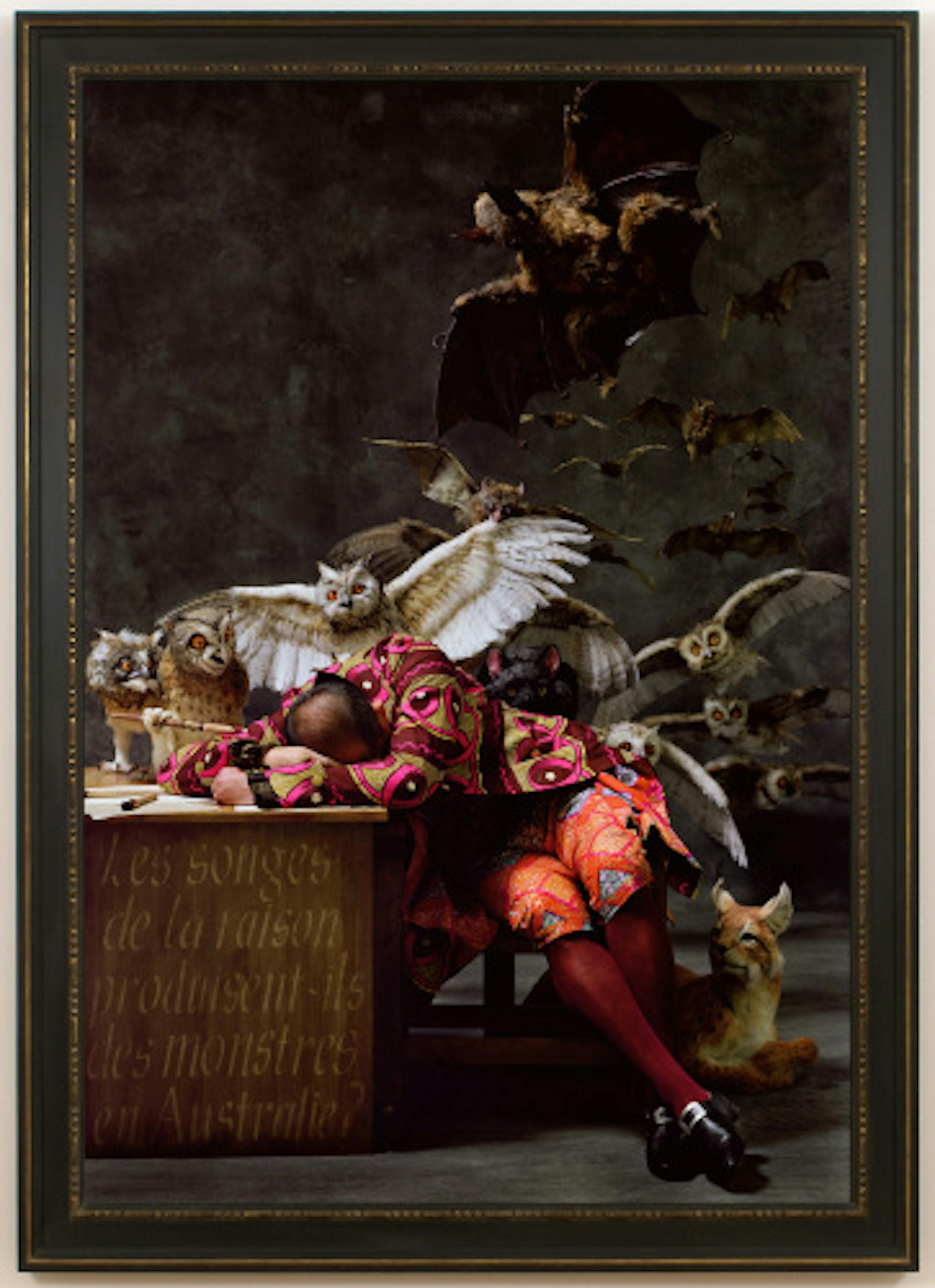
So it's noteworthy that new curators from three departments at the Minneapolis Institute of Arts all endorsed the recent purchase of a photo by Yinka Shonibare, a contemporary London-born artist of Nigerian heritage. The buy was proposed by contemporary-art curator Elizabeth Armstrong, who found the 7-by-5-foot photo in New York. The idea was immediately seconded by Jan-Lodewijk Grootaers, who oversees the African collection, and by photo curator David E. Little.
All three seem intent on breaking down old departmental walls while pushing the museum's engagement with contemporary art, which it previously left mostly to nearby Walker Art Center.
The Shonibare photo "symbolically speaks to the direction we're taking," said Little. "I'm not thinking just about collecting photography. We're thinking about ways certain images can be utilized throughout the museum in relationship to other collections."
A multi-talented figure, Shonibare is known for photos and installations in which he restages famous European images using mannequins wearing colorful costumes made from "African" fabrics. The institute's photo -- modeled on "The Sleep of Reason Produces Monsters," an etching by Spanish artist Francisco de Goya -- shows a man in 18th-century European attire surrounded by the devilishly winged creatures and feral beasts that Goya believed beset society when "reason" nods off.
The photo probably will go on display in late February, most likely in the African department. Later in the year Armstrong hopes to include it in a contemporary exhibit. It also complements the museum's extensive collection of original Goya prints and its famous 1820 painting in which a gravely ill Goya depicts himself being nursed by his doctor.
"Not only is [Shonibare's] work contemporary, but he precisely addresses the issue that culture is not a set identity but an artificial construct," said Grootaers, who is eager to breach the boundaries that balkanize museum departments. "If you physically change a work from one department to another you make a statement that art is not easily caught by the labels that museum curators define. I will be happy to have it in the African department for a while ... but I have no problem with moving it across boundaries. I think that's exciting."
Photo given cinematic staging


