

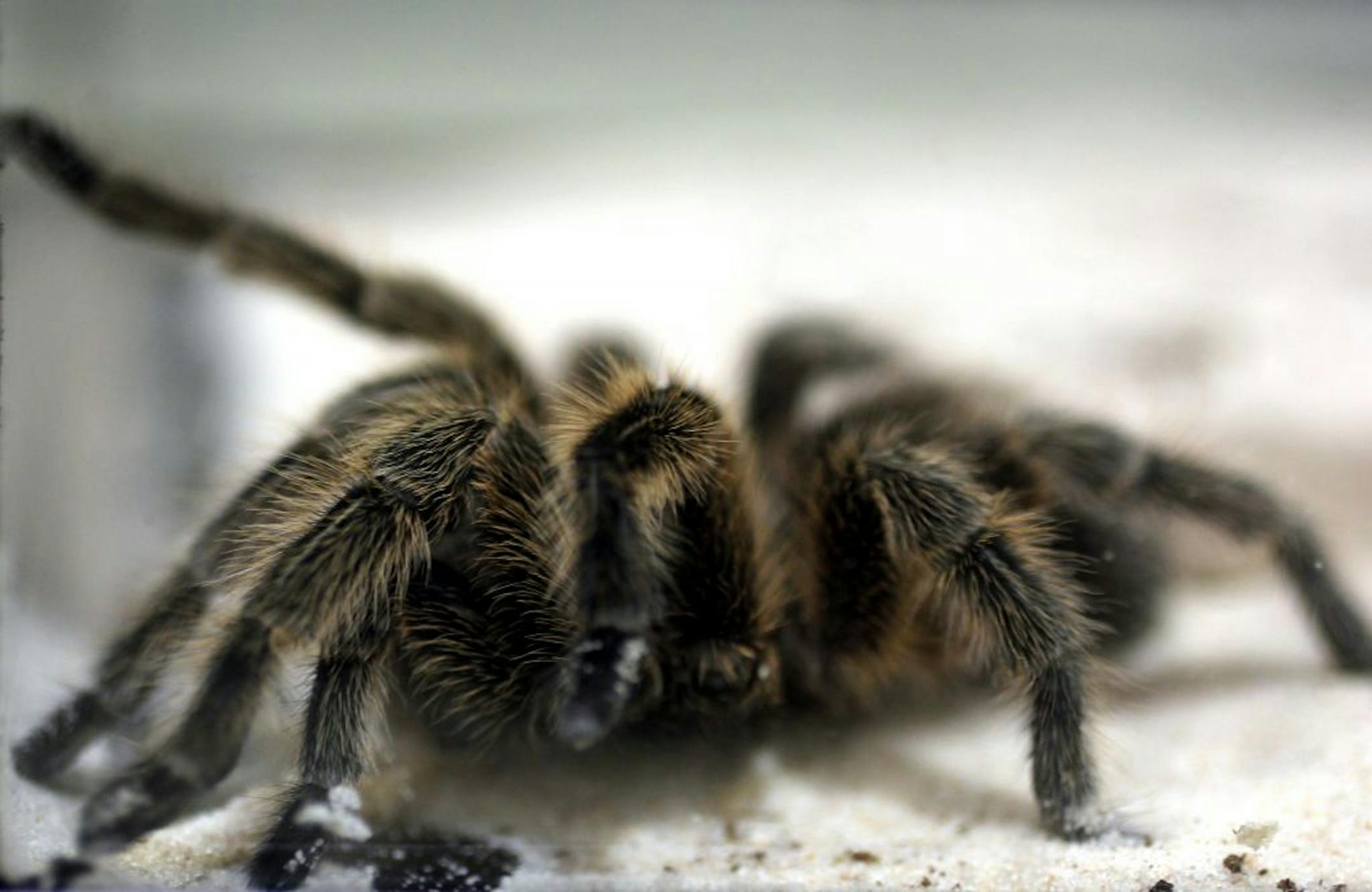
The nervous college student was pacing the corridor, so scared of the caged spider at the end of the hall that he thought he would leave before the therapy session began.
After about two hours of "exposure therapy," which involved touching the 5-inch-wide tarantula with a paintbrush, then with gloves and finally with bare hands, he didn't want to leave the arachnid.
"It was so sweet. I remember thinking this was not a problem I had anticipated -- that he wouldn't want to leave the spider," said Katherina Hauner, a post-doctoral neurology fellow at the Northwestern University Feinberg School of Medicine in Chicago.
The patient's phobia was cured. And Hauner was able to observe how the brain changes when fear is successfully treated.
Hauner's research, published this week in the Proceedings of the National Academy of Sciences, documents the immediate and long-term brain changes after treatment for a phobia.
Her 12 arachnophobic subjects underwent brain imaging scans -- while being shown pictures of spiders -- immediately before and after the therapy. The same scanning technique was performed six months later.
Brain scans after the therapy showed that regions associated with fear had decreased activity when the subjects were shown pictures of spiders. The scans also showed how the brain reorganizes long-term to reduce fear.
The research could be used in the treatment of other phobias and anxiety disorders, including the fear of blood, flying and small spaces. By studying the levels of brain activity associated with fear, researchers might be able to predict for whom therapy will be most effective, and they could use the results to decide whether someone needs more therapy, for example.


