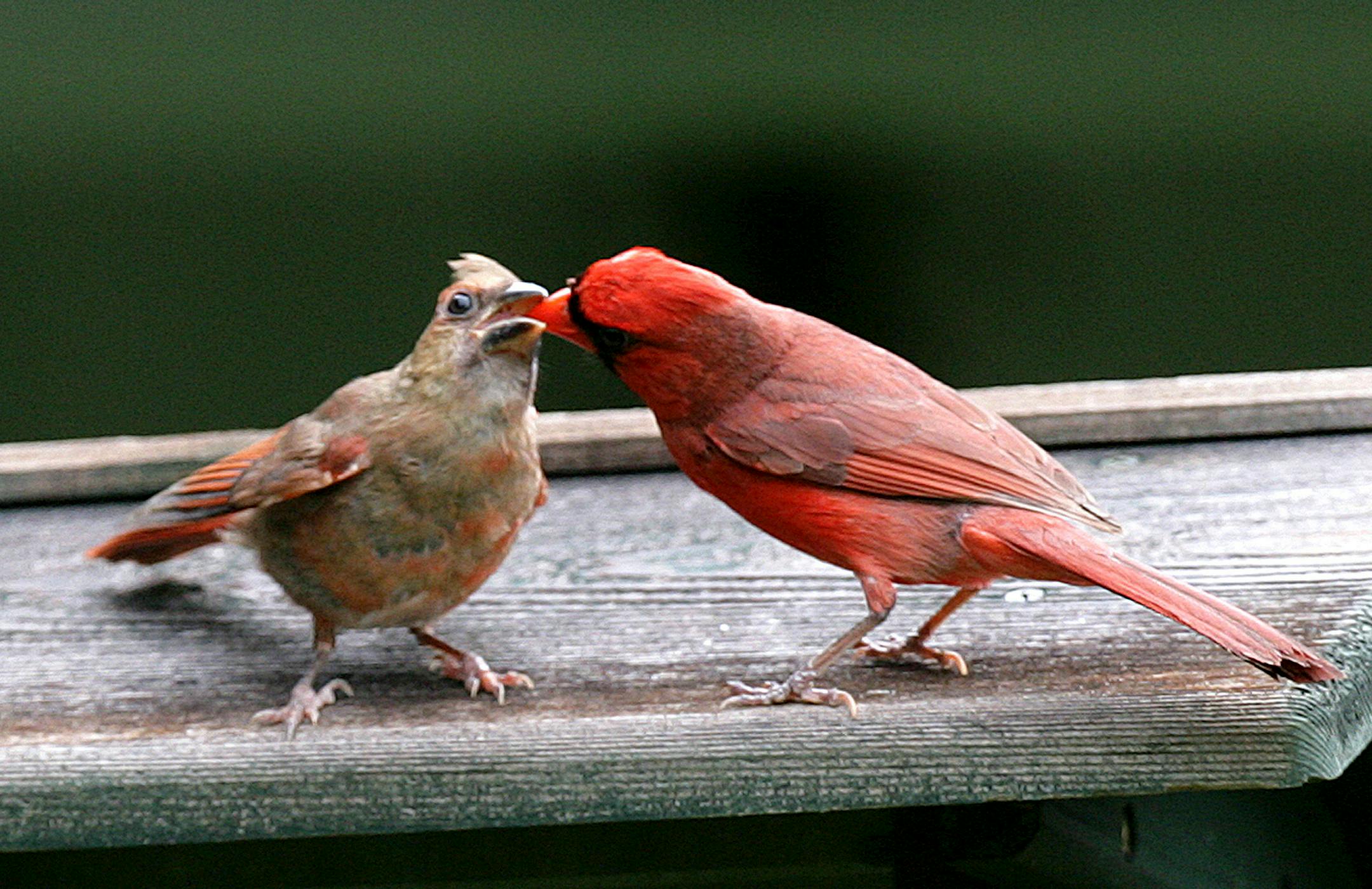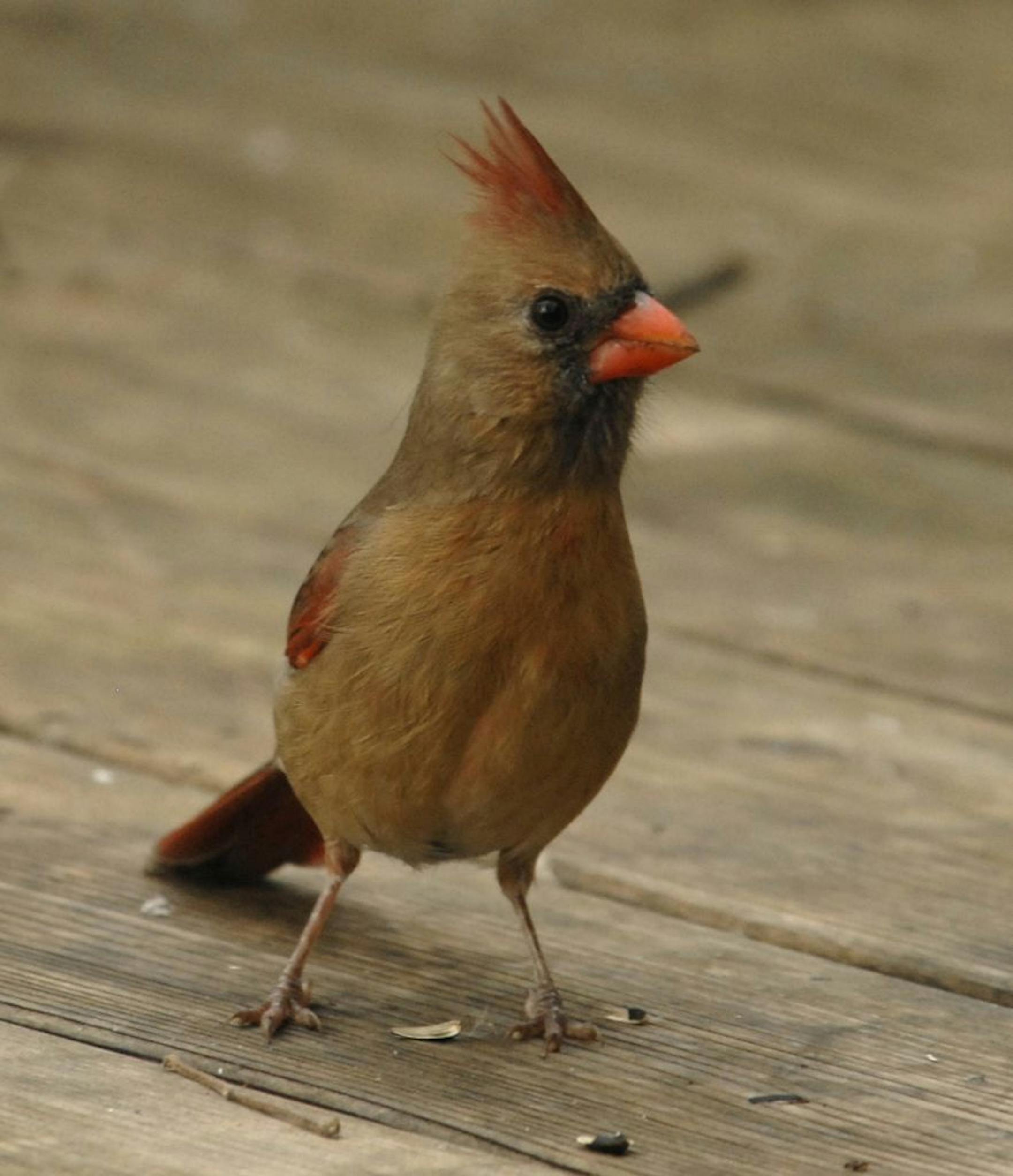
Q When I travel in the South, I encounter cardinals that seem to have no fear of people, but the cardinals at home are extremely skittish. Is there a difference between cardinals in the North and South, and could this be due to the Scandinavian influence around here?
A I had to chuckle at the thought of cardinals under the influence of our area's Scandinavian heritage. But no, I think what you're noticing is the "handout effect" -- I've seen the same thing at state parks in Florida, where people feed birds that visit the campgrounds. You're seeing cardinals that have become habituated to humans and expect a treat from any tall, two-legged creature. Most back-yard cardinals, North or South, are very wary of humans but are comfortable visiting feeders.
True blue Q Two questions about blue jays: (1) Do they stay mated for life, and (2) do they migrate in the fall?
A After a male and a female blue jay pair up, they tend to stay together as long as they both live (most birds live fairly short lives, so if one jay dies or disappears, the remaining bird will find another mate). We see blue jays year-round, but they may not always be the same birds. The jays in our area may shift down toward Iowa in the fall and are replaced by birds from farther north. Come spring, "our" jays return and the northern jays head back north.
Flame-flying 'deesQ I witnessed something unusual the other day: I was burning a big pile of wood and brush out at the farm and a flock of about 15 chickadees showed up and started flying across the fire. They would land on a bush on the other side, then fly over the flames again, almost close enough to singe their feathers. They kept this up for almost three hours and I'm wondering what they were doing.
A I wish I'd been there to see this interesting and unusual behavior on the part of those little birds. Chickadees are very smart and very curious, and the big, pulsating orange thing must have fascinated them. When they discovered that flying over it brought warmth on a cold day, it probably inspired them to make numerous flights, somehow instinctively keeping above the flames. And it may even have brought some fun into the lives of intrepid little birds that are pretty focused on survival in winter.
Mentor-less migration Q Do young birds need to migrate with adults the first time, so they know where to go?
A Astonishing as it may seem, millions and millions of young birds, some no more than a few months old, lift into the sky each autumn and head, all alone, to their species' winter home. And then they make it back in the spring to the area they left the previous autumn. Songbirds have migration information hard-wired into their brains, and they amend this internal map in later years with information based on their experiences. A few species, notably geese, cranes and swans, learn migration routes from their parents as the family flies together on their first migration.