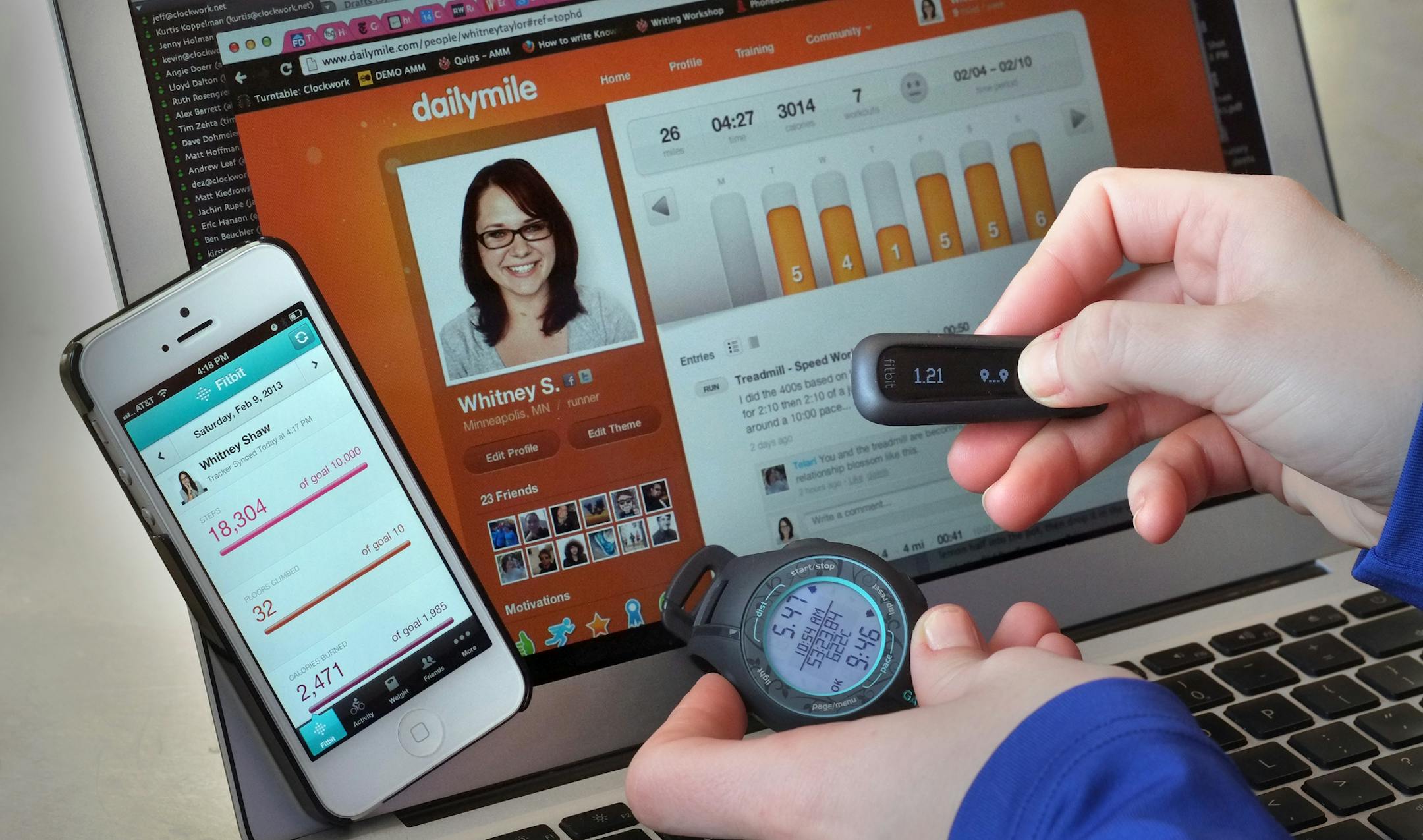
Whitney Shaw is training for a marathon — and her friends know every single detail.
She tracks the distance and time of every run on the social network DailyMile, posts her proudest achievements to Facebook and maintains a thoughtful account of her fitness and nutrition efforts on a Tumblr blog.
"My friends know my weekly mileage," said Shaw, 26. "If I'm not hitting that, I hear about it."
The Minneapolis resident is among millions of Americans counting on mobile apps, social media and wearable tech gizmos to lose weight or get fit. These digital tools promise a combination of high-tech habit tracking and positive peer pressure that users say helps them shed pounds faster. But the apps also make oversharing too easy, prompting eye rolls among those checking Twitter from the couch.
One in five American smartphone owners have downloaded at least one health or fitness app, according to a recent study by the Pew Research Center, and there are more than 13,000 apps in that category in the iTunes store. DailyMile, which draws data from different apps, claims users have logged more than 12 million workouts.
Altogether, this tech trend takes what once was mostly private — every calorie consumed, step taken or pound lost — and turns it into public discussion. Apps often link to Facebook and Twitter, automatically posting details of the latest run or even a user's weight for all to see. That can be encouraging, annoying or embarrassing.
"My worst nightmare is that I will tweet my weight," said Meghan Wilker, co-host of the Minneapolis-based Geek Girls Guide podcast and a co-worker of Shaw's at Clockwork Interactive Media. "It's too easy to share something embarrassing when you automate everything."
Share with caution
Shaw, inspired by Wilker and other tech-savvy co-workers, started running a year ago. But she's mindful of what she shares online. Not everyone is interested in her daily training updates, she said.