

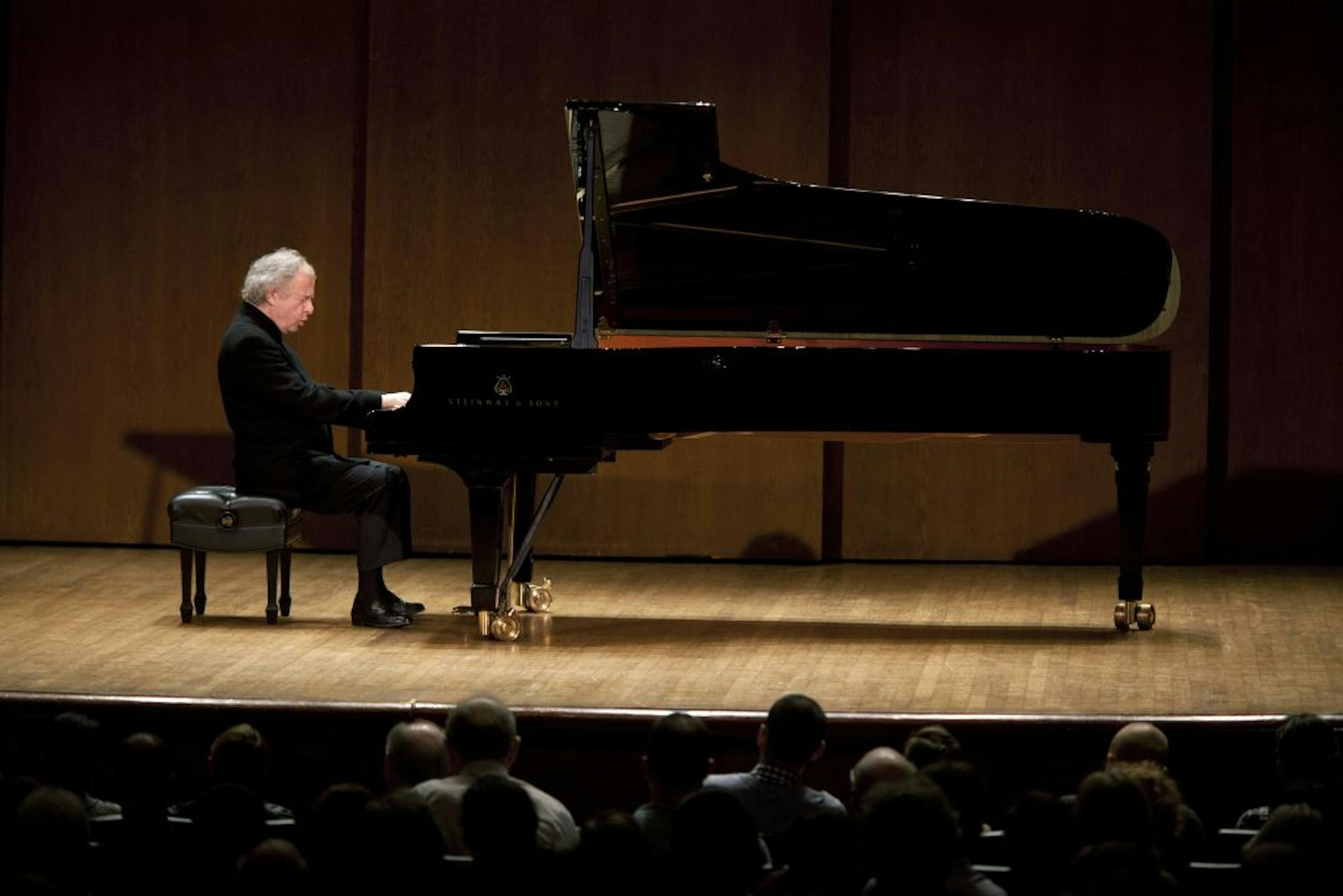
While listening to Andras Schiff's new recording of J.S. Bach's "The Well-Tempered Clavier" on headphones as I stared up into the crown of a maple tree, it suddenly struck me that listening to Bach is like staring up into the crown of a maple tree.
The root of each passage in "Clavier" is clear and the end-points are self-evident. But the ever-branching paths from beginning to end are a fascinating blend of seemingly chance procedure and inexorable logic. This is music that skips, swerves, stutters, scurries, struts, dreams, hesitates, ponders. It's a seemingly inexhaustible treasure house of melodic/rhythmic/harmonic pattern and possibility.
Schiff is alert to every one of those patterns and possibilities.
His new ECM recording of "Clavier" is his second go at the keyboard cycle (he recorded it for Decca in 1990). In a recent interview posted on Vimeo, the pianist held forth eloquently and sometimes mischievously about his connection to Bach.
"To me he's a divine presence, and the greatest composer of all time," Schiff said. "Most people would agree on that. I think if you really dislike Bach, you keep quiet about it."
Schiff acknowledges that, in Bach's own time, his greatness as a composer wasn't always acknowledged -- perhaps, he says, because Bach never took "the easy way" in his music.
"He's incredibly demanding to listen to, even today -- emotionally, intellectually demanding. It's anything but light entertainment ... although there's plenty of joy in the music. I think there's even plenty of humor in it. But it's very sophisticated humor."
Each book of "The Well-Tempered Clavier" takes the form of 24 paired preludes and fugues. The first book was composed in 1723 and, in the words of Bach, was intended "for the use and profit of young musicians desirous of learning as well as for the pastime of those already skilled in this study."


