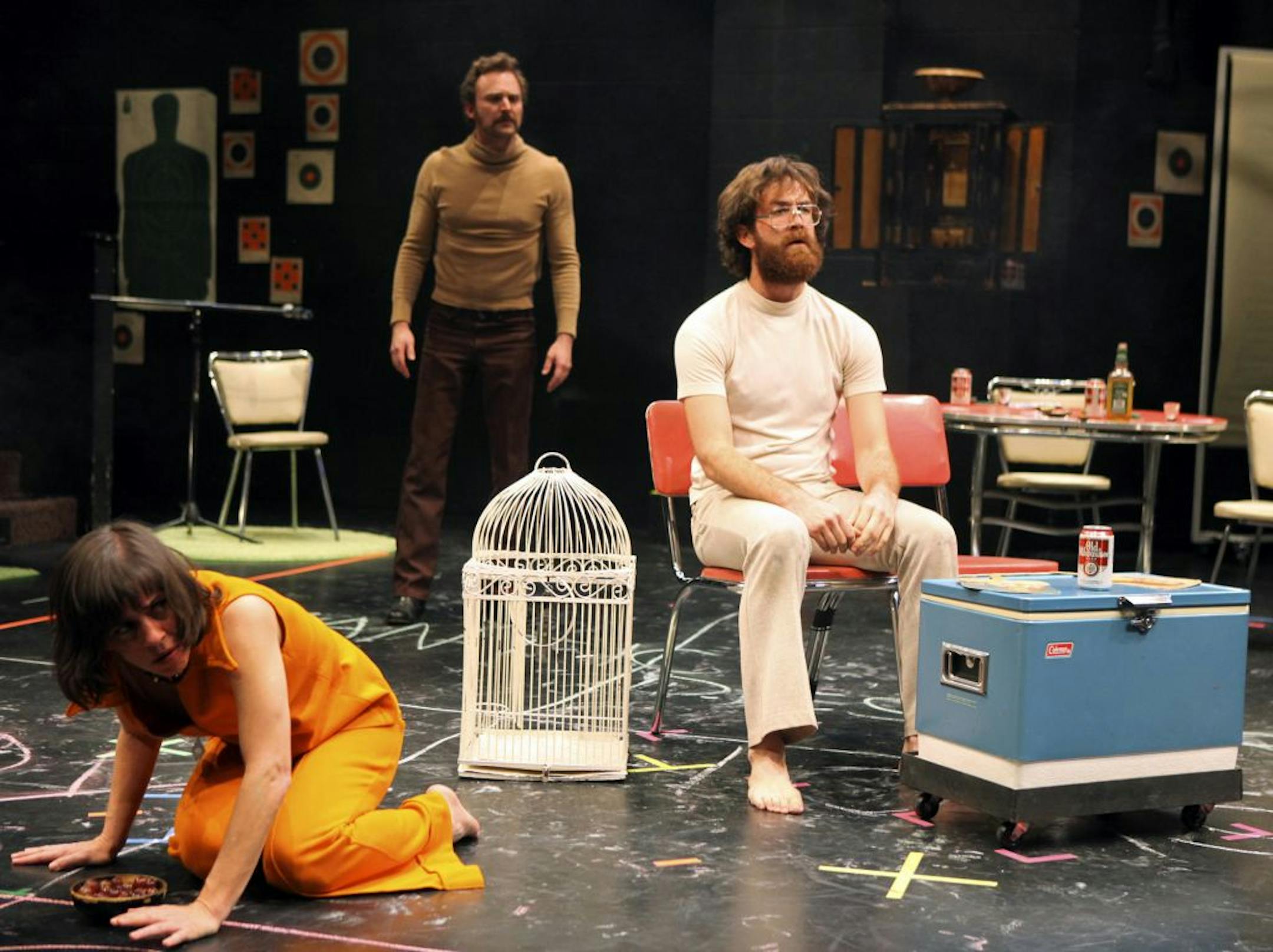
Among the "most terrifying moments" Philip Bither can recall in his more than 12 years as head of performing arts at Walker Art Center was the time in 2000 when actor Roger Guenveur Smith nearly turned "Out There" into "Fight Club."
The Obie-winning actor, who was portraying 1960s Black Panther activist Huey P. Newton, liked to get into his confrontational character before the show began, giving plenty of attitude from his perch onstage. On this particular evening, his Huey was not enjoying the Minnesota winter, and he was in an even fouler mood than usual.
"Some teens laughed, and he yelled back," Bither said. "He started baiting the audience, as Newton, provoking them. We really thought there was going to be a fight."
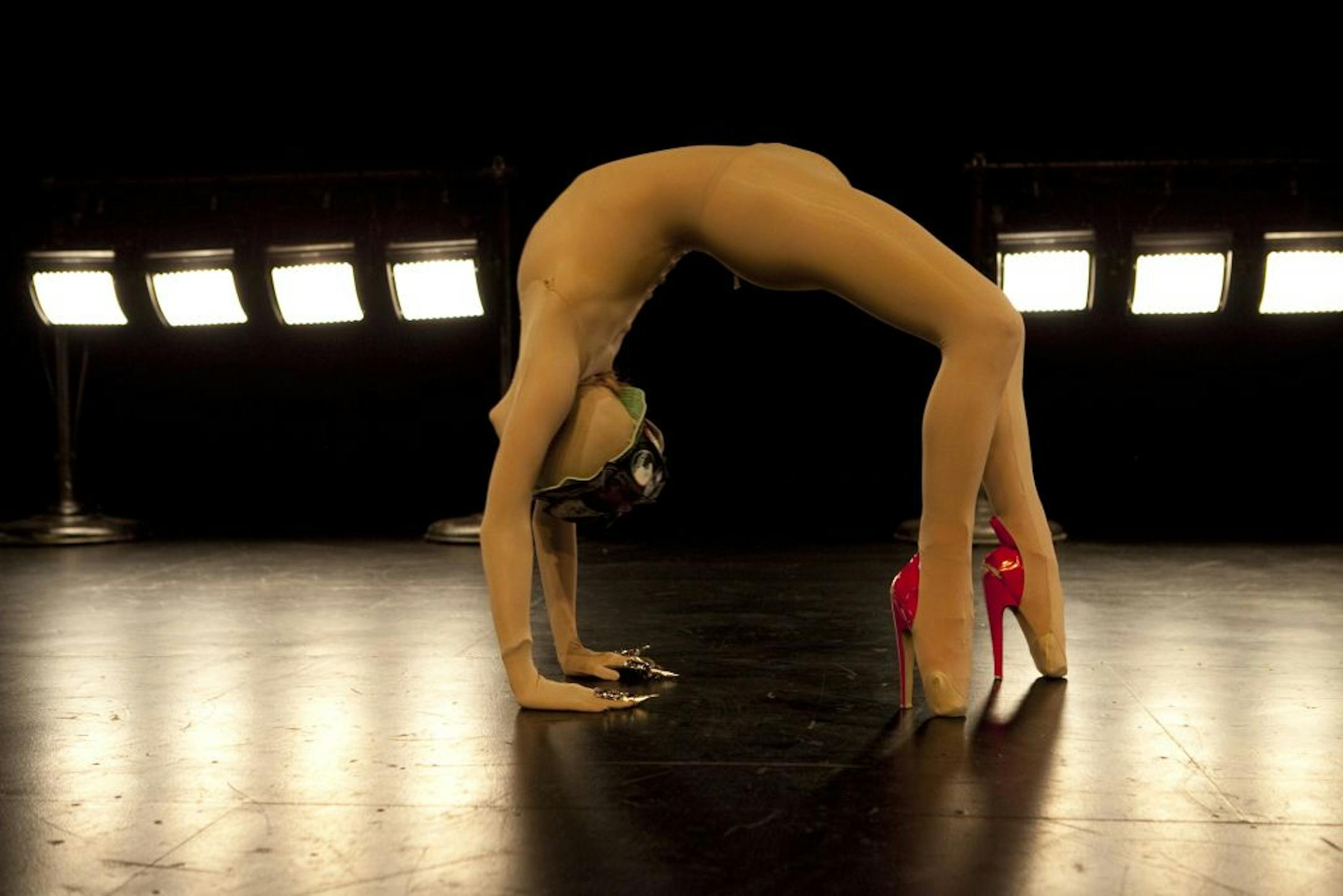
Such is the unpredictability and intensity of "Out There" at its best. The January performance series turns 25 this weekend. It began as a raw, risky forum for emerging artists on the fringes to let it all hang out -- often literally. Launched at the end of the Reagan presidency, when a conservative climate overtook the country, it thumbed its nose at those on the tsk-tsk side of the era's culture wars. Bither routinely booked performers who employed strident social criticism, nudity and behavior that wasn't doing its job if it failed to offend delicate sensibilities.
Although today's audiences are harder to shock, the "Out There" tradition continues, with work ranging from fearlessly transgressive -- like last year's "Untitled Feminist Show" by Young Jean Lee, a wordless, evening-length piece featuring eight naked women -- to what some see as inanely self-indulgent.
"If life as we know it is the box, it brings to this community a constant stream of what's beyond the box," said longtime Twin Cities performer Patrick Scully, founder of Patrick's Cabaret and an "Out There" participant in its early years.
"It's a safe place for unsafe ideas," Bither said.
Linking big and small groups