

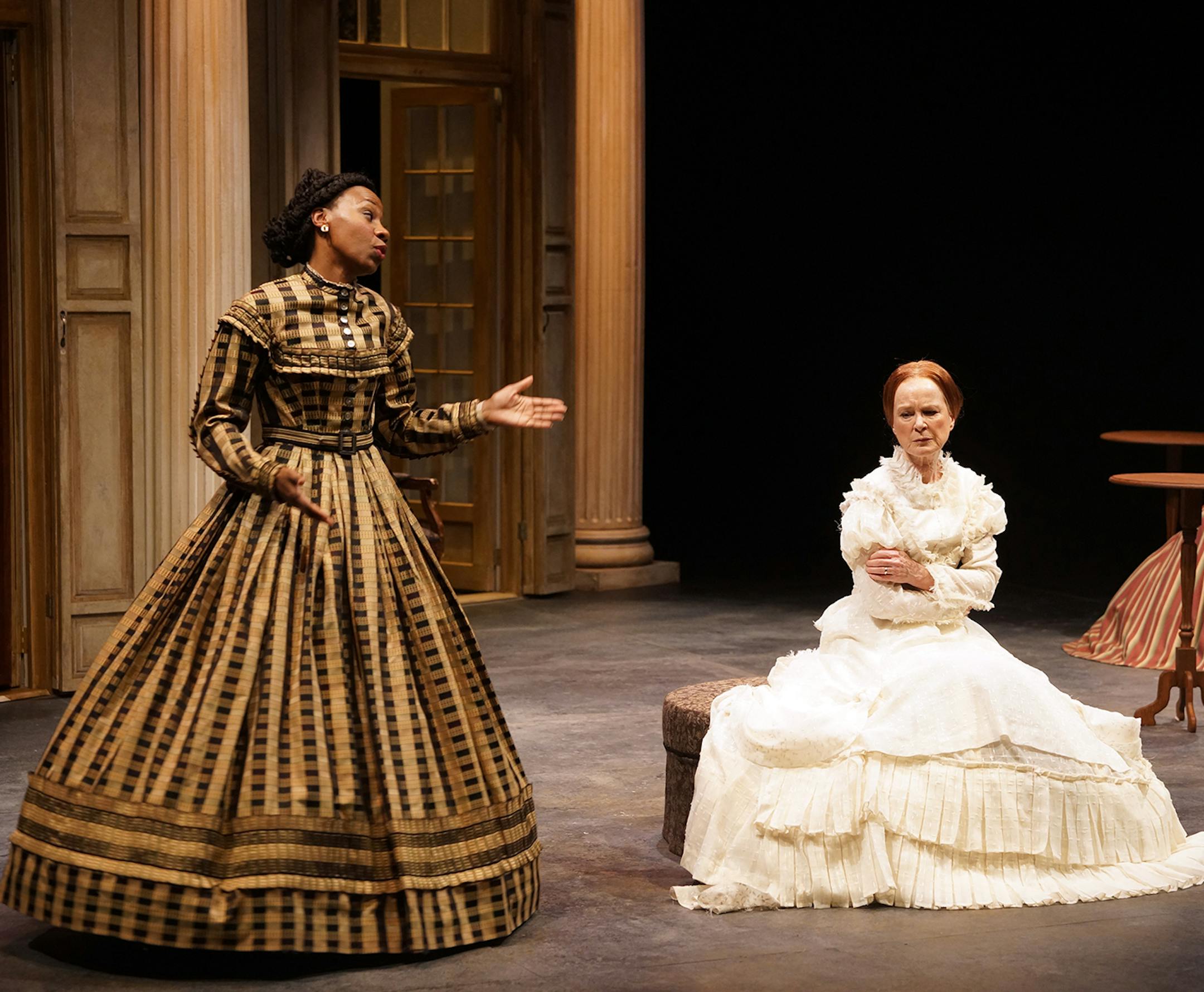
"Mary T. & Lizzy K." concludes with the former first lady and her dressmaker embracing sweetly in a decaying halo of light. It is a fitting image for two old friends who have endured calamity and betrayal in their lives — some of which is shown well in Tazewell Thompson's play about Mary Todd Lincoln and Elizabeth Keckly.
The journey to this moment, however, is less certain in Thompson's small drama, which opened Friday at Park Square Theatre. Directed by Richard Cook, "Mary T. & Lizzy K." is less a study of these two historical confidants than it is a string of poetic vignettes exploring Lincoln's descent into her own personal hell — with Lizzy being one of several witnesses.
Keckly has emerged from the shadows of history. A brilliant seamstress, she satisfied Mary Lincoln's inner need to be a 19th-century fashionista. A symbiosis formed between the aristocratic first lady and this freed slave.
Through scenes in which Keckly (Shá Cage) builds and then convinces Lincoln (Linda Kelsey) to wear a new dress fashioned on the crinoline cage, Thompson relates key notes of a prickly dependency: Kelsey's Lincoln is mercurial and vain, unsure of venturing into new styles; Keckly loves her work, dismisses Lincoln's complaints and scolds the first lady for being in arrears on her dress bill (Merrily Murray-Walsh's dresses are works of art).
Thompson's heightened poetry and monologues reveal instances of beautiful lilting rhythms. Actor Nike Kadri, who plays a Jamaican assistant to Keckly, embraces the language in a monologue that reveals how she lost an eye. Cage is outstanding in Lizzy's speech of admiration for the president, and Stephen d'Ambrose etches the wearied soul of a president who puzzles over his wife's volatility in what should be the happiest point in his life — the end of the Civil War.
Amid her character's tempestuousness, Kelsey excavates a vulnerability that occasionally reveals tenderness.
The play's problem — with its shouting matches and talky, meandering scenes — is an unfocused attention on the relationship between the title characters. One moment stands out as the exception that proves the rule: Mrs. Lincoln calling out for her dead son and Keckly indulging her sorrow. Cook's staging, though, does not embrace this particular opportunity with much warmth.
More so, Thompson sketches a portrait of Mary Lincoln's travail, reflected through the lenses of those closest to her. Is that what the play wants to be?


