

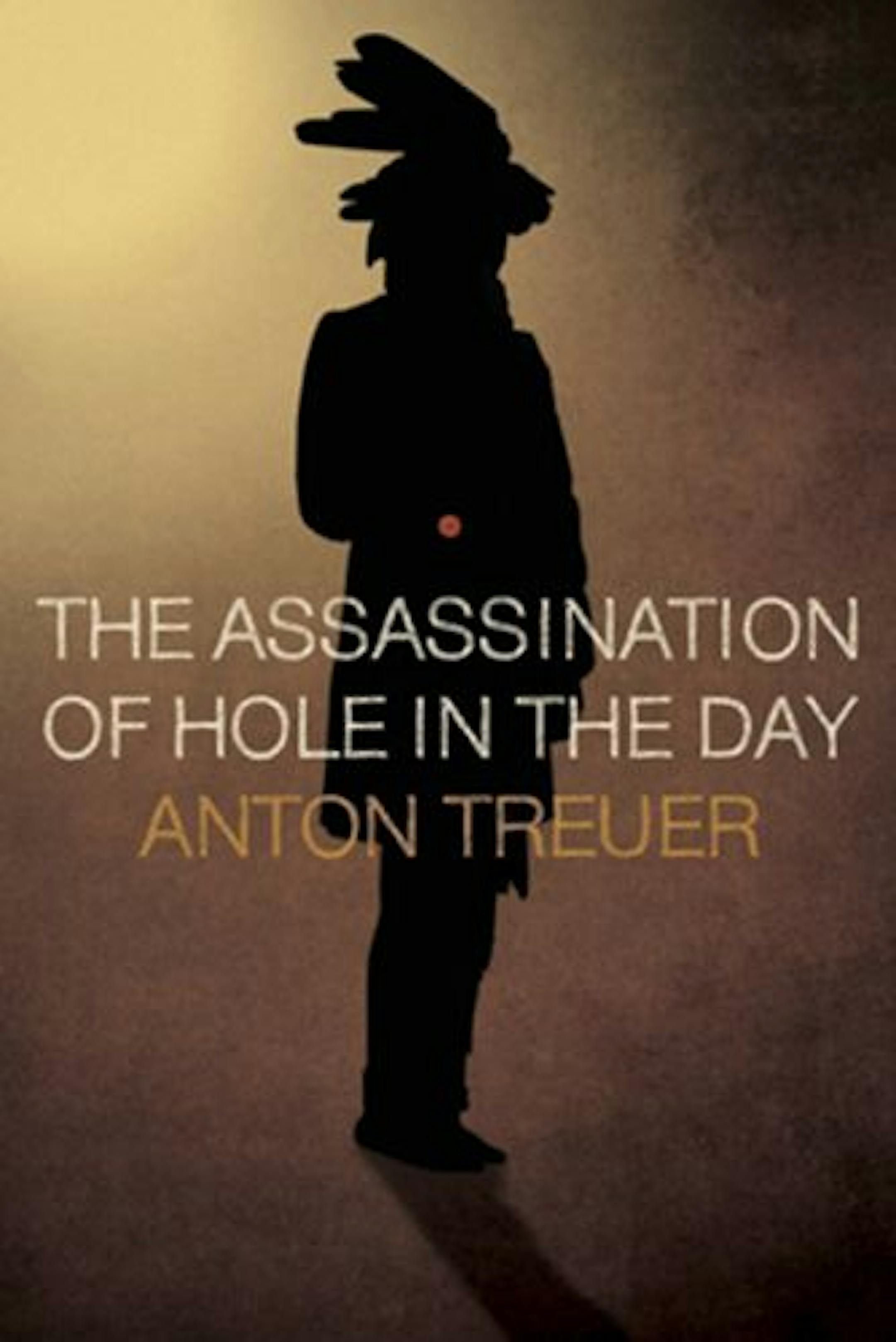
Anyone who has spent time wandering the lakes region of north central Minnesota has come upon the sign identifying Hole in the Day Lake north of Brainerd. Many probably think the poetic name was conjured by an ambitious land developer.
But Hole in the Day was a man -- two men, actually, father and son, remarkable leaders of the Ojibwe people at a time when Ojibwe life, customs and relations with others were undergoing profound change.
Hole in the Day the Younger especially deserves to be known, as much as Alexander Ramsey, his contemporary and first governor of Minnesota Territory, or any of the traders, missionaries and other white settlers who streamed into Minnesota in the mid-1800s. In his new book, "The Assassination of Hole in the Day," Anton Treuer makes a strong case for remembering Hole in the Day (Bagone-giizhig) as a pivotal figure in Minnesota as well as Ojibwe history.
Treuer, professor of Ojibwe at Bemidji State University, is the author of "Ojibwe in Minnesota" and several books on the language, whose preservation he champions. His grasp of its nuances and his extensive use of oral history provide new understanding of the personality, talents and achievements of this warrior/statesman.
Hole in the Day dressed sometimes in fine suits and made six trips to Washington, D.C., to meet with presidents. A gifted orator, he gave "some of the most stunning speeches that government officials had ever heard."
He was a paradoxical figure, denounced by enemies among his own people as arrogant and self-serving even as great numbers of Ojibwe (and U.S. agents) recognized him as "head man." Not a hereditary chief, he made himself into a traditional leader with "enormous, undeniable power," which he used both on behalf of his people and for personal gain.
"For decades he successfully led the Ojibwe toward peace with the Dakota, yet he killed and scalped many Dakota people with his own hands," Treuer writes. "He was incredibly bold -- in war, in council and in his personal life."
As testament to his stature, an account of his murder published in the St. Paul Pioneer was reprinted days later in the New York Times.


