
Advertisement

An arctic fox's epic journey: Norway to Canada in 96 days

The New York Times
July 3, 2019 at 2:34AM
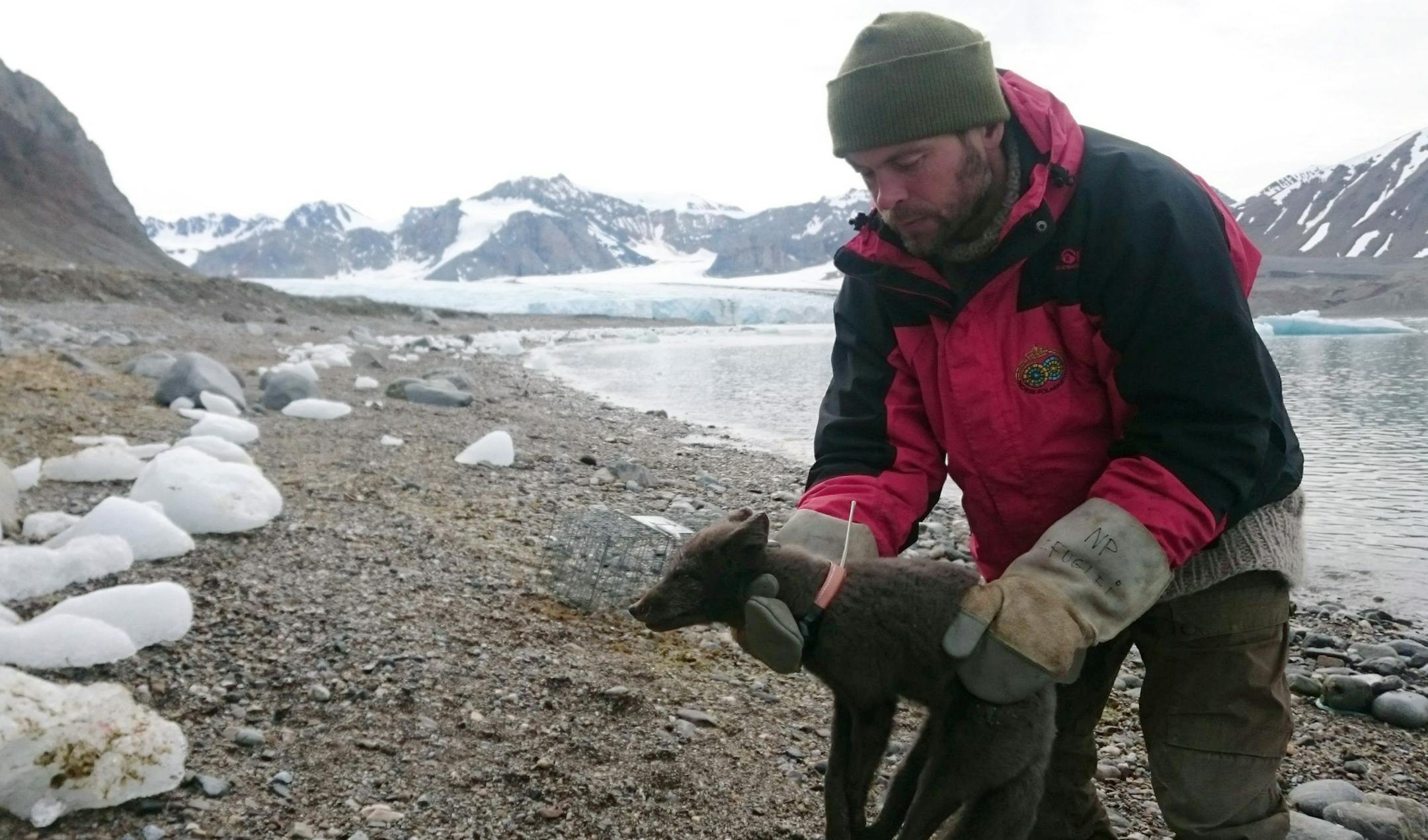
A polar fox is fitted with a satellite tracking collar in Krossfjorden, Svalbard, a Norwegian Arctic archipelago, on July 29, 2017, as part of research conducted by the Norwegian Polar Institute. Norwegian researchers said Tuesday July 2, 2019, that this young female arctic fox, shown in this photo, has been tracked walking from northern Norway to Canada’s far north, a distance of 4,415 kilometers (2,737 miles), via Greenland in 76 days. (Elise Stroemseng/Norwegian Polar Institute via AP)
This fox, fitted with a satellite tracking collar in Norway’s Svalbard Archipelago two years ago, walked to Canada. (The Minnesota Star Tribune)
Advertisement

The journey of a young arctic fox, which trekked more than 2,175 miles from Norway to Canada in 96 days, has stunned researchers and shed new light on the movement of the ­species over vast distances of sea ice.

The animal, also known as a coastal or blue fox, set off from the Svalbard Archipelago of Norway last year and ended up on a remote island in northern Nunavut, Canada, according to a study in Polar Research, published by the Norwegian Polar Institute.

The areas are connected seasonally by sea ice, and much of the journey was completed over vast stretches of the frozen Arctic Ocean. The fox also passed through Greenland, but kept forging farther west, the researchers' data showed, moving quickly across the ice sheets where food was scarce and conditions were harsh.

While this type of arctic fox has long been known for its endurance in the barren polar climate, such a fast transcontinental journey has never been documented before.

Eva Fuglei, one of the researchers from the Norwegian Polar Institute, said in a statement released by the group that the feat had prompted disbelief. "We didn't think it was true," she said. "Could the fox have been found dead, the collar taken off and now aboard a boat?"

But Fuglei said that no boats could travel that far north through the ice, so they knew it had to be the fox that was still on the move.

The animal left Spitsbergen in the Svalbard Archipelago on March 26, 2018, and reached Ellesmere Island in Nunavut on July 1. The details of the trek were released last week, and the researchers also published an animated map showing the fox's journey.

Using a satellite tracking device, researchers determined that in one day alone, the female fox had traveled about 96 miles.

Advertisement

"This is, to our knowledge, the fastest movement rate ever recorded for this species," Fuglei said in the report, which she wrote with Arnaud Tarroux of the Norwegian Institute for Nature Research.

The fox's tracking collar stopped transmitting in February 2019, according to the report, so the animal's ultimate fate is unknown.

Why did the fox take such an extreme, transcontinental journey in the first place?

The study indicated that the trek may have been prompted by a lack of available food or by the need to seek a new habitat.

Sea ice plays a vital role in foxes' ability to migrate between areas and find resources, the study noted.

But that ice has become increasingly threatened as a result of climate change.

Advertisement

Svalbard Archipelago has been particularly affected by rising global temperatures, experts say.

A study from the Bjerknes Center, a Norway-based climate research organization, found that the area had experienced significant loss of sea ice and was on course to continue warming up.

Ola Elvestuen, Norway's environment minister, called the study "another example of how important sea ice is to wildlife in the Arctic."

"The warming in the north is frighteningly fast," he said, adding, "We must cut emissions quickly to prevent the sea ice from disappearing all summer."

about the writer

about the writer

Megan Specia

More from Minnesota Star Tribune

See More
card image
Provided/Sahan Journal

Family members and a lawyer say they have been blocked from access to the bedside of Bonfilia Sanchez Dominguez, while her husband was detained and shipped to Texas within 24 hours.

card image
Advertisement