

Pop quiz: Name a Swedish painter.
Extra points for anyone other than illustrator Carl Larsson. Or portraitist Anders Zorn. Or wildlife artist Bruno Liljefors.
Stumped? That's not surprising. Despite continual engagement with the international art scene, Swedish artists tend to be little known outside their homeland. Even Larsson, whose charming family scenes grace a thousand calendars, is best known among Swedish-heritage emigrants. Ditto Zorn's glamorous society portraits and Liljefors' impressionistic birds and animals. And all three earned their fame more than a century ago, leaving a lot of visual history unexplored.
Which brings us to "150 Years of Swedish Art," on view at the Hillstrom Museum of Art at Gustavus Adolphus College in St. Peter, Minn. Organized by Hillstrom director Donald Myers and a consortium of Swedish curators, the show marks the 150th anniversary of the college's founding. Honoring the school's Swedish heritage, it features 44 paintings on loan from the home country's most important art museums, the traditionally grounded National Museum and the more contemporary Moderna Museet, both in Stockholm. The free exhibit is up through Dec. 2.
Most of the artists will not be familiar in Minnesota. Virtually all were trained at Sweden's Royal Academy or the leading art schools of Europe, where they absorbed and adapted all the latest trends.
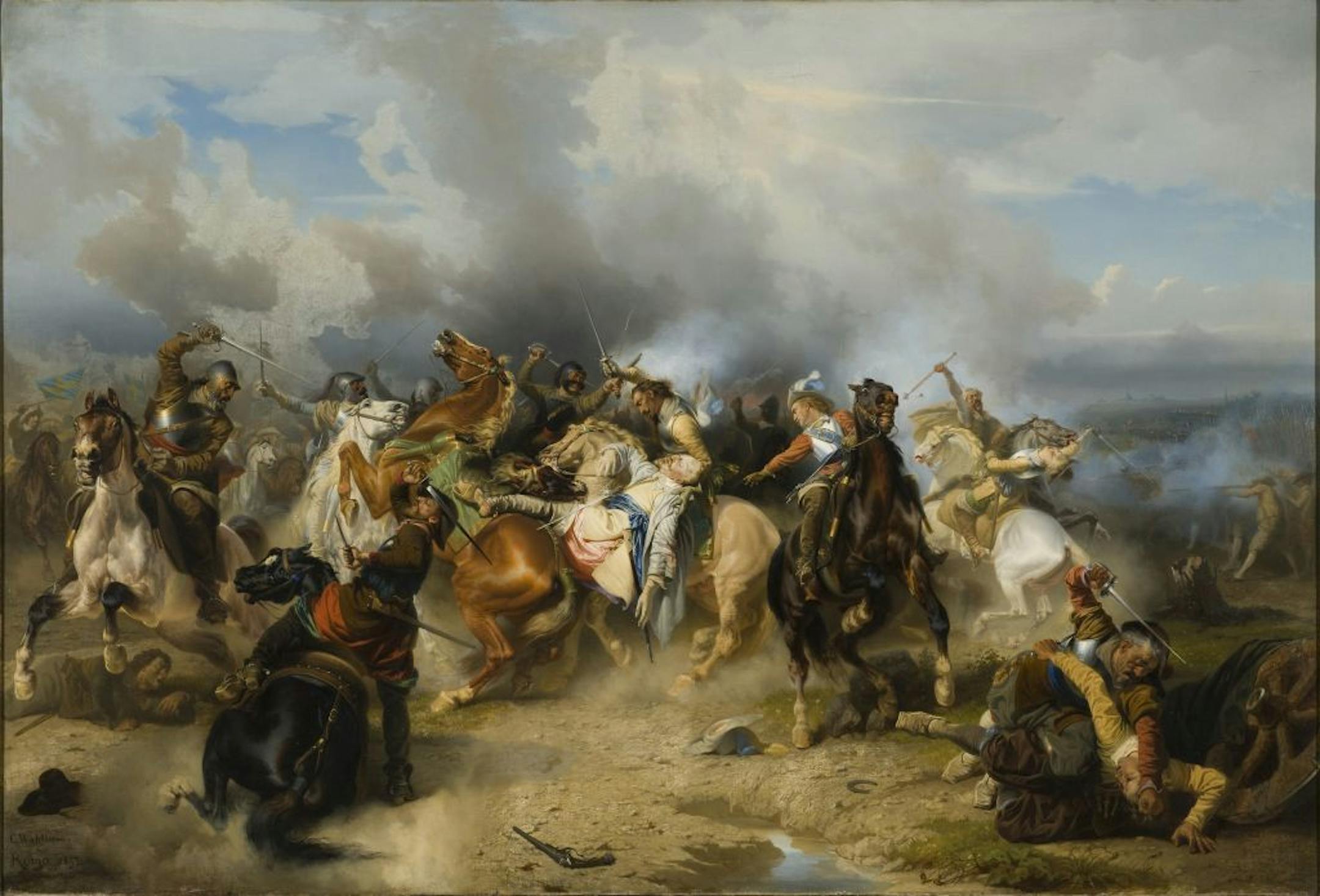
The show begins fittingly with a dramatic 1855 scene by Carl Wahlbom, "Death of King Gustav II Adolf at Lützen." Nearly 5 feet wide, it is a swirl of rearing horses and flashing swords surrounding the wounded king, who falls from his steed as his troops struggle with thuggish-looking Germans. A Protestant warrior who died in 1632, Gustav II is the college's namesake and a legendary ruler whose blood-stained elk-hide coat is still displayed in a Stockholm museum -- along with the taxidermied carcass of his horse.
National landscapes
Like their American counterparts, 19th-century Swedes loved landscapes such as Edvard Bergh's 1862 vista of a rocky outcropping overlooking Stockholm's island-dotted waters. Shimmering fairies swirl through a moonlit river valley in a visionary August Malmström painting, while Olof Arborelius catches the crystalline light and bright clouds of a summer afternoon.


