

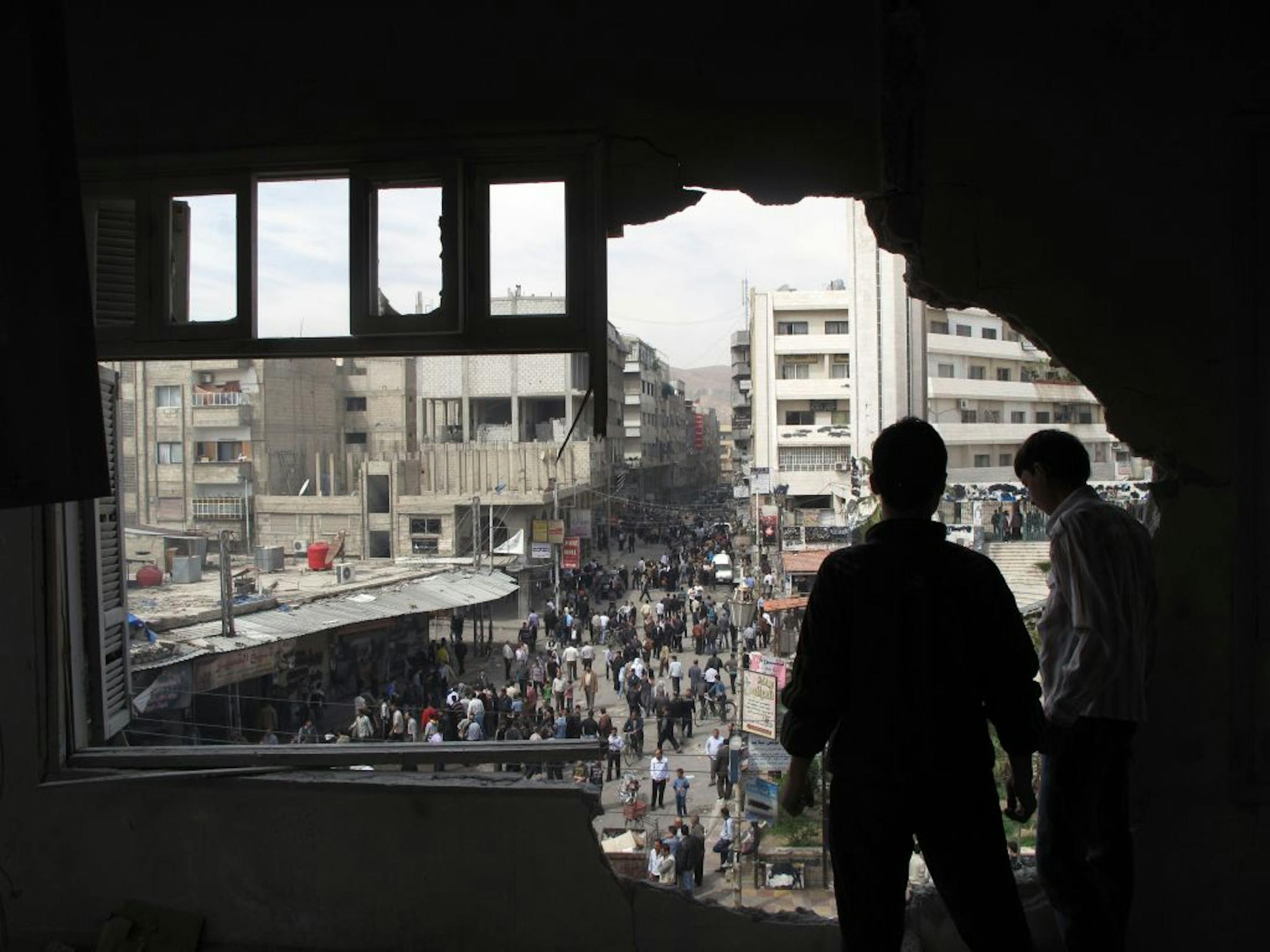
As Syrian dictator Bashar Assad continues his slaughter, the issue is not whether more forceful U.S. action to stop him is risk-free.
The issue, instead, is how the risks and potential rewards stack up against those of a continued U.S. reliance on sanctions and diplomacy that offer few prospects of success.
On its current path, Washington is increasingly likely to blow a major opportunity to advance its interests and, worse, to suffer a major strategic defeat that could have serious repercussions in the region and elsewhere for some time.
The case for a more forceful U.S. response is compelling.
Assad remains a committed U.S. adversary -- despite the hopes of all-too-many "experts" over the years to make him an ally -- who works closely with Iran's radical regime to fund and arm the terrorists who have targeted U.S. troops in Iraq and Afghanistan and who have attacked U.S. interests in the region.
Thus, Assad's fall would eliminate a major adversary and, as senior U.S. officials acknowledge, deliver a severe body blow to Tehran, leaving it more isolated diplomatically just as sanctions over its nuclear program are squeezing its economy.
Washington's refusal so far to step up -- such as by working with its European or Arab allies to arm the opposition, establish safe havens to protect Syria's people, and enable opposition forces to regroup, impose a no-fly zone, and even, if necessary, conduct air strikes on Syria's military -- raises prospects that Assad will survive.
His survival will mark a major victory for Washington's key adversaries -- the autocrats of Beijing, Moscow and Tehran who fear that the Arab Spring and other democratic uprisings will incite unrest in their own countries.


