

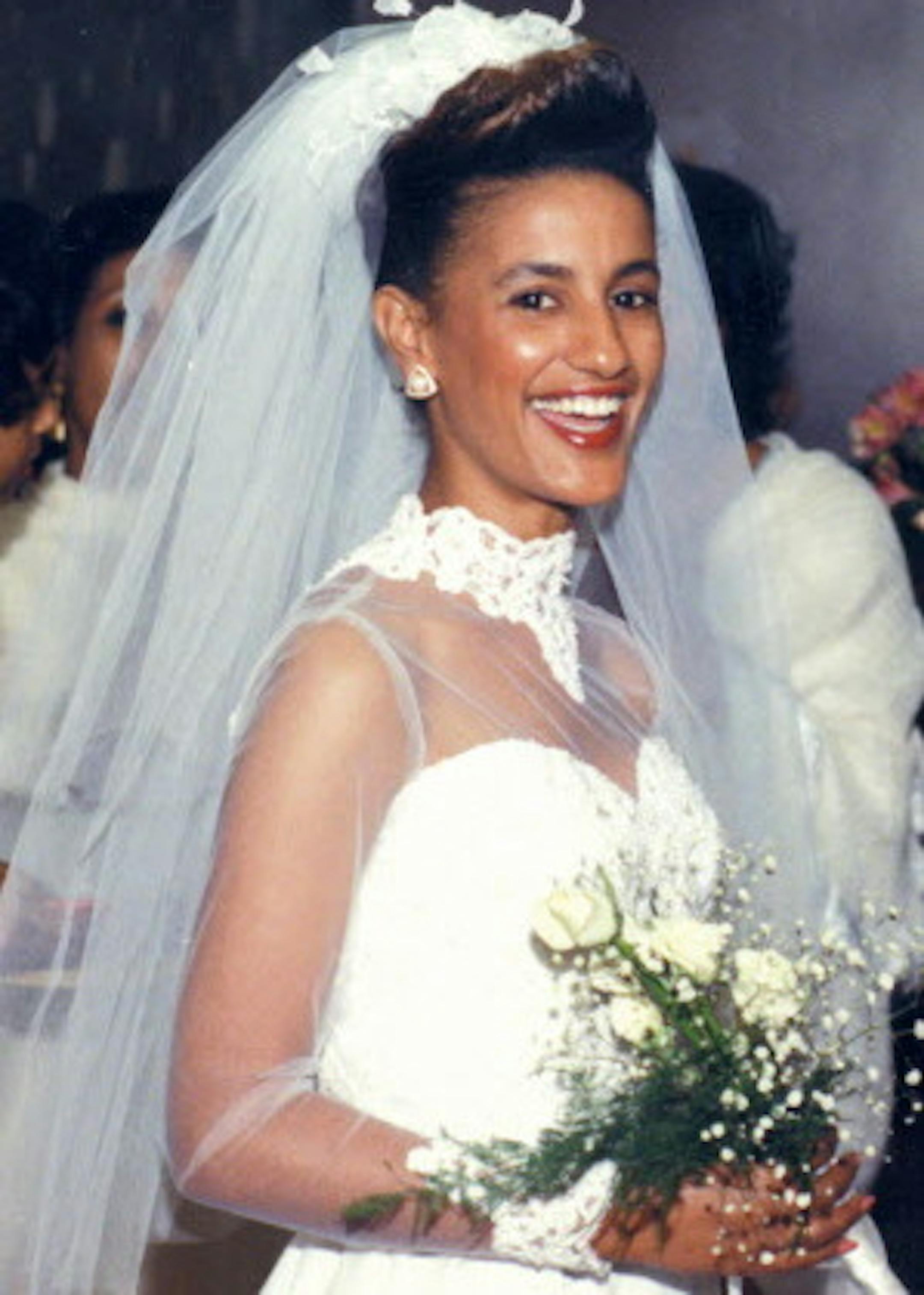
Amsale Aberra, 64, an Ethiopian-born fashion designer whose simple, minimalist aesthetic transformed the modern American wedding dress, died of uterine cancer Sunday in New York. She was 64.
While most wedding dress designers in the 1980s were making elaborate, tulle-and-lace affairs with long trains and decorative appliqués, Aberra pared everything down. Her dresses had little fluff or flounce and were often strapless. Describing Aberra's wildly modern styles in 1997, Constance C.R. White wrote in the New York Times, "To be sure, the leg-of-mutton dress, the traditional, high-neck, puff-sleeve number, still has its strong support base, but there is now the option of a sleeker and more sensuous spirit embodied in a narrower shape, bare arms and shoulders and subtle adornment, if adorned at all."
Bridal gown retailer Mark Ingram, who worked with Aberra, was quoted in Women's Wear Daily as calling her "the inventor of the modern wedding dress."
Susan Anspach, 75, the actress who personified the 1960s-into-the-'70s counterculture, died of heart failure Monday at her home in Los Angeles.
In 1967, Anspach played Sheila, the good-girl-turned-hippie female lead, in the off-Broadway production of the musical "Hair" that preceded the Broadway run. When "Hair" opened on Broadway in April 1968, Lynn Kellogg was Sheila.
Her first film role was in Hal Ashby's "The Landlord" (1970), about a young white man (Beau Bridges) who buys a building in a black neighborhood in Brooklyn. Her second movie, the same year, was "Five Easy Pieces," directed by Bob Rafelson, in which she played the sophisticated New Age intellectual who sleeps with Jack Nicholson's character. In "Blume in Love" (1973), she left her stuffy divorce-lawyer husband (George Segal), and moved in with a musician (Kris Kristofferson).
Alfred Crosby, 87, a historian who illuminated the role the environment has played in human history — particularly in what he dubbed the "Columbian exchange," when diseases, plants and animals crossed oceans and continents after Columbus' arrival in the New World — died of Parkinson's disease March 14 in Nantucket, Mass.
Crosby, a professor of geography, history and American studies at the University of Texas who retired in 1999, was best known for his 1972 book "The Columbian Exchange: Biological and Cultural Consequences of 1492," which helped establish the field of environmental history.


