
Also noted

September 3, 2016 at 5:18AM
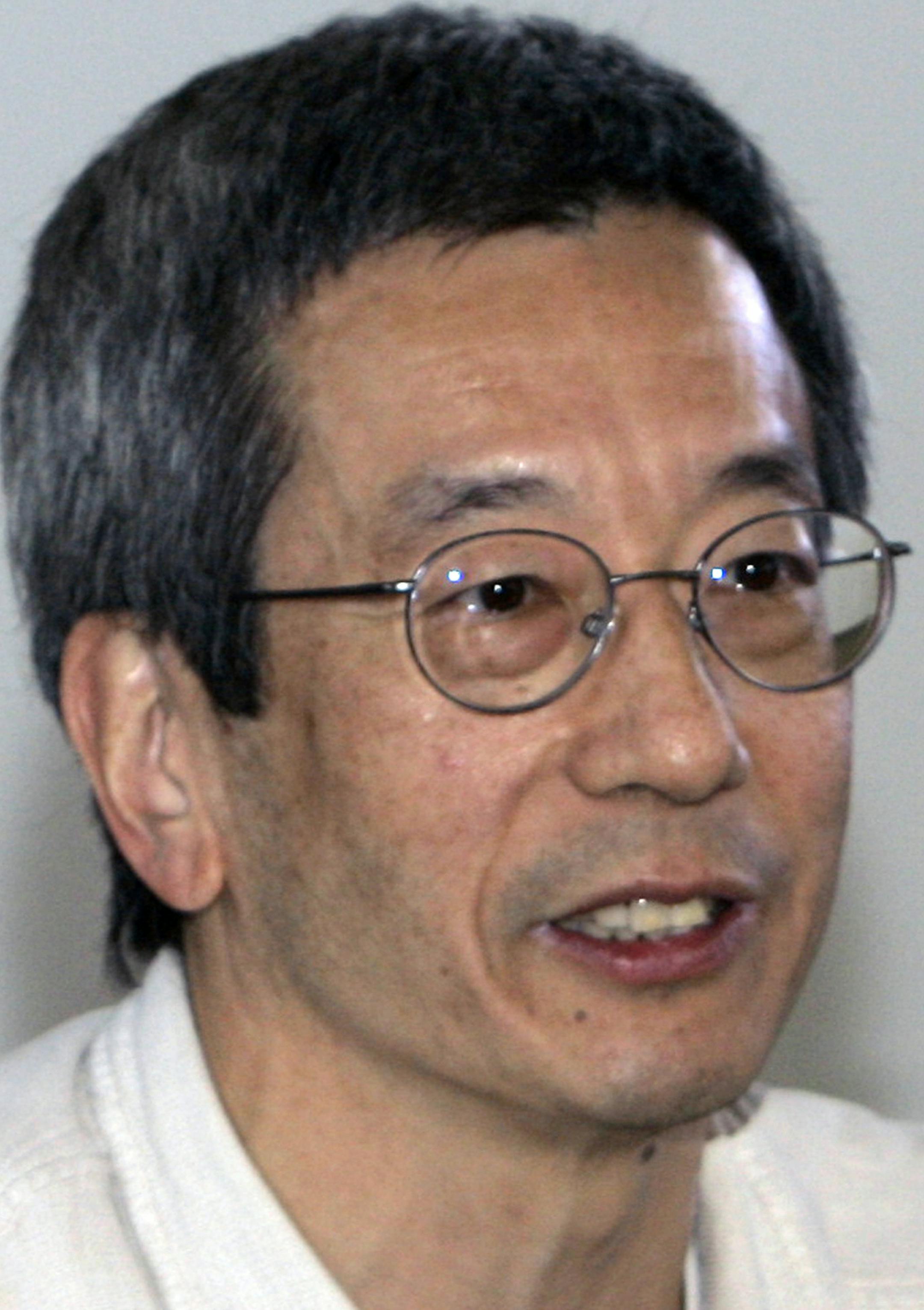
FILE - This Oct. 8, 2008 file photo shows Roger Tsien, PHD, talks about his research at a news conference at the University of California-San Diego. Tsien, who won a Nobel Prize for helping create colorful markers that can help tag cancer tumors or track the development of Alzheimer's disease, has died. Tsien was 64. The university says he died Aug. 24, 2016, in Eugene, Ore. (AP Photo/Lenny Ignelzi, File)
Tsien (The Minnesota Star Tribune)

Roger Tsien, 64, a University of California, San Diego researcher who shared the 2008 Nobel Prize in chemistry for helping to find a more effective way to peer inside cells and organisms, died Aug. 24.

Tsien, a first-generation American who began to explore chemistry at age 8, was hailed for "illuminating" the study of such diseases as cancer and HIV. He teamed with fellow scientists Osamu Shimomura and Martin Chalfie to turn green fluorescent protein, or GFP, which is found in jellyfish, into a research tool.

Chancellor Pradeep Khosla recalled the collaboration: "Shimomura identified the crucial jellyfish protein and revealed that it glowed bright green under ultraviolet light. Chalfie showed how it could be used as a biological marker. Combining his deep skills in chemistry and biology, Tsien found ways to make GFP glow more brightly and consistently; then he created a full palette of fluorescent proteins that scientists could use to track different cellular processes at the same time."

Khosla added: "GFPs have become a fundamental fixture in life sciences labs around the world, allowing researchers to look into cells or whole animals, to watch molecules interact in real-time and ask questions once thought impossible."

Nobel laureate K. Barry Sharpless of the Scripps Research Institute said, "Rarely are the smartest people the most creative, too — but Roger was both."

Tsien was born in New York City on Feb. 1, 1952. His father, Hsue Chu, was an engineer. His mother, Yi Ying Li, was a nurse.

His early years weren't easy. Tsien wrote in his Nobel biography that the family "chose a new housing development in Livingston, N.J., but the developer refused to sell to us, saying that they could not permit Livingston to become a Chinatown, nor could they afford the likelihood that other customers would refuse to buy houses next to a Chinese family."

Dr. Joy Browne, 71, the syndicated radio and TV psychologist who dispensed advice and inspiration over the air for nearly four decades, died Aug. 27 in Manhattan. She was still hosting her daily three-hour radio program.

Beginning in 1978 — when she was thrust onto the air because a hockey game had been canceled — Browne reached millions of listeners, many of whom revealed concerns to her in cathartic call-in segments or e-mailed her their problems, which she read and responded to over the air.

She was the longest-running psychologist on AM/FM radio at the time of her death, according to Michael Harrison, publisher of Talkers magazine.

On TV, her program appeared on CBS, with a studio audience, and on the Discovery Health cable channel.

In contrast to other on-air psychologists, some of whom could come across as scolds, Browne was unflaggingly buoyant as she delivered self-help advice and gentle goading. "I'm in the business of helping make lives better," she once said, "not by bashing but by teaching people how to take responsibility for their behavior."

On a recent program she asked: "If we can figure out a way to get to the moon, wipe out disease, double life expectancy, don't you think we can be a little nicer to each other? Maybe. I know, I believe in the Easter Bunny and the Tooth Fairy as well."

Browne found her niche in the 1970s, at a time when seeking professional help was still stigmatized. Radio gave people wrestling with emotional issues the safety of anonymity.

She was born Joy Oppenheim on Oct. 24, 1944, in New Orleans, the daughter of Nelson Oppenheim, a life insurance salesman, and the former Ruth Strauss, a teacher.

news services

about the writer

about the writer

More from Minnesota Star Tribune

See More
card image
J. SCOTT APPLEWHITE, ASSOCIATED PRESS/The Minnesota Star Tribune

The "winners" have all been Turkeys, no matter the honor's name.

In this photo taken Monday, March 6, 2017, in San Francisco, released confidential files by The University of California of a sexual misconduct case, like this one against UC Santa Cruz Latin Studies professor Hector Perla is shown. Perla was accused of raping a student during a wine-tasting outing in June 2015. Some of the files are so heavily redacted that on many pages no words are visible. Perla is one of 113 UC employees found to have violated the system's sexual misconduct policies in rece