
Also noted

July 23, 2016 at 5:33AM
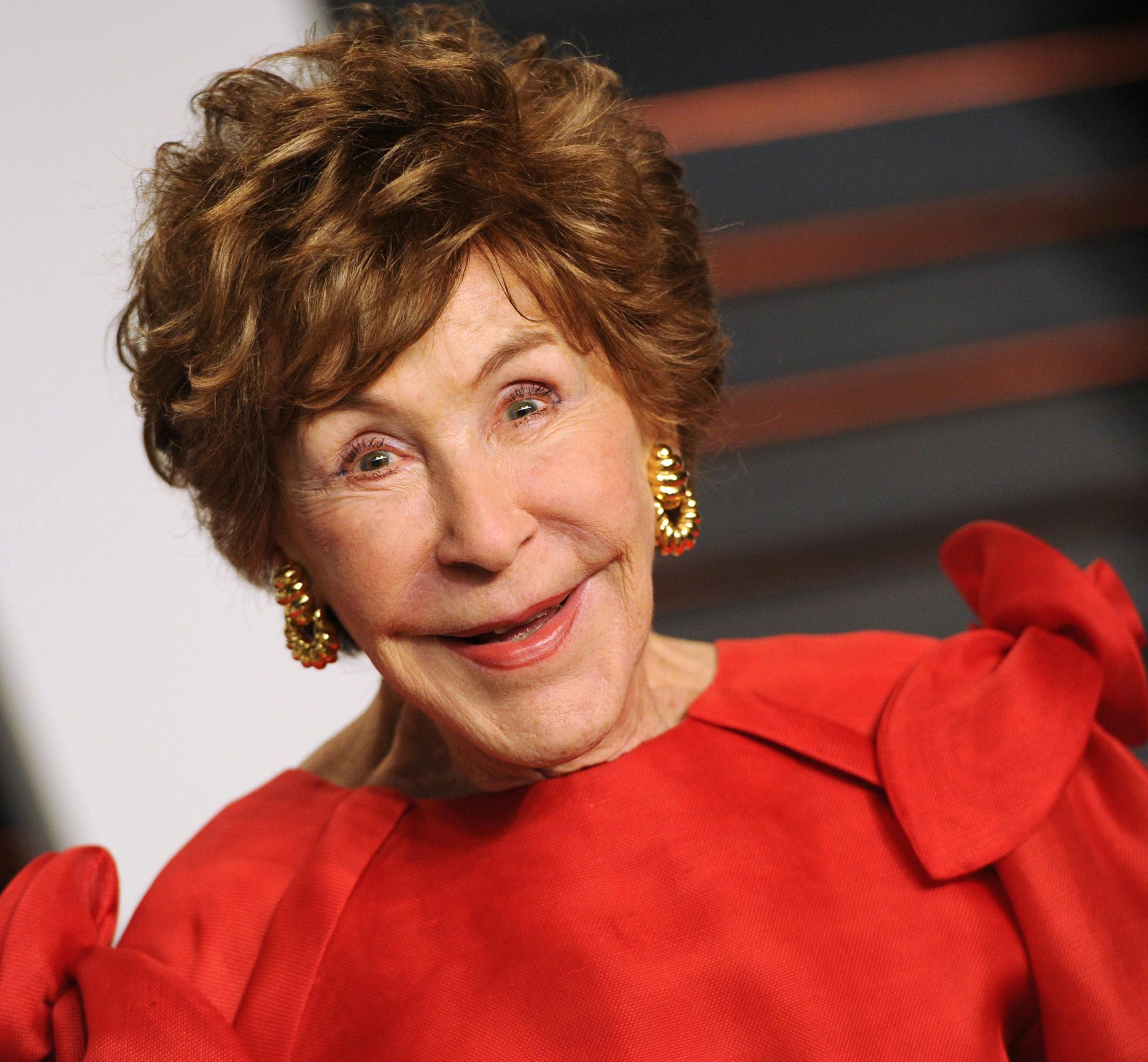
FILE - In this Feb. 22, 2015 file photo, Betsy Bloomingdale arrives at the 2015 Vanity Fair Oscar Party in Beverly Hills, Calif. Bloomingdale, the widow of a department store heir who hobnobbed with the world’s elite and was best friends with Nancy Reagan, has died. She was 93. Her daughter-in-law says Bloomingdale died Tuesday, July 19, 2016, at her Los Angeles home from congestive heart failure. (Photo by Evan Agostini/Invision/AP, File)
Betsy Bloomingdale, above at a February 2015 Oscar party in Beverly Hills, died Tuesday. (The Minnesota Star Tribune)

Betsy Bloomingdale, 93, socialite and fashion leader who was the widow of Alfred Bloomingdale, the department store heir, and a celebrated hostess to royalty, world dignitaries and show business luminaries, died Tuesday at her Los Angeles home.

The cause was complications of a heart condition.

Bloomingdale was a high-octane doyenne of the Social Register whose friendships encompassed presidents and princes, tycoons and leaders of government, entertainment, publishing and the arts.

She lived in palatial homes in Los Angeles and New York; shopped for $20,000 gowns at Paris houses of couture; frolicked with the Kissingers, the Cronkites and Malcolm Forbes on Rupert Murdoch's yacht in Morocco; attended the royal wedding of Prince Charles and Lady Diana in 1981; and dined regularly with President Ronald Reagan and First Lady Nancy Reagan at the White House in the 1980s.

In the exclusive Holmby Hills section of L.A., her neighbors over the years were Hollywood legends: Barbara Stanwyck, Jack Benny, Bing Crosby, Frank Sinatra and Michael Jackson. She kept diaries of the dinner parties she had given since the late 1950s, many for charities, and took photographs of table settings to avoid using the same one twice. She was perennially on lists of the world's best-dressed women.

For decades, she and her husband were trusted friends of the Reagans. With homes a few minutes apart in Los Angeles, they shared soirees, holiday gatherings and family occasions, and celebrated a succession of Reagan's triumphs as he, with the help of Alfred Bloomingdale and others in the Reagan "kitchen cabinet," ascended from film star to the California governorship in 1967 and to the presidency in 1981.

When the Reagans moved to the White House, the Bloomingdales took an apartment at the Watergate complex. Betsy Bloomingdale was Nancy Reagan's confidante during her husband's political career and, especially, afterward, during the emotional stresses of his battle with Alzheimer's disease in the 1990s and his death in 2004.

After her own husband's death in 1982, Bloomingdale, who was accustomed to seeing her name only in society columns, was drawn into a lurid tabloid scandal when his longtime mistress, Vicki Morgan, sued the Bloomingdale estate and his widow for $10 million for breach of promise. She claimed that Alfred Bloomingdale, in exchange for her companionship, had promised her lifetime support and a house.

In a deposition, Morgan, 37 years his junior, told of a sadomasochistic relationship with Alfred Bloomingdale. His widow acknowledged the affair, but contended that Morgan had been a well-paid prostitute, undeserving of further compensation. A Los Angeles court dismissed most of the suit in 1983.

Morgan was bludgeoned to death in 1983 by another companion, who was convicted of her murder.

Betsy Bloomingdale was born Betty Lee Newling in Beverly Hills on Aug. 2, 1922, the daughter of a socially prominent doctor. Growing up, she knew Cary Grant, James Stewart and Merle Oberon. She attended the Marlborough School in Los Angeles and Bennett College in Millbrook, N.Y.

She briefly aspired to an acting career before becoming, in 1946, Bloomingdale's second wife.

U.S. Rep. Mark Takai, 49, a war veteran and longtime legislator known for his bright nature and deep commitment to service, died Wednesday in his home after a monthslong battle with pancreatic cancer.

Takai had "a servant's heart, full of aloha," said U.S. Rep. Tulsi Gabbard, who served with Takai in Congress, the Hawaii Army National Guard and the state Legislature.

Born on Oahu, Takai served in the state House of Representatives for 20 years before he was elected to Congress. He served as a lieutenant colonel in the Hawaii Army National Guard for more than a decade and was deployed to the Middle East as a part of Operation Iraqi Freedom. In Congress, he sat on the Armed Services and Natural Resources committees.

"Mark was always a fighter," said President Obama, who recorded a radio ad for Takai during his congressional campaign, in a statement.

"His relentless push for cancer research inspired countless Americans fighting the same battle as him. Simply put, our country is better off because of Mark's contributions," Obama added.

Takai was first diagnosed with cancer in October and initially expressed optimism that he would recover. But in May, he announced he would not seek re-election after he learned the cancer had spread.

Robert B. Morgan, 90, a North Carolina Democrat who was a freshman U.S. senator when he cast crucial votes in favor of treaties that transferred control of the Panama Canal to the Panamanian government, a decision that brought a swift end to his Senate career but which he stood by all his life, died July 16 at his home in Buies Creek, N.C. The cause was complications from Alzheimer's disease.

Morgan practiced law and ascended the ranks of North Carolina politics before his election to the U.S. Senate in 1974. He served in the North Carolina state Senate, including a stint as president pro tempore, from 1955 to 1969 and later was state attorney general, developing a reputation as a hard-charging activist for consumer rights.

In the U.S. Senate, he assumed the seat vacated by retiring Sen. Sam Ervin Jr.

Morgan accumulated a voting record that "defies ideological labels," according to the Almanac of American Politics. He was liberal on some issues but conservative on others, and he gained his greatest prominence on the matter of the Panama Canal.

The canal and surrounding area, a critical waterway that connects the Pacific and Atlantic oceans, had been controlled by the United States since 1903, an arrangement that by the 1970s had caused increasing friction with the Panamanians.

President Jimmy Carter, elected in 1976, became convinced that authority over the canal should reside with the Panamanian government. Opponents of his position regarded any treaty to that effect as a "giveaway."

Morgan was initially among those opponents. He changed his position after visiting Panama as a member of the Senate Intelligence Committee and meeting with the CIA contingent there and with Panamanian leaders.

news services

about the writer

about the writer

More from Minnesota Star Tribune

See More
card image
J. SCOTT APPLEWHITE, ASSOCIATED PRESS/The Minnesota Star Tribune

The "winners" have all been Turkeys, no matter the honor's name.

In this photo taken Monday, March 6, 2017, in San Francisco, released confidential files by The University of California of a sexual misconduct case, like this one against UC Santa Cruz Latin Studies professor Hector Perla is shown. Perla was accused of raping a student during a wine-tasting outing in June 2015. Some of the files are so heavily redacted that on many pages no words are visible. Perla is one of 113 UC employees found to have violated the system's sexual misconduct policies in rece