
Also noted: Hugh O'Brian who played Wyatt Earp on TV

September 10, 2016 at 2:13AM
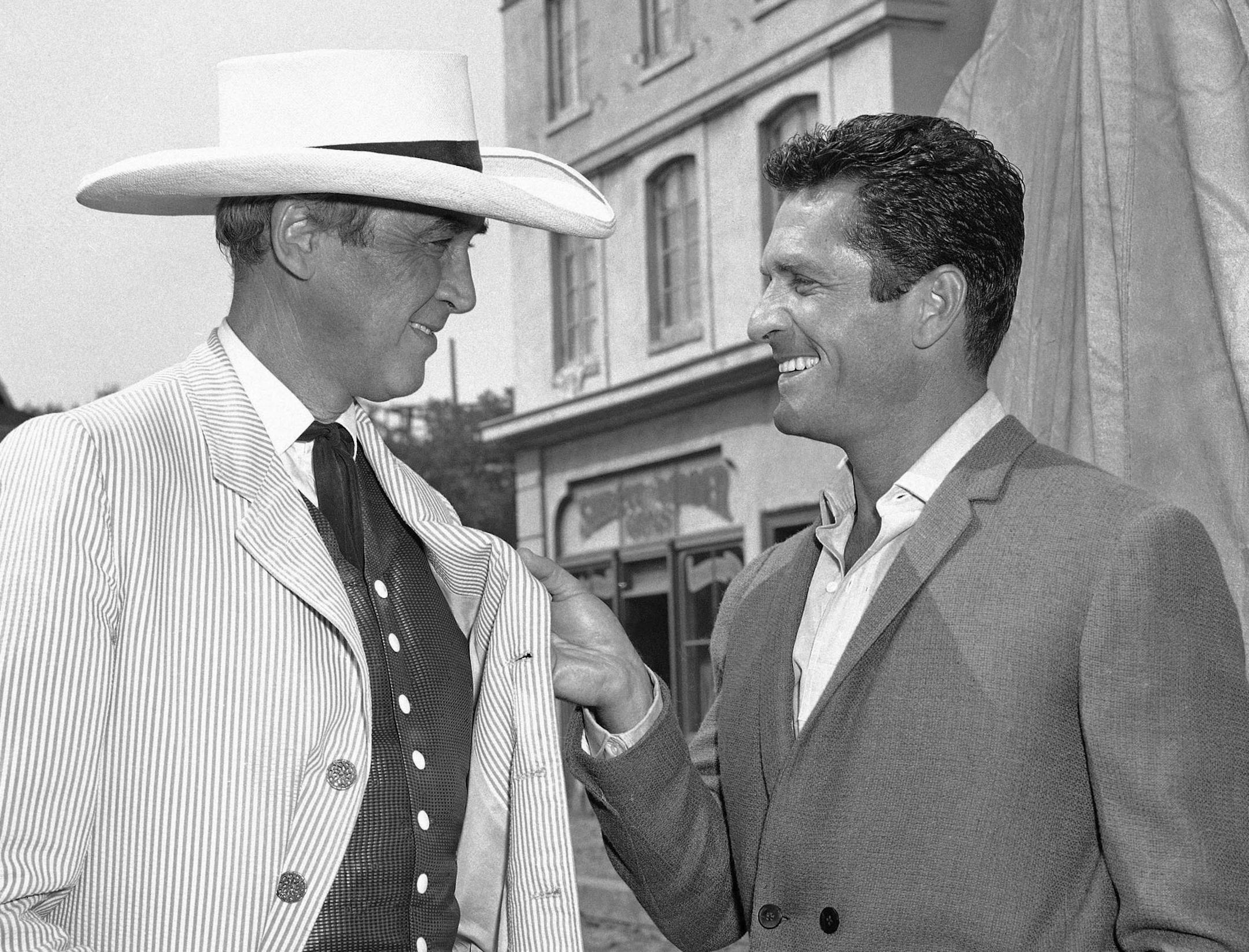
FILE - In this Oct. 24, 1963 file photo, actors James Stewart, left, and Hugh O'Brian confer on the set of "Cheyenne Autumn" in Los Angeles. In the movie, Stewart plays the role of Wyatt Earp, whom O'Brian portrayed on the 1950s television series "The Life and Legend of Wyatt Earp." O'Brian has died at the age of 91. He passed away at this home in Beverly Hills Monday morning, Sept. 5, 2016, according to a statement from HOBY, a youth leadership philanthropic organization that O’Brian fou
James Stewart, left, and Hugh O’Brian on the set of ­“Cheyenne Autumn” in 1963. In the movie, Stewart played the role of Wyatt Earp, whom O’Brian portrayed on TV. (The Minnesota Star Tribune)

Hugh O'Brian, 91, who rose to fame on TV as the quick-drawing Wyatt Earp in the 1950s — but who later devoted extensive time to a foundation he created that trains young people to be leaders — died on Monday at his home in Beverly Hills.

His death was announced by his foundation, HOBY, originally known as Hugh O'Brian Youth Leadership.

When he first arrived in Hollywood in 1947, O'Brian was a strapping presence with leading-man looks and a swagger he had picked up in the Marine Corps. He broke into show business by chance, when he escorted an actress to a rehearsal for a play and ended up with a part for himself, filling in for an actor who had fallen ill.

Actress Ida Lupino, then just beginning her career as a director, cast him in her 1949 feature film, "Never Fear."

Early in his career, O'Brian was relegated mostly to secondary status in run-of-the-mill Westerns — with Gene Autry in "Beyond the Purple Hills" (1950), Audie Murphy in "The Cimarron Kid" (1952) and Rock Hudson in "Seminole" (1953). He emerged from obscurity when he landed the title role on "The Life and Legend of Wyatt Earp," which ran on ABC from 1955 to 1961 and was one of the most popular TV Westerns of the era.

O'Brian would play that real-life lawman in one form or another several times during his career, most notably in the 1991 TV movie "The Gambler Returns: The Luck of the Draw," a vehicle for singer Kenny Rogers, and "Wyatt Earp: Return to Tombstone," a 1994 CBS production timed to capitalize on the release that year of the big-budget feature "Wyatt Earp," starring Kevin Costner.

O'Brian remained active through the '60s, '70s and '80s, mostly on TV. He appeared on such series as "The Alfred Hitchcock Hour," "Charlie's Angels," "Fantasy Island" and "Murder, She Wrote."

Although most of O'Brian's movies were Westerns and other action-oriented features, he also acted in comedies, dramas and musicals, including "There's No Business Like Show Business" (1954), "Come Fly With Me" (1963) and "Twins" (1988). One of his more memorable roles was in John Wayne's final movie, "The Shootist" (1976). O'Brian played a professional gambler who, in the film's closing moments, became the last character ever killed on-screen by Wayne.
He played Broadway, too: In 1960, he briefly filled in for Andy Griffith in the musical "Destry Rides Again," and a year later he portrayed author Romain Gary in "First Love," directed by Alfred Lunt and based on Gary's memoir, "Promise at Dawn."

Fred Hellerman, 89, a self-taught guitarist who sang about social harmony in harmony with Pete Seeger as a founding member of the pivotal 1950s folk quartet the Weavers, died Sept. 1 at his home in Weston, Conn.

Formed in 1948, the Weavers sold millions of records and influenced acts that included the Kingston Trio; Peter, Paul and Mary; Joan Baez; and Bob Dylan.

Hellerman, who in the late '50s and '60s began working largely as a songwriter and producer, played guitar on Baez's self-titled 1960 debut album. Of Dylan, he once said, "He can't sing, and he can barely play, and he doesn't know much about music at all."

The Weavers' blend of politically minded lyrics and sunny harmonies reached mass audiences in songs such as "Goodnight, Irene," "On Top of Old Smoky," "Kisses Sweeter Than Wine" and "The Hammer Song," which became a top-10 hit when Peter, Paul and Mary recorded it under the name "If I Had a Hammer" in 1962.

In addition to Seeger and Hellerman, the Weavers featured Lee Hays, who sang bass, and contralto Ronnie Gilbert. Hays died in 1981, Seeger in 2014, and Gilbert in 2015, leaving Hellerman the last surviving member.

Isabelle Dinoire, 49, the Frenchwoman who in 2005 received the world's first partial facial transplant, paving the way for dozens of other patients to receive this complicated surgery, has died.

In a statement released this week, the Amiens-Picardie University Hospital, where the transplant was performed, said that Dinoire died April 22 but that it had withheld announcing the death at her family's request.

In a separate statement, the hospital suggested that the cause was related to long-standing complications from the operation. In the years after the transplant, Dinoire had suffered from infections and taken immunosuppressive drugs to keep her body from rejecting the foreign tissue.

As she related in February 2006, Dinoire's ordeal began one day in May 2005 when she came home "after a very disturbing week and with lots of personal worries." "I took drugs to forget," she said. The drugs were sleeping pills.

She passed out, she said, and fell against a piece of ­furniture.

When she awoke, she said, she was horrified to discover that her pet Labrador had chewed off the bottom half of her face.

Dinoire had lost her lips and parts of her chin and nose. She was taken to a hospital and from there to the Amiens-Picardie hospital, where she was placed under the care of Dr. Bernard Devauchelle.

He saw that the extent of Dinoire's disfigurement made her a prime candidate for transplant surgery.

In July 2005, he spoke with Jean-Michel Dubernard, a doctor who had helped perform the world's first semi-successful hand transplant in 1998. Dubernard visited with Dinoire in August.

Three months later, Devauchelle and Dubernard headed the two teams that performed the surgery, grafting lips, a nose and a chin from a 46-year-old brain-dead donor onto Dinoire's face.

news services

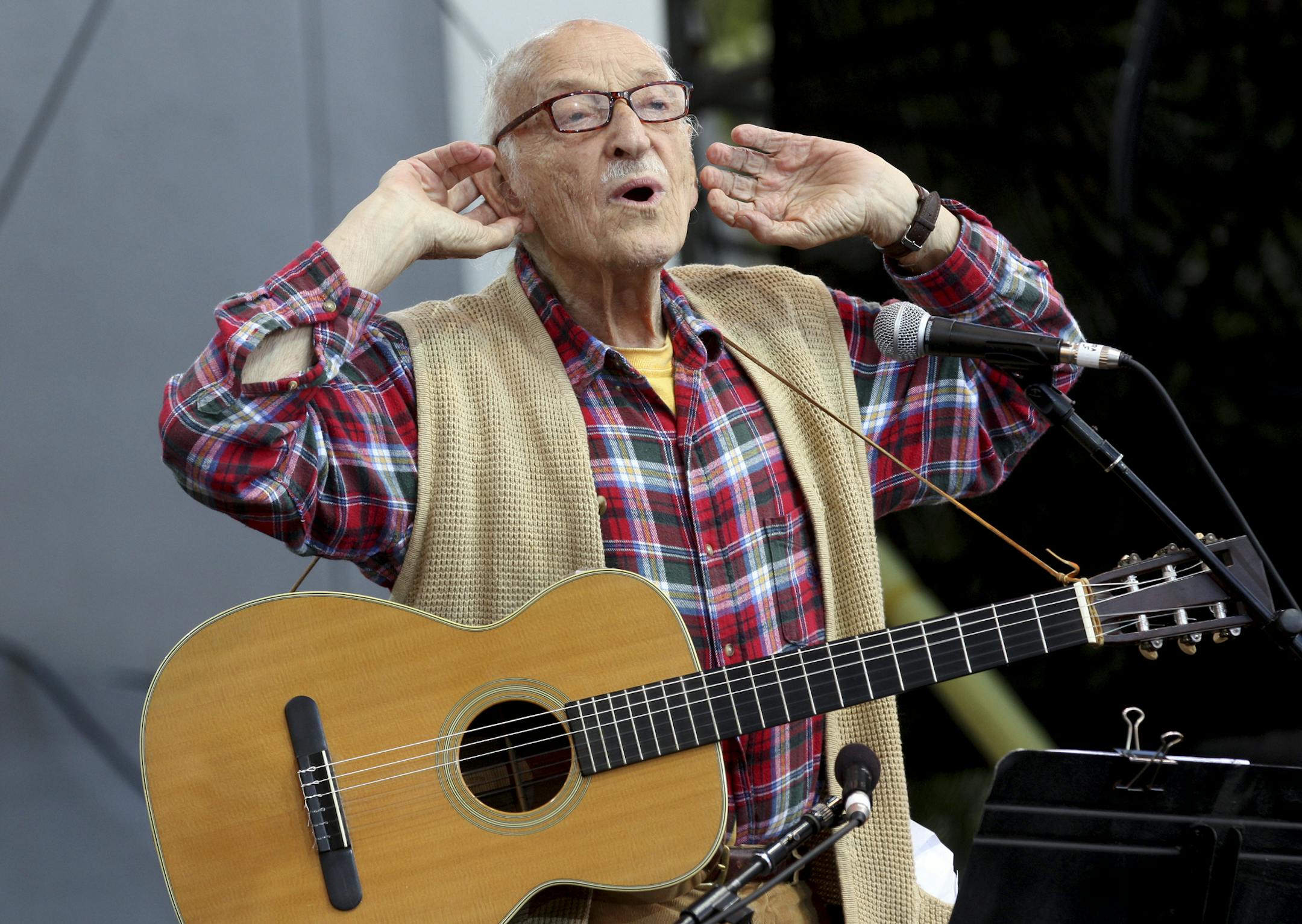
FILE — Fred Hellerman at a memorial concert for Peter Seeger in Damrosch Park in New York, July 20, 2014. Hellerman, a singer, guitarist and songwriter and the last surviving member of the Weavers, the quartet that in the 1950s helped usher in the folk music revival, died on Sept. 1, 2016 at his home in Weston, Conn. He was 89. (Hiroyuki Ito/The New York Times)
Fred Hellerman at a memorial concert for Peter Seeger in New York on July 20, 2014. (The Minnesota Star Tribune)
about the writer

about the writer

More from Minnesota Star Tribune

See More
card image
J. SCOTT APPLEWHITE, ASSOCIATED PRESS/The Minnesota Star Tribune

The "winners" have all been Turkeys, no matter the honor's name.

In this photo taken Monday, March 6, 2017, in San Francisco, released confidential files by The University of California of a sexual misconduct case, like this one against UC Santa Cruz Latin Studies professor Hector Perla is shown. Perla was accused of raping a student during a wine-tasting outing in June 2015. Some of the files are so heavily redacted that on many pages no words are visible. Perla is one of 113 UC employees found to have violated the system's sexual misconduct policies in rece